


A war neither Pakistan nor Afghanistan can win, but South Asia will lose

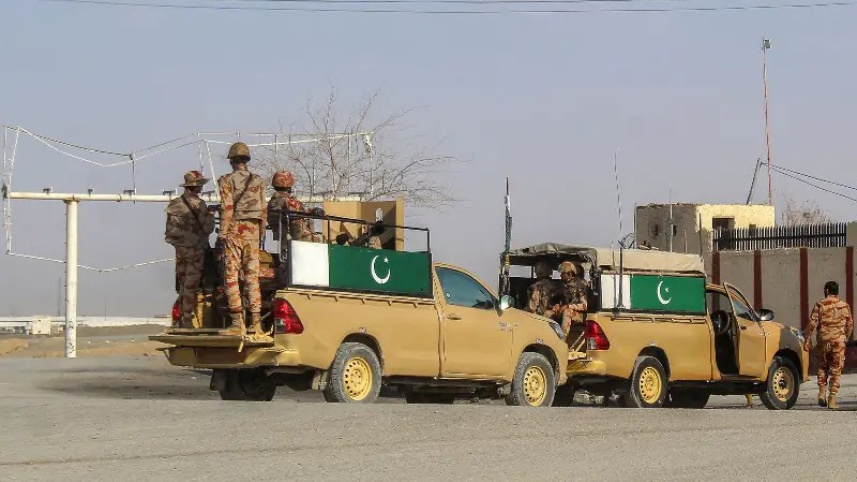
On Friday, Pakistani warplanes struck Kabul, Kandahar and multiple Afghan military sites in what Islamabad called “Operation Ghazab lil Haq,” declaring that its patience with Taliban-led Afghanistan had run out after cross-border attacks the previous night.
Kabul confirmed the strikes hit several provinces and said it had begun retaliatory operations, including drone attacks on Pakistani military positions along the Durand Line.

Casualty figures remain contested, but Pakistani officials claimed more than 331 Taliban fighters were killed and over 500 wounded, while Afghan sources reported military and civilian deaths and said dozens of Pakistani soldiers were killed in border fighting.
The exchange followed an earlier Pakistani air raid on February 21 that Afghan authorities say killed civilians, itself justified by Islamabad as targeting Tehrik-e-Taliban Pakistan (TTP) bases.
Just like that, what had been months of sporadic border violence has now crossed into something far more dangerous: not quite full-scale war, but no longer manageable skirmishes either. For South Asia, the implications are immediate and unsettling.
For the uninitiated, the conflict is rooted in geography as much as ideology. The two countries share roughly 2,600 kilometres of rugged frontier, much of it historically porous and disputed. Afghanistan has never formally recognised the Durand Line as an international border, while Pakistan sees militant sanctuaries across that line as an existential threat.
Since the Taliban returned to power in 2021, attacks inside Pakistan attributed to the TTP have surged dramatically, with conflict monitors recording over a thousand violent incidents in 2025 alone. Islamabad insists Kabul is either unwilling or unable to dismantle these networks; the Taliban counters that Pakistan’s insurgency is a domestic problem.
That unresolved contradiction has produced a pattern of retaliation that now resembles a cycle of deterrence and punishment rather than crisis management.
What happens next matters not only to the two combatants but to the entire region’s fragile balance.
Pakistan is a nuclear-armed state already strained by internal militancy, economic fragility and political instability. A prolonged confrontation on its western frontier diverts military resources, weakens border governance and risks emboldening insurgent groups from Baloch separatists to sectarian militants.
Afghanistan, meanwhile, remains economically isolated, humanitarian-dependent and diplomatically unrecognised by most of the world. Sustained conflict further erodes whatever limited state capacity exists, raising the prospect of renewed refugee flows into Pakistan and Iran and potentially beyond.
Instability in Afghanistan rarely stays confined within Afghan borders. India’s position becomes more complicated, not simpler.
On one hand, friction between Islamabad and Kabul reduces Pakistan’s strategic depth — a long-standing concern in Indian security thinking — and creates diplomatic space for New Delhi to engage Afghanistan through aid, infrastructure and humanitarian outreach without formally recognising the Taliban government.
India has already invested more than $3 billion in Afghan development projects and continues to pursue what it calls engagement without recognition to protect those interests.
On the other hand, instability threatens connectivity dreams linking India to Central Asia through Afghanistan, including energy corridors such as the stalled TAPI pipeline, and increases the risk that militant groups hostile to India could exploit chaos to regroup.
Islamabad has further widened the geopolitical dimension by accusing the Taliban of acting as a proxy for India — even claiming Afghanistan had become a “colony” of New Delhi — while India has condemned Pakistani airstrikes as violations of Afghan sovereignty. Kabul rejects the proxy allegation, but the rhetoric alone pulls South Asia’s core rivalry into what was once a bilateral border dispute.
Meanwhile, India’s engagement with the Taliban — including reopening a technical mission in Kabul, humanitarian aid deliveries and diplomatic contacts — reflects a pragmatic calculation that influence in Afghanistan cannot simply be abandoned.
The result is a triangular tension in which Pakistan fears encirclement, Afghanistan resists dependence, and India seeks influence without formal alignment.
For smaller South Asian states, including Bangladesh, Nepal and Sri Lanka, the consequences are indirect but real. Regional cooperation frameworks are already weak; escalating hostility between two major Muslim-majority states deepens fragmentation in a region that struggles to act collectively even in peacetime. Trade corridors linking South Asia to Central Asia — often discussed as pathways to diversify economies beyond maritime routes — become harder to realise.
Security anxieties tend to crowd out development agendas, pushing governments toward defence spending and away from social investment. Persistent conflict also reinforces the perception of South Asia as a zone of chronic instability, discouraging foreign investment and long-term infrastructure planning.
 For all latest news, follow The Daily Star's Google News channel.
 There is also the spectre of transnational militancy. Groups such as TTP and Islamic State-Khorasan thrive in contested borderlands where sovereignty is blurred and accountability weak. Escalation between state actors can unintentionally create operating space for precisely the non-state actors both governments claim to oppose.
Pakistan argues it is striking Afghanistan to eliminate militant sanctuaries; Afghanistan argues it is defending sovereignty against aggression. In practice, sustained conflict risks multiplying the very threats that triggered it.
External powers are already urging restraint — from China and Russia to Iran, Turkey and Saudi Arabia — because instability along this frontier threatens wider regional projects, from Belt and Road connectivity to energy corridors and counterterrorism cooperation.
Yet mediation efforts have repeatedly failed, and the relationship appears trapped in a self-sustaining loop of retaliation.
Still, many believe the crisis is unlikely to escalate into full conventional war, largely because neither side can afford it. That may be true in narrow military terms, yet history shows that limited conflicts can still produce large regional consequences.
Continuous cross-border strikes, drone warfare and artillery exchanges normalise instability, turning frontier zones into permanent conflict theatres. Over time, such conditions erode civilian life, disrupt trade routes and generate humanitarian crises that spill outward.
Perhaps the most troubling outcome is the sense of drift. Neither side appears capable of decisive victory, yet neither shows willingness to make the concessions required for lasting peace. Ceasefires mediated by external actors have repeatedly collapsed, creating a cycle with no obvious exit.
In that environment, South Asia faces not a single catastrophic event but a prolonged period of simmering instability radiating from the Afghanistan-Pakistan frontier.
If there is a central takeaway, it is that the region may be entering another phase in which Afghanistan once again becomes the fault line of South Asian security.
The immediate headlines focus on airstrikes, casualties and declarations of “open war,” but the deeper story is structural: a nuclear-armed state confronting a militant-affected neighbour with weak institutions, disputed borders and overlapping insurgencies.
Unless that structure changes, Friday’s escalation may be remembered not as an isolated flare-up but as the moment when a chronic crisis hardened into a long-term regional reality.
Comments