


India, Pak suffer new Covid surge
India and Pakistan reported a big jump in new coronavirus infections yesterday, driven by a resurgence in cases in their richest states, as experts warned that large parts of Europe are at the start of a third coronavirus wave.
While authorities in India have mainly blamed crowding and an overall reluctance to wear masks for its spike, Pakistan says the UK variant of the virus found in the country could also be a factor.

Maharashtra state, home to India's commercial capital Mumbai, reported 23,179 of the country's 35,871 new cases in the past 24 hours, and the fast-spreading contagion in major industrial areas raised risks of companies' production being disrupted.
With the worst rise in infections since early December, India's total cases stood at 11.47 million, the highest after the United States and Brazil. Deaths rose by 172 to 159,216, according to health ministry data yesterday.
In Pakistan, 3,495 people tested positive in the past 24 hours, the most daily infections since early December. Total cases rose past 615,000. Deaths rose by 61 to 13,717.
Most of the new cases came from Pakistan's largest and richest province, Punjab.
Pakistani minister Asad Umar said on Twitter that hospital beds were filling fast, warning of stricter curbs if rules were not followed.
"The new strain spreads faster and is more deadly," he said on Twitter, referring to the UK variant.
India's first wave peaked in September at nearly 100,000 cases a day, with daily infections hitting a low of just over 9,000 early last month.
India and Pakistan have a combined population of 1.57 billion, a fifth of humanity.
CURBS RETURN
Cases have been rising in Maharashtra since the reopening of most economic activity in February. Mumbai's suburban trains, which carry millions daily, also resumed.
The state of 112 million people ordered a fresh lockdown in some districts and put curbs on cinemas, hotels and restaurants until the end of the month after infections rose to a multi-month high earlier this week
New cases have more than doubled in the past two weeks in Maharashtra's industrial towns such as Pune, Aurangabad, Nashik and Nagpur, home to car, pharmaceutical and textile factories.
"We have asked industries there to operate with minimum manpower as much possible," said a senior Maharashtra government official, declining to be named as he was not authorised to talk to the media. "Most of the IT companies have allowed their employees to work from home."
Hospital beds and special Covid-19 facilities were filling up fast, especially in Mumbai, Nagpur and Pune, said another state official.
THIRD WAVE
Large parts of Europe are at the start of a third coronavirus wave, experts have said, with warnings that the decision to pause the use of the AstraZeneca vaccine over health concerns is likely lead to a rise in cases and a high number of deaths as more contagious new variants account for the majority of cases.
Christian Drosten, a leading virologist at Berlin's Charité hospital said Germany's epidemiological situation was "not good right now", and was compounded both by the exponential rise in the spread of the B117 mutation which first originated in Britain that now makes up about three-quarters of new cases in Germany, and the decision to temporarily stop using Oxford/AstraZeneca.
"We need this vaccine," he insisted.
 For all latest news, follow The Daily Star's Google News channel.
 The benefits of AstraZeneca's vaccine far outweigh any risks and countries across Europe should continue to use it to help save lives, the World Health Organization's European director said yesterday.
Hans Kluge noted that Europe's medicines regulators are investigating a small number of cases of blood clots in the region that have prompted around a dozen EU governments to suspend us of the AstraZeneca shot.
The African Union (AU) said yesterday that African countries should continue to use AstraZeneca's vaccine, echoing the WHO by saying the shot's benefits outweighed risks, reports Reuters.
Europe's medical regulator was set to give its verdict later yesterday on the safety of the AstraZeneca vaccine.
Meanwhile, Britain's medicines regulator said yesterday the evidence does not suggest that the AstraZeneca vaccine causes blood clots but added that a very rare and specific type of blood clot in cerebral veins was being investigated.
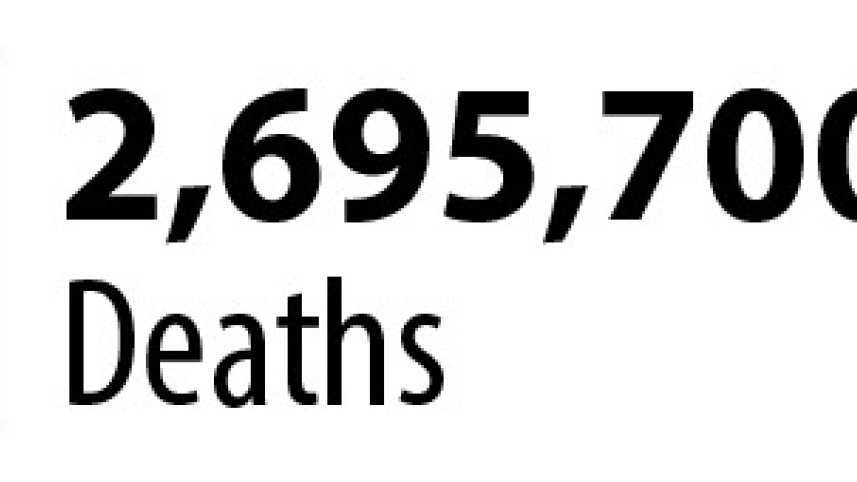
The coronavirus has killed at least 2,682,032 people since the outbreak emerged in China in December 2019, according to a tally from official sources compiled by AFP yesterday. The number of vaccine doses administered around the world is nearing the 400 million mark.
Comments