


‘Lutfar Pradeep’ returns to Shilpakala in February
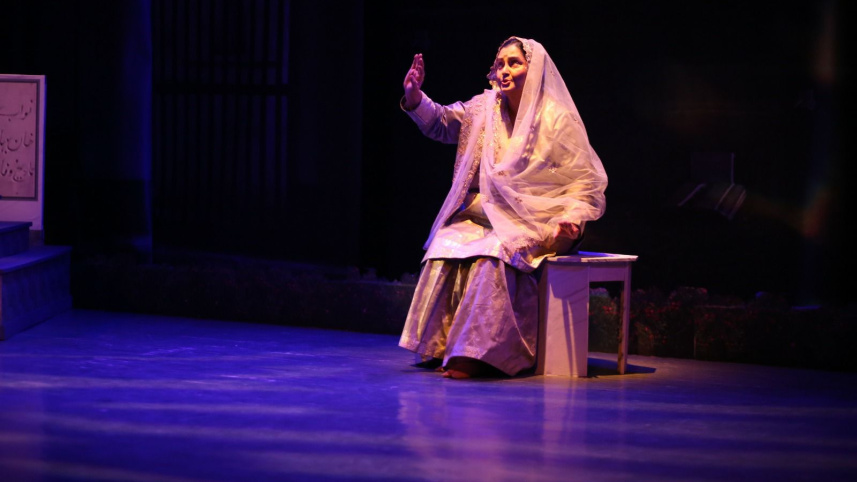
Theatre troupe Samatal will stage its production “Lutfar Pradeep” at Bangladesh Shilpakala Academy on February 7 and 8, with performances scheduled for 7 pm at the Experimental Theatre Hall.
Written by Tanvir Mokammel and directed by Sagir Mostafa, the play premiered in Dhaka last month. Its opening show was held on January 3 at Bangladesh Mohila Samity, marking Samatal’s formal entry into the capital’s theatre circuit.
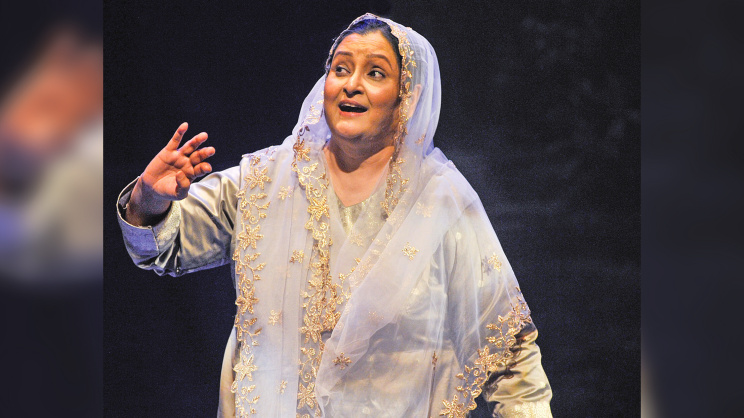
“Lutfar Pradeep” is a solo performance by veteran actor Chitralekha Guha, her first one-woman stage act in a career spanning more than four decades. Describing the work, Guha said it is “the story of a resolute woman who may break, but never bends,” adding that the play blends personal emotion with historical reflection. “I feel deeply moved to be part of such a story,” she said.
The narrative draws from a lesser-known emotional chapter of Bengal’s colonial past. After Nawab Siraj al-Dawlah was defeated and brutally killed following the Battle of Palashi, his body was buried across the Bhagirathi river at Khoshbagh, beside the grave of Nawab Alivardi Khan. Siraj’s wife, Lutfunnesa—known as Lutfar—lit a lamp at his grave every evening, a ritual she continued until her death.

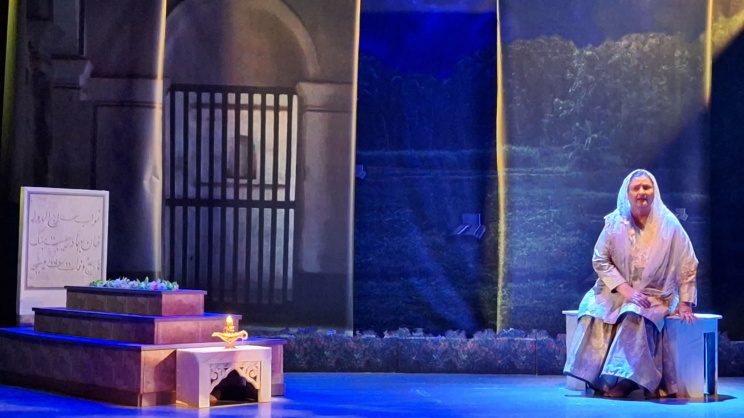
The play questions whether this act was merely an expression of a widow’s devotion or a gesture with deeper political meaning.
Playwright Tanvir Mokammel frames the lamp as a symbol of resistance. “The lamp she lit every evening at Siraj’s grave symbolised the hope and aspiration for freedom in this land,” he said. “Good rulers in Bengal have rarely been allowed to survive. With the help of local collaborators, foreign powers repeatedly seized the throne and wealth of this region. Lutfar’s lamp becomes a symbol of a subjugated nation’s hope, longing, and dream.”
Art direction and lighting design are by Uttam Guha, background music and sound design by Syed Shabab Ali Arzoo, and costume design by Wahida Mollick Jolly.
By centring a single woman within a decisive historical rupture, “Lutfar Pradeep” revisits political loss through endurance, memory, and the quiet power of ritual—asking who keeps history alive when empires fall.
 For all latest news, follow The Daily Star's Google News channel.
Comments