


BADC restores waterlogged farmland, lifts rice output in Barishal region
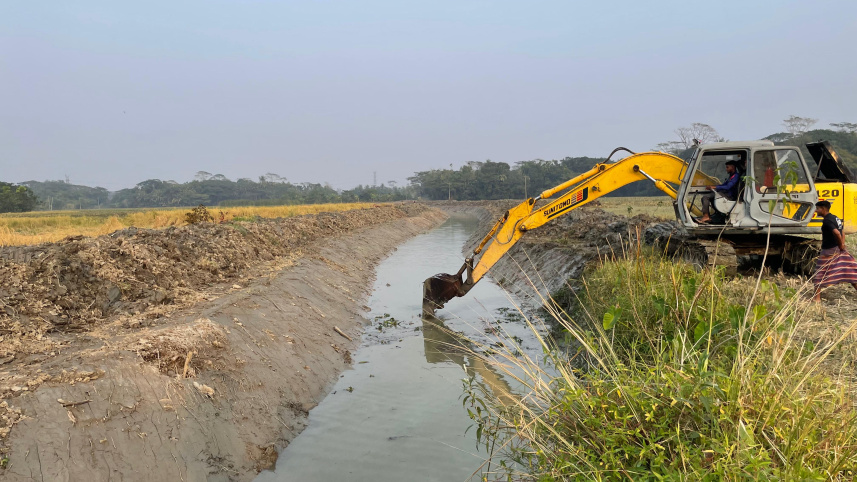
The Bangladesh Agriculture Development Corporation (BADC) said it has completed 60 percent of its canal excavation target in Barishal region, with the aim of easing waterlogging and boosting agricultural production.
The project is expected to bring 16,504 hectares of waterlogged land back under cultivation and increase annual rice production by about 66,014 tonnes in Barishal, Bhola, Jhalakathi, and Pirojpur districts, BADC Executive Engineer Wahid Murad said.

He added that around 10,000 hectares of previously waterlogged farmland had already been brought under cultivation by December last year.
According to the Barishal–Bhola–Jhalakathi–Pirojpur district irrigation project, the initiative began in September 2023 and will run until December this year. It involves the excavation of 325 kilometres of canals using modern irrigation approaches at a cost of Tk 348 crore.
Over the past two and a half years, about 200 kilometres of canals have been excavated to improve irrigation facilities, while work on the remaining 125 kilometres is ongoing. Once completed, the project is expected to significantly reduce waterlogging and enhance crop yields, particularly from this year onward, the BADC official said.
Describing it as the largest irrigation initiative in the southern region, Wahid said the project’s full completion by December could increase food production in the region by up to 66,000 tonnes annually.
Meanwhile, BADC’s Barishal Sadar office said excavation of a two-kilometre self-financed canal in the Mirabari area of Char Kaua union is nearing completion. The canal is expected to free around 2,500 acres of farmland from persistent waterlogging.
Upazila Agriculture Officer Uttam Bhowmik said the canal would be 30 feet wide and nine feet deep, with culverts to be constructed along adjacent roads to improve water flow and communication.
He added that resolving waterlogging in Char Kaua alone could enable the production of crops worth about Tk 20 million annually, including rice.
Local farmer Abdus Salam Mia said cultivators from four to five villages—including Dinar, Nayani, Char Aicha, and Purba Char Kaua—had suffered for years due to damaged culverts and poor drainage.
“With the canal excavation and culvert construction, irrigation will improve, and the excavated soil will also be used to repair roads,” he said.
Islam Sikder, additional director of Department of Agricultural Extension (DAE), Barishal, said improved irrigation facilities helped bring 885,034 hectares under Aman cultivation in Barishal region this season. Rice production rose to 2.365 million tonnes, compared with 2.322 million tonnes last year.
“Enhanced irrigation support and increased mechanisation were driving steady growth in agricultural production across the southern region,” he added.
 For all latest news, follow The Daily Star's Google News channel.
Comments