

Bangladesh’s old diplomacy won’t survive new realities

In the post-July 2024 situation, Bangladesh has been facing several new strategic realities. At the domestic level, a generational shift has been redefining the political landscape and articulating the urge for justice as well as an equitable economic order. The graduation of Bangladesh in 2026 will again frame and reset our external relations with practically all partners. Such a reset will obviously demand corresponding reforms in many areas of our domestic policy and practices. Old mindsets and behaviours may have little relevance in the evolving actualities.
At the same time, several layers of geopolitical challenges are also greeting Bangladesh on the external front. The growing interest of global and regional powers in domestic issues, and their tendency to view them through a geopolitical lens, have added a new dimension of complexity. There is already strain between Bangladesh and India, and this tension is beginning to affect the broader geopolitical landscape. On its part, the Rohingya issue has already raised a red flag regionally and still requires a solution. Big-power competition is also heating up in the Indo-Pacific region, with a direct impact on the Bay of Bengal and the Indian Ocean region. Needless to say, the effective management of these hugely powerful geopolitical trends is essential to protect our identity, security, progress, and prosperity.
Against this backdrop, it may be useful to review some of the tools and techniques Bangladesh could employ in the near future to safely navigate these evolving challenges and build a new structure of mutually beneficial relationships with its partners. A few priorities could be considered for this purpose.
1. Pursuing Proactive Diplomacy
Managing perception and rebuilding reputation: Over the years, our reputational repertoire has suffered due to a poor human rights record, a fractured political process, serious governance deficits, and an overreliance on the promotion of personality cult. In the process, the real strength of the nation, as represented by the huge entrepreneurial spirit of the common people, the power of the youth and women, as well as the strong determination of people to resist oppression and cultivate resilience against all odds, has lost visibility.
In the context of the recent changes in Bangladesh, the need for reputation management has acquired a new salience. While it is easy to blame others for many of our problems, it is important to pay attention to how we define ourselves, what priorities we set for ourselves as a nation, how we pursue them, and what kind of company we keep. In the world of statecraft and diplomacy, signals, narratives, gestures, and initiatives can frame perception, which in many cases may shape reality as well.
Our friends and foes read them through their own lenses, not through ours! Extra care is therefore warranted in charting our course, especially in volatile times.
Playing a role in addressing non-traditional security issues, such as climate change, transnational crimes like drug smuggling and extremism, disaster management, migration issues, and humanitarian initiatives, could perhaps enhance the regional and global standing of Bangladesh.
Calibrated and interest-based bilateralism: Bangladesh must make every effort to maintain a dignified, equitable, and mutually beneficial bilateral relationship with India and other South Asian neighbours, based on the principles of respect for sovereign equality, territorial integrity, non-interference in each other’s domestic affairs, and a no-harm-to-each-other-or-to-a-third-party approach. Given the growing complexities in South Asia, it is extremely important for us to carefully and dispassionately weigh the value of our relationships with all our immediate and extended neighbours through the prism of our own national interest and our shared and common needs and priorities.
Pursue strategic partnership: As the volatility in the regional and global scenario intensifies, Bangladesh must review its approach and redesign its engagement strategy with a strategic focus on its relationships, with particular attention to the five permanent members of the UN Security Council, the EU, Japan, South Korea, ASEAN, and GCC countries, among others.
Prioritise new ideas: In this context, Bangladesh may continue to promote Open Regionalism with wider connectivity in all its dimensions and forms. On the horizontal level, Bangladesh may pursue cooperation within the framework of SAARC, BIMSTEC, IORA, the Colombo Security Conclave (CSC), ASEAN, and RCEP, among others. It could also aggressively pursue building vertical-level connectivity in the form of digital connectivity, energy connectivity, scientific and educational connectivity, and forging partnerships on health, climate, and other forms of connectivity. South-South collaboration could be the key driver for such cooperation with a view to synergising the linkages and maximising mutual and collective benefits.
Support robust multilateralism: Given the global uncertainty, Bangladesh must continue to promote the value of multilateralism, as embodied in the United Nations and other multilateral organisations. As the only universal platform to safeguard global peace, security, and progress, Bangladesh must support suitable reforms of the United Nations and other multilateral institutions to reflect the interests of all member States. At the same time, Bangladesh must not hesitate to pursue other forms of multilateralism, including mini multilateralism and issue-based ad-hoc multilateralism, and engage in multi-alignments to promote its national interests.
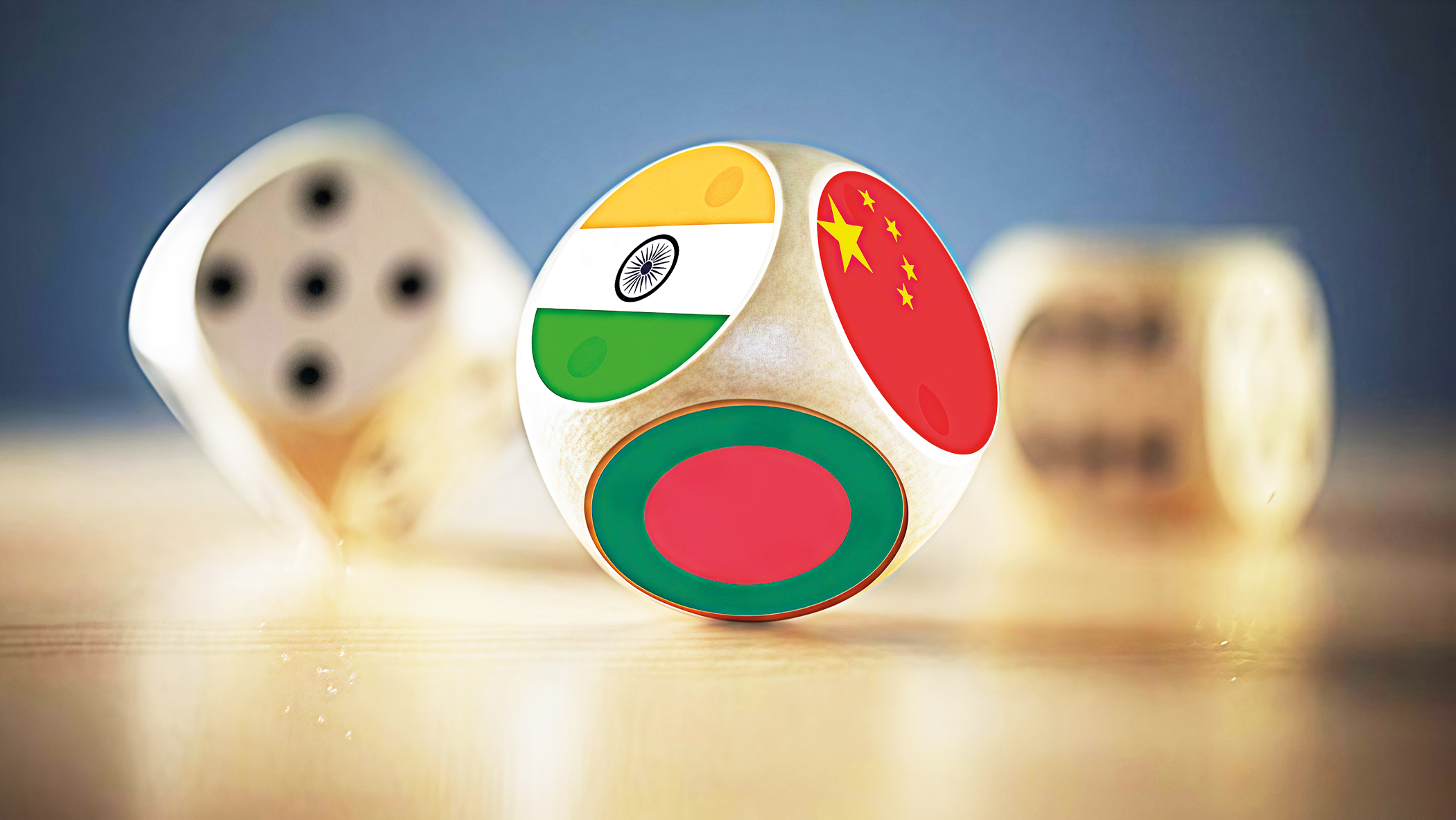
2. Managing Geopolitics with Nuance
Given the heavy reliance of Bangladesh on the international environment for maintaining its identity, security, economy, and prosperity, any change in the regional and global environment could seriously affect the lives of its people in myriad ways. It is therefore imperative to understand and appreciate the strategic shifts taking place domestically, regionally, and globally, and accordingly chart a coordinated and calibrated strategy, and, if possible, develop an action plan to respond to them appropriately. It is worth noting that Bangladesh has never seen such turmoil in the regional and global environment, except perhaps in the wake of our Independence in 1971.
In concrete terms, our response must start with a good understanding and appreciation, at the political level and in policy-making circles, of the linkages between our developmental objectives and the urgency of pursuing an objective and proactive diplomacy to neutralise potential risks and harness resources from our partners to achieve our national goals. Examples of good practices pursued by other States to manage geopolitical chaos could be reviewed and appropriately used as lessons for protecting and promoting our national interests and objectives.
3. Value diplomacy as a tool for promoting national interest
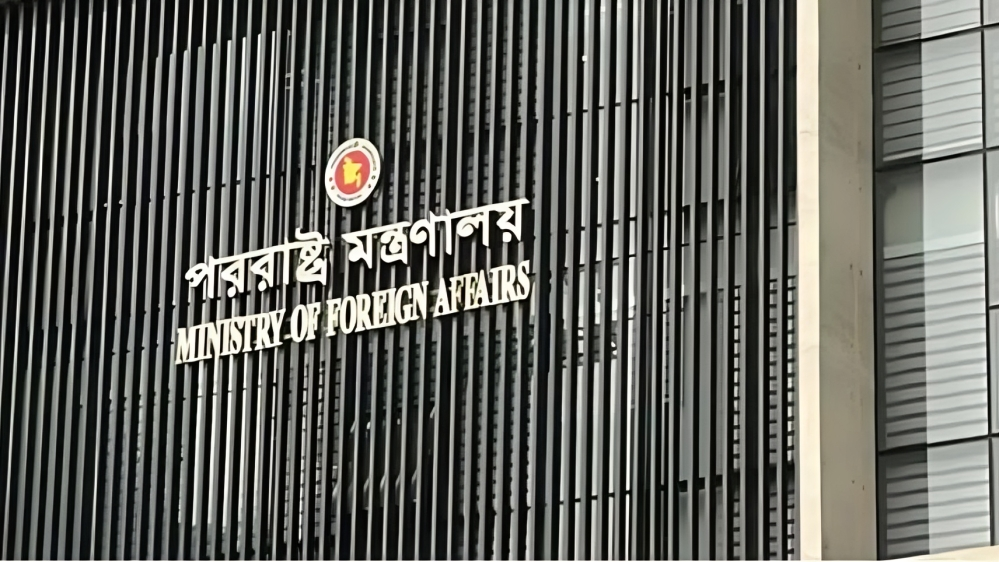
A word to clarify a wide-ranging misperception about the role of diplomacy and the role of the Ministry of Foreign Affairs within our government structure and in our national development and progress. It is worth noting that the Ministry of Foreign Affairs (MOFA) is not just a Ministry as such; it is the symbol of our sovereignty and independence, alongside the Ministry of Defence. Indeed, these are the two new institutions which emerged after our Independence. At the same time, MOFA and our missions abroad are a veritable window of Bangladesh to the outside world, representing Bangladesh as a nation. Therefore, it is important to appropriately support its professional work and provide the required resources to perform its mandated work to a high standard of professionalism.
On its part, MOFA also needs to significantly improve its professionalism and performance to analyse strategic shifts, forecast risks, and prepare the nation to overcome challenges and harness benefits. In the process, it must also review its performance periodically to identify gaps and be ready to embrace changes with a view to recasting its approach and engagement with other stakeholders. A new set of tools, such as public diplomacy, economic diplomacy, digital diplomacy, diaspora diplomacy, and climate diplomacy, could be effectively used to reach out to a wider set of constituencies, both at home and abroad.
4. Strengthening Domestic Coordination
Coordination has been a major Achilles’ heel in our governance structure for a long time. There are several dimensions to it. First, our understanding of the outside world is still very limited and generally framed by our own worldview. Such a limited worldview restricts our ability to make meaningful outreach to and engagement with outside actors. It is worth noting that such a mindset is partly responsible for our inability to adequately capitalise on existing opportunities for expanding our vital interests in many areas, including trade, tourism, manpower export, and the inflow of foreign capital and technology, among others.
Second, hardly any coordination exists between policy makers in various Ministries within the government itself. At least a dozen Ministries are now involved in interactions with the outside world, but there is hardly any coordination among them. In some cases, they work at cross purposes, thereby negatively affecting our outreach externally.
Third, likewise, the coordination between government institutions and other outside stakeholders—who are the main actors in the management of economic diplomacy and those who could contribute to improving collective understanding of opportunities and challenges—is no better. One heard complaint from the business community of not being adequately consulted and engaged during the last tariff negotiations with the US in August 2025.
Indeed, a deep-seated silo mentality prevents any objective and serious evaluation of the effectiveness of such a coordination mechanism. It is extremely important to note that, to the outside world, Bangladesh is one entity, and it is treated as such. If we cannot coordinate our positions and actions within ourselves, nobody will take us seriously, and in the process, our ability to secure our fair share in any negotiations will be badly compromised!
Humayun Kabir is the President of the Bangladesh Enterprise Institute (BEI) and served as Bangladesh’s Ambassador to the United States from 2007 to 2009
Send your articles for Slow Reads to slowreads@thedailystar.net. Check out our submission guidelines for details.