

Our disasters, ‘their’ management: Need to break the chain of complacency and ‘not questioning’

The present state of disaster management in Bangladesh reflects both substantial progress and ongoing challenges. The government, guided by the Disaster Management Act (2012) and the National Disaster Management Plan (2021–2025), has strengthened legal and strategic frameworks to enhance preparedness, early warning, emergency response, and recovery systems at national and local levels. Institutional coordination has improved through mechanisms such as the Humanitarian Coordination Task Team, which brings together the Ministry of Disaster Management and Relief, UN agencies, NGOs, and other stakeholders to streamline response and planning. Community-based approaches, including the Cyclone Preparedness Programme and local disaster committees, play a central role in translating early warnings into lifesaving action, especially in coastal and rural areas. Investments in forecasting and hazard monitoring—such as enhancements by the Bangladesh Meteorological Department and flood forecasting systems—have also strengthened anticipatory action. Despite these advances, challenges remain in terms of resource limitations, infrastructure resili-ence, climate change impacts, and capacity gaps at subnational levels, underscoring the need for continued policy im-plementation, community engagement, and international cooperation to build long-term resilience.
The evidence and urge for consulting the local people on the preparedness mechanism is almost nil. The tendency of ignoring the native expertise and local wisdom to combat natural or complex disasters creates problems rather than strengthening the capacity of fighting back. People living in this land are not stupid people.
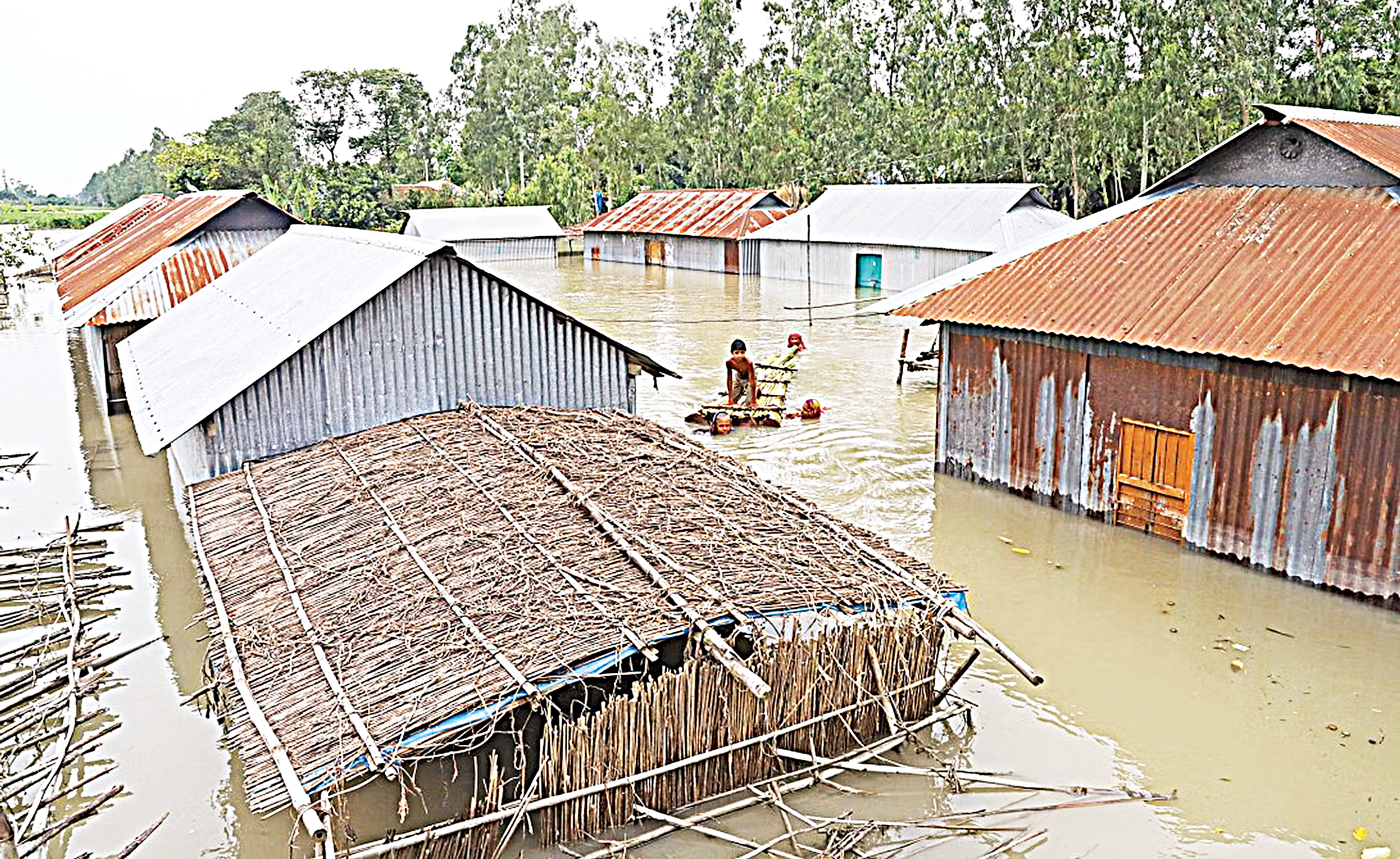
Khana was not the only person who had the capacity of predicting weather and crop yields. In fact, people living in this disaster-prone delta are known for their rich indigenous knowledge and nature-based solutions. This knowledge and wisdom developed over thousands of years. They know how to live with abundant water and to protect life when water is scarce. With their indigenous knowledge, they cope with cyclones and erratic weather conditions (changes in cli-mate). Traditional practices like raised homesteads, floating gardens, selecting the right seeds and keeping them in the right places created the backbone of resilience. Folk wisdom helps them to build community resilience, even when for-mal aid is delayed. This local wisdom, passed down through generations, includes understanding local ecosystems and developing unique survival techniques, making them highly adaptable to frequent natural hazards:
Khana (or Khona), the legendary poet, philosopher and astrologer from medieval Bengal (9th–12th century CE), is fa-mous for her insightful couplets, Khanar Bachan, offering practical advice on agriculture, health and daily life, deeply rooted in Bengali rural wisdom and folklore, with tales linking her to the astrologer Mihir. She is a key figure in Bengali culture, known for her prophetic accuracy in predicting weather and crop yields, and her sayings (Bachan) are still fol-lowed by farmers today.
With the aggression of colonisation, we started undermining local culture, wisdom, and indigenous knowledge. We devalued the golden heritage of our resilience capacity. We also forgot the needs of the people; rather, we are building on the foundations laid by the past masters. Here we will examine some of our disaster management instruments to see how much they are helping, firing back, or creating a more vulnerable situation for the country and the people. To begin with, we can discuss the cyclone warning system. Ports and ships were much more important to the rulers than the people of the land. After the partition of 1947 and our independence in 1971, our cyclone signals are still primarily issued for seaports and seagoing vessels to indicate the intensity of a storm, its possible direction, and the level of im-pending danger.
For cyclones, we have 11 signals. They are:
• Distant Cautionary Signals: 1, 2, 3 (forecast of squally weather or a storm).
• Local Cautionary Signal: 4 (a storm is approaching, but the danger is not yet severe).
• Danger Signals: 5, 6, 7 (a storm is approaching or moving toward the port).
• Great Danger Signals: 8, 9, 10 (a severe or very severe storm is approaching; final and highest level of warning).
• Communication Failure Signal: 11 (communication disrupted; actions to be taken based on local judgment).
All Danger Signals (5, 6, and 7) refer to wind speeds of 62–88 kph, while Great Danger Signals (8, 9, and 10) refer to wind speeds of 89 kph or more. To make it clearer, Signal No. 5 means the storm will pass leaving the port on its left side; Signal No. 6 means the storm will pass leaving the port on its right side; and Signal No. 7 means the storm will pass directly over the port or very close to it. The water vessel operators (Sarang or Captain) can easily translate that and take the necessary action. But the general people can hardly understand the background of why 5, 6, 7 refer to the same wind speed. So, when the signal suddenly shifts from 5 to 8, they become confused and lost. The same applies to the Great Danger Signals.
Contrary to our eleven signals, the Philippines managed their cyclones (they face more cyclones than we do) with only five signals, with a higher signal number associated with higher general wind strength and shorter warning lead time. We all know this but still love to stick with what our colonial masters introduced.
After the partition of India, many of our development and vulnerability reduction projects were also prescribed by agencies who lent the money. Among them, here I would like to discuss two such initiatives:
a) Introduction of Polders and Ring Embankments
b) Introduction of Malaria Eradication Programme
Introduction of Polders and Ring Embankments
In the name of preventing tidal flooding, controlling salinity, and enabling year-round crop cultivation in the coastal area, polders and ring embankments were introduced under the Coastal Embankment Project (CEP, 1960s and 1970s) with technical and financial support from international development partners. These structures enclosed large tracts of low-lying land with earthen embankments and sluice gates. In the initial years, the intervention led to increased agricul-tural output and improved livelihood security, but over the years, it proved to be a counterproductive exercise and cre-ated irreversible damage to nature and livelihoods.
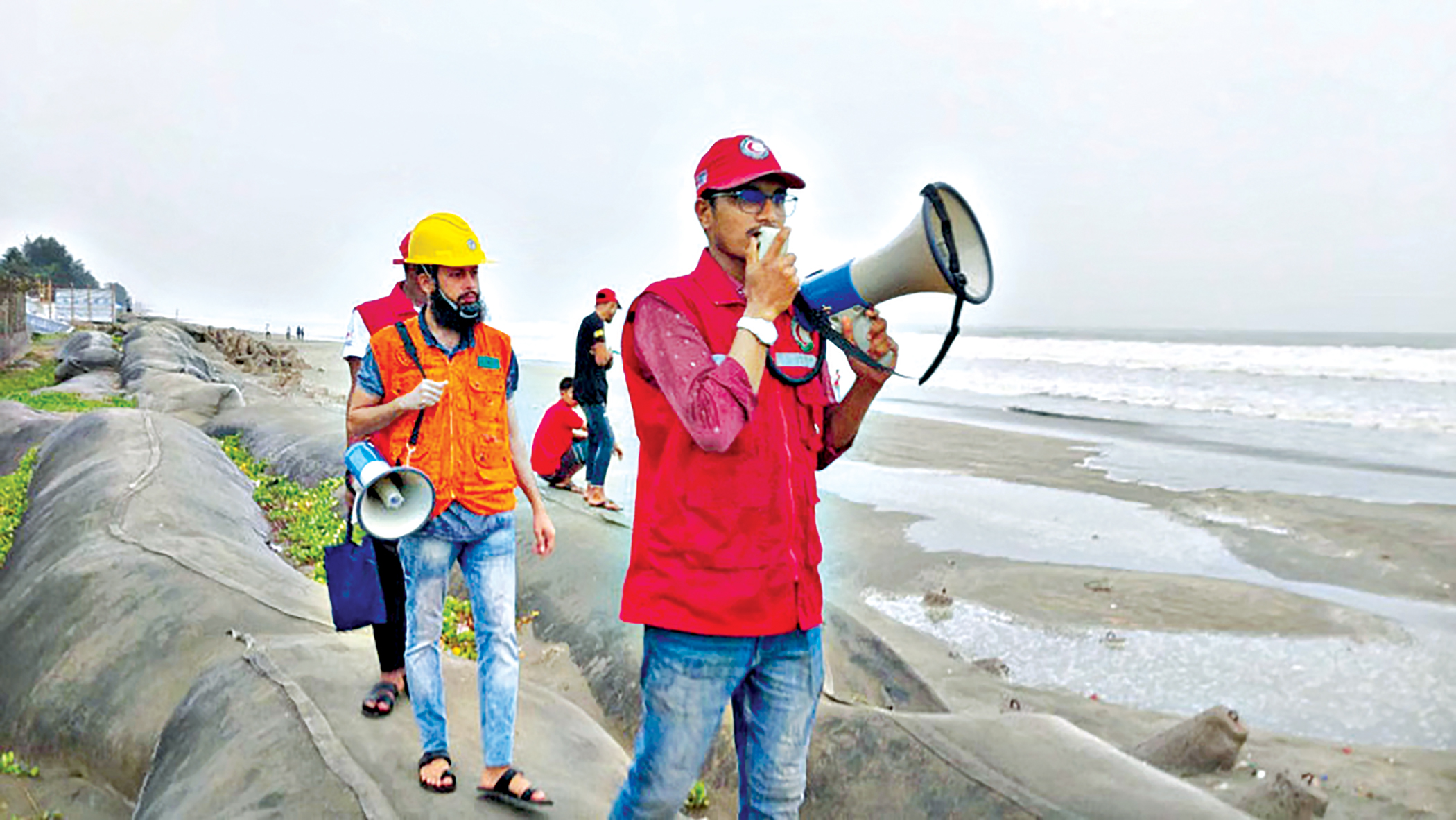
Over time, however, the south-west region began experiencing severe waterlogging, particularly from the 1980s on-ward. Large areas remained inundated for months or even years, damaging crops, infrastructure, and settlements. Wa-terlogging emerged due to several interconnected factors:
Disruption of Natural Sedimentation
Embankments prevented tidal flows from entering floodplains, stopping natural sediment deposition inside polders. Meanwhile, sediment continued to accumulate in riverbeds, causing river channels to become shallower.
Reduced River Drainage Capacity
Silted riverbeds lost their ability to drain monsoon rainfall effectively, leading to prolonged stagnation of water inside polders.
Malfunctioning Sluice Gates
Poor maintenance, siltation, and mismanagement of sluice gates reduced their effectiveness in releasing excess wa-ter.
Land Subsidence
Enclosed polders experienced gradual land subsidence, making them lower than surrounding river levels and further aggravating drainage congestion. Increased risk of certain cancers Hormonal and endocrine disruption Reproductive and developmental health problems.
Socio-Environmental Impacts
The waterlogging crisis resulted in:
• Loss of agricultural land and livelihoods
• Increased poverty and forced migration
• Damage to roads, houses, and public facilities
• Long-term ecological degradation
Communities in the region faced chronic hardship due to persistent inundation.
Public Response and Adaptive Measures
In response to waterlogging, local communities initiated Tidal River Management (TRM) practices from the 1990s onward. TRM involves temporarily opening embankments to allow tidal water and sediment to enter selected floodplains, raising land levels and restoring river depth. The government later adopted TRM as a partial mitigation strategy.
The introduction of polders and ring embankments in south-west Bangladesh initially achieved its objectives of flood protection and agricultural expansion. However, the unintended consequence of chronic waterlogging highlights the limitations of rigid structural interventions in dynamic deltaic environments. The experience underscores the need for adaptive, ecosystem-based water management approaches that balance flood control, sediment dynamics, and community participation.
Malaria Eradication Programme
Malaria was a major public health threat in undivided Bengal during the mid-20th century, particularly in rural and forested regions. High transmission rates caused widespread illness, reduced productivity, and significant mortality. In response, the then East Pakistan (now Bangladesh) adopted DDT (dichloro-diphenyl-trichloroethane) spraying as a primary vector-control strategy, in line with global malaria eradication efforts promoted during that period.
Introduction of DDT Spraying
DDT spraying was introduced in the 1950s under the global malaria eradication programme supported by international agencies. Indoor residual spraying targeted malaria-carrying Anopheles mosquitoes, aiming to interrupt transmission. The intervention initially proved highly effective, leading to a dramatic reduction in malaria incidence and mortality and an immediate public health success.
The use of DDT resulted in:
a) Rapid decline in mosquito populations
b) Significant reduction in malaria cases
c) Improved public health outcomes and economic productivity
At the time, DDT was considered a cost-effective and powerful solution for vector control. On the other hand, over time, extensive and prolonged DDT use produced serious unintended consequences:
Destruction of Beneficial Insects
DDT is a broad-spectrum pesticide. Along with mosquitoes, it killed beneficial insects such as pollinators and natural predators of crop pests, disrupting the ecological balance.
Environmental Persistence and Bioaccumulation
DDT does not break down easily. It accumulated in soil, water, and the food chain, affecting fish, birds, livestock, and ultimately humans.
Development of Pesticide Dependency
As mosquito populations developed resistance to DDT, higher doses or alternative chemical pesticides became necessary. This led to increasing reliance on chemical pest control in both public health and agriculture, trapping the country in pesticide dependency.
Human Health Implications
Long-term exposure to DDT has been associated in scientific studies with:
While DDT was not the sole cause of cancer, its widespread and uncontrolled use increased population-level exposure to carcinogenic and toxic substances, raising long-term health risks.
Policy Shift and Ban
By the 1970s–1980s, growing global evidence of DDT’s harmful effects led to its restriction and eventual ban in many countries, including Bangladesh. Malaria control strategies gradually shifted, but by that time it was too late to reverse the situation. To fight malaria, we are now trying with a) Integrated Vector Management (IVM), b) Use of insecticide-treated bed nets, and c) Environmental management and surveillance.
The experience underscores a critical public health lesson: disease control strategies must balance immediate benefits with long-term ecological and human health consequences.
There are many more examples of ‘backfires’; actually, so-called ‘unintended impacts’ swamp the intended impacts of the apparently useful initiatives. To address another public health crisis, Bangladesh promoted the use of hand-pumped tubewells as a safe drinking water solution. This intervention was strongly supported by international agencies and development partners and was implemented on a large scale from the 1970s. However, by the 1990s, a serious unintended consequence emerged. Scientific investigations revealed that groundwater in many regions of Bangladesh contained naturally occurring arsenic at levels exceeding safe limits. Long-term consumption of arsenic-contaminated water led to widespread arsenicosis, a chronic condition caused by arsenic poisoning.
The Tale of Salt Iodization
To stop the aggression of goitre, we went for a blanket solution named ‘iodized salt’ for all, forgetting the people who are suffering from hyperthyroids. Iodine is nothing but poison to such people. In 1989, Bangladesh enacted the Iodine Deficiency Disorders Prevention Act, making the iodization of all edible salt mandatory. The programme was implemented under the framework of Universal Salt Iodization (USI) during the early 1990s. Salt was selected as the vehicle for iodine supplementation because it is universally consumed, affordable, and easy to fortify without altering taste or quality.
Alongside some positive outcomes, an increase in the detection and prevalence of certain thyroid disorders has been observed. For the sake of argument, one can say this ‘unintended’ development does not indicate a failure of salt iodization but reflects complex physiological and epidemiological factors associated with changes in iodine intake. This also reflects our mindset of following the advice of those who give funds without questioning or analysing the possible intended and also unintended impacts on life and livelihood.
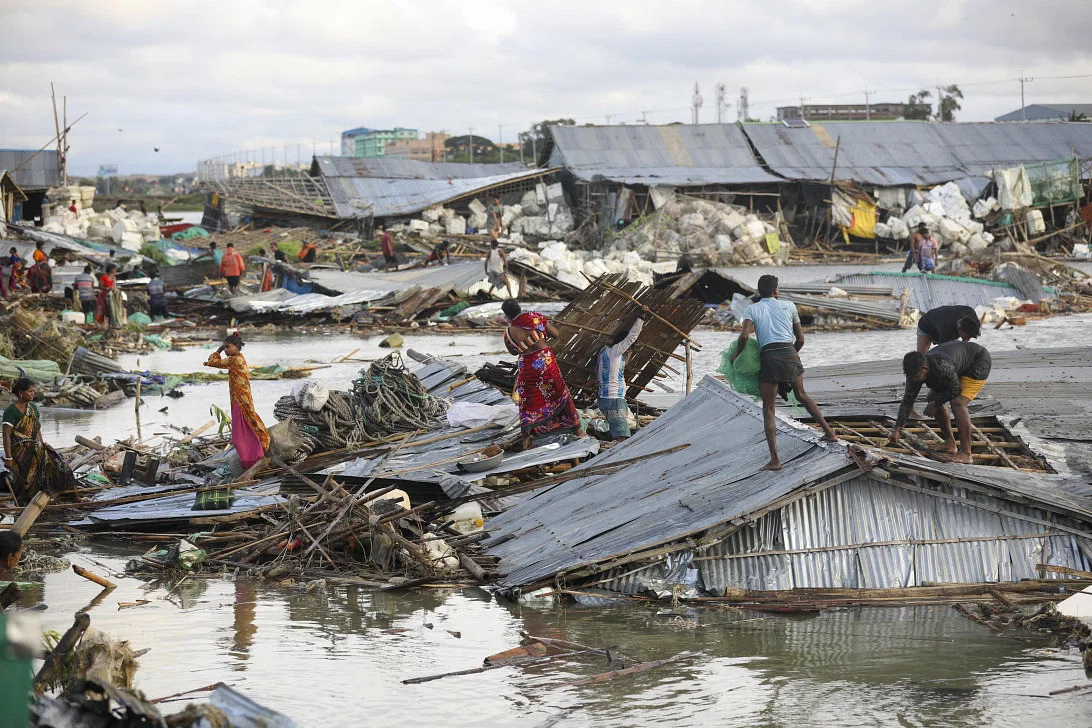
Introduction of High-Cost Cyclone Shelter: Mega Project Syndrome
According to government project budgets, Bangladesh is constructing three-storied multi-purpose cyclone shelters at a total cost of about Tk 636.09 crore under a coastal resilience programme. This means each shelter costs roughly around Tk 7 crore on average (636.09 crore ÷ 90 shelters = ~7.07 crore per shelter), though actual costs vary by site and amenities. Using the funding needed to construct one cyclone shelter could result in the construction of 35–40 cyclone-resistant houses, which can accommodate many more people during a disaster without the need to travel to a shelter in dangerous conditions. ActionAid, in consultation with BUET experts and BRAC, has already successfully piloted such housing. Another alternative is increasing the number of raised earthen platforms, known otherwise as Kella or Mujib Kella, which can house people and livestock during cyclones. Investing in such alternatives, with provisions for local communities to construct and manage these structures themselves, will also create opportunities for work in the coastal areas. While the Government has taken initiative to build new ‘Mujib Kellas’, it is also important to maintain Kellas so that they do not become vulnerable during cyclones owing to landslides.
We also have success stories in building and maintenance of flood/cyclone protection embankments. Laxmipur (Char Alexander) and Bhola (Char Fassion) embankments are still protecting the vulnerable communities since 1992, while the other high-cost embankments could not survive as they should have. There was no trick or deception behind this. In both cases, marginalised people living in the vulnerable area were consulted from the very inception of the project. They were involved in building the embankments and were given ownership of the embankment, and in return they protected it on their own initiative, sometimes risking their lives.
To make disaster management in Bangladesh more people-sensitive and responsive, greater emphasis is needed on community-centred and inclusive approaches rather than a predominantly top-down system. Local people—especially women, persons with disabilities, the elderly, ethnic minorities, and the urban poor—should be meaningfully involved in risk assessment, planning, and decision-making so that warnings, shelters, and relief reflect real needs and social realities. Early warning messages must be simplified, localised, and delivered through trusted channels and local languages to ensure last-mile reach. Strengthening local government institutions with adequate resources, trained manpower, and decision-making authority can significantly improve rapid response and accountability. Disaster shelters and recovery programmes should prioritise dignity, privacy, livelihoods, and long-term resilience rather than only emergency survival. Finally, transparent data sharing, feedback mechanisms from affected communities, and stronger coordination between government, NGOs, and community groups can help ensure that disaster management systems respond quickly, fairly, and with empathy to the people they are meant to serve.
Gawher Nayeem Wahra Disaster Management Expert and the Founder Convenor of the Bangladesh Disaster Preparedness Forum. He can be contacted at wahragawher@gmail.com
Send your articles for Slow Reads to slowreads@thedailystar.net. Check out our submission guidelines for details.