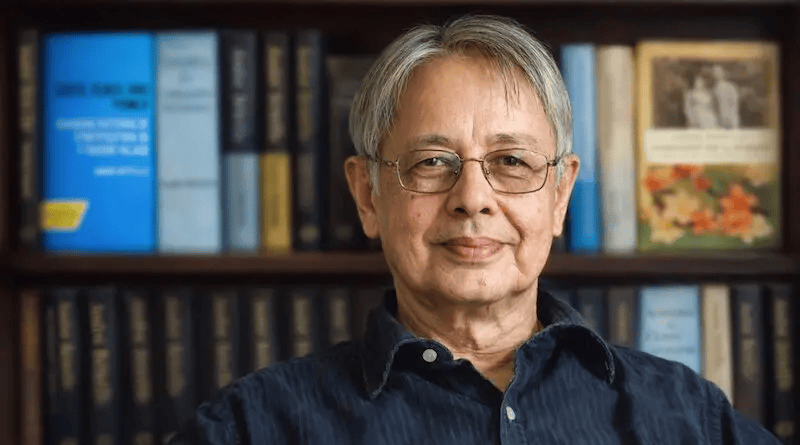
André Béteille: A sociologist Bangladesh should read
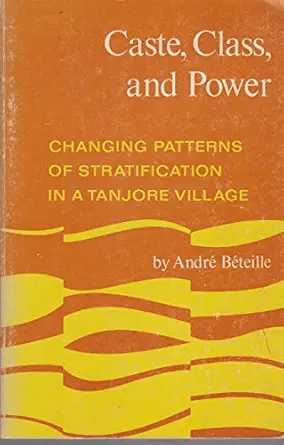
My first encounter with the ideas of Professor André Béteille was in July 1966 in an introductory sociology course at the University of Dhaka (at that time in East Pakistan) through Professor Tom Bottomore’s book, Sociology: A Guide to Problems and Literature (1962). The emphasis on general theory of social stratification for an explanation of the Indian caste system found its empirical reflection, as Bottomore refers to, in the work of Béteille, especially in Caste, Class and Power: Changing Patterns of Stratification in a Tanjore Village (1965).
My second encounter with him was in the Fall of 1975 at Dalhousie University, Halifax where I was writing my Master’s thesis under Professor Bottomore, and he referred to read me Béteille’s “Closed and open social stratification” (1966). Reading Béteille after nine years under the Maple tree, I began to admire his empirical depth, comparative methodology, and theoretical clarity, which reshaped my understanding of social hierarchies in India.
In the Christmas of 1976, I had an occasion to share some of my understanding of Béteille’s work. At that time, I was at York University, Toronto where I was doing my PhD. Professor K. Ishwaran, one of our faculty members, who wrote Tradition and Economy in Village India (1966), invited me for Christmas dinner-- Turkey with cranberry sauce, cooked by his Dutch wife. There we talked about the contribution of both Béteille and his supervisor M. N. Srinivas towards understanding the impact of social change on Indian social stratification.
In order to realistically understand contemporary caste hierarchy, Béteille emphasised the “other factors such as class and power” that “have to be considered as independent variables” (1966). It appeared to me highly useful for comparative empirical research. It creates a distance from traditional essentialist and ideological perspective of inequality.
Borrowed from Max Weber, he focused on multidimensionality of stratification and examined how status, economic resources, and political control interact to shape multifarious social order. This was a tremendous contribution in the field of stratification studies. Though he focused on rural stratification, the model is also applicable to the study of urban social stratification.
It is puzzling that in Bangladesh universities, both sociology and anthropology disciplines overlooked and neglected the Weberian model of multidimensional stratification system: anthropology remained spell-bound under the dichotomous model of rural “ashraf-atraf”; and sociology was locked in the iron cage of simplistic Marxist model of “land ownership” under the name of peasant studies. In spite of teaching Weber’s “Class, Status, Party” (1922/1946) in the universities, there is a marked absence of the application of Weberian model in the study of rural and urban complex social hierarchy. Probably in Bangladesh, this shows the intellectual bankruptcy of these disciplines, which are suffering from morbidity.
In fact, in order to understand contemporary social change in Bangladesh, especially its regime of accumulation under crony capitalism, it is essential to understand the nexus between power and class. The determining power of traditional property ownership in the formation of classes and consequent class consciousness has diminished in Bangladesh.
The notion of political capitalism advanced by Max Weber is also useful in understanding Bangladesh social stratification, especially class formation. The party consciousness along with ruling party affiliation, may give legitimate or illegitimate access to economic resources, thereby determining class position in terms of life opportunities and life style. This in turn, heavily influence commodification of prestige and honour; and becomes marker of status.
The rural and urban dispossession, which is an integral part of neoliberal and crony capitalism’s regime of accumulation, is also the progenitor of emergent lumpen bourgeoisie, whose class position do not correspond with their demeaning status position. Again, the traditional status group in Bangladesh, as Béteille found in his Tanjore village study with respect to traditional caste, suffer from status dislocation, having less access to power and economic resources. The ontology of inequality and hierarchy can best be understood by the Weberian epistemology.
I think study of this process of social change, and its impact on inequality in Bangladesh, is vital towards understanding Bangladesh society. The internationally acclaimed Indian empirical model provided by Béteille can be one of the best guides to study the intersectionality of class, status and power in both urban and rural Bangladesh. It is unfortunate that social sciences in Bangladesh have neglected such a significant social dynamic that affects all our lives.
In March 1989, Professor Abhijit Dasgupta, a colleague of Professor Béteille, facilitated my direct meeting with him. Professor Dasgupta was kind enough to arrange a seminar talk by me in the sociology department of Delhi School of Economics. After the seminar, I paid a visit to Professor Béteille’s office room. He was very warm and hospitable to offer tea to me and my wife. He spoke in Bangla and affirmed his Bangali origin. I felt very comfortable to have a vibe of Bengal. I mentioned to him how I came to know of his work à la Bottomore and Ishwaran. I was so surprised to experience his stock of knowledge mediated by modesty and simplicity. The meeting with professor Béteille during the short-lived spring of Delhi was one of the most memorable events of my life. I wish his conceptual and methodological clarity inspire the young Bangladeshi sociologists to break the chain of ignorance, myopic framework, and the hegemony of intellectual infantilism.
A.I. Mahbub Uddin Ahmed is a professor in the Department of Sociology at the University of Dhaka.
Send your articles for Slow Reads to slowreads@thedailystar.net. Check out our submission guidelines for details.
Can Bangladesh make its plastic waste policy work?
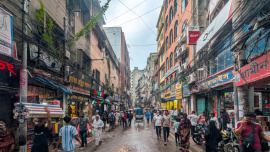
Dhaka accidentally built the city planners now want. Can we make it liveable?

Can Bangladesh produce its own knowledge?
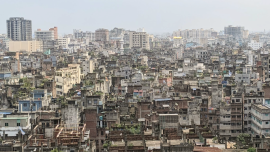
How we are killing Dhaka

Can Bangladesh afford not to invest in Bhola’s gas?
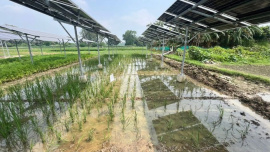
Bangladesh’s renewable policy: Still too little but not too late
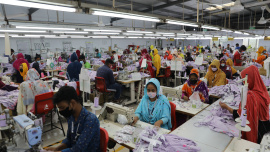
Prabhat Patnaik speaks / Why the Global South must rethink export-led growth
Bhotekoshi flood: Another warning from the Himalayas. Are we listening?
Renewing the Ganges Water Sharing Treaty: What should Bangladesh do?