Capturing the Language Movement: Rafiqul's rare archive
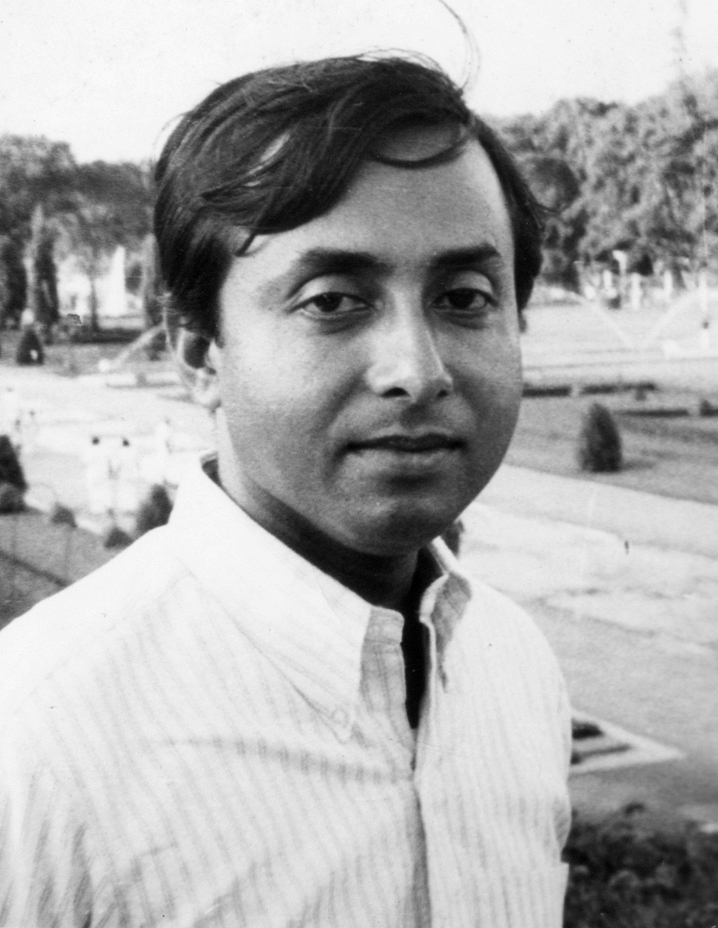
On the morning of 21 February 1952, when the decision was taken to defy Section 144, Rafiqul Islam, a first-year student of the Bangla Department at Dhaka University, felt that this historic moment needed to be recorded in photographs. He had a Voigtländer folding camera. One roll of film in it allowed eight photos. Loading one roll into the camera and keeping another in his pocket, he hurried to the mango tree courtyard of the old Arts Building (now the emergency section of Dhaka Medical College).
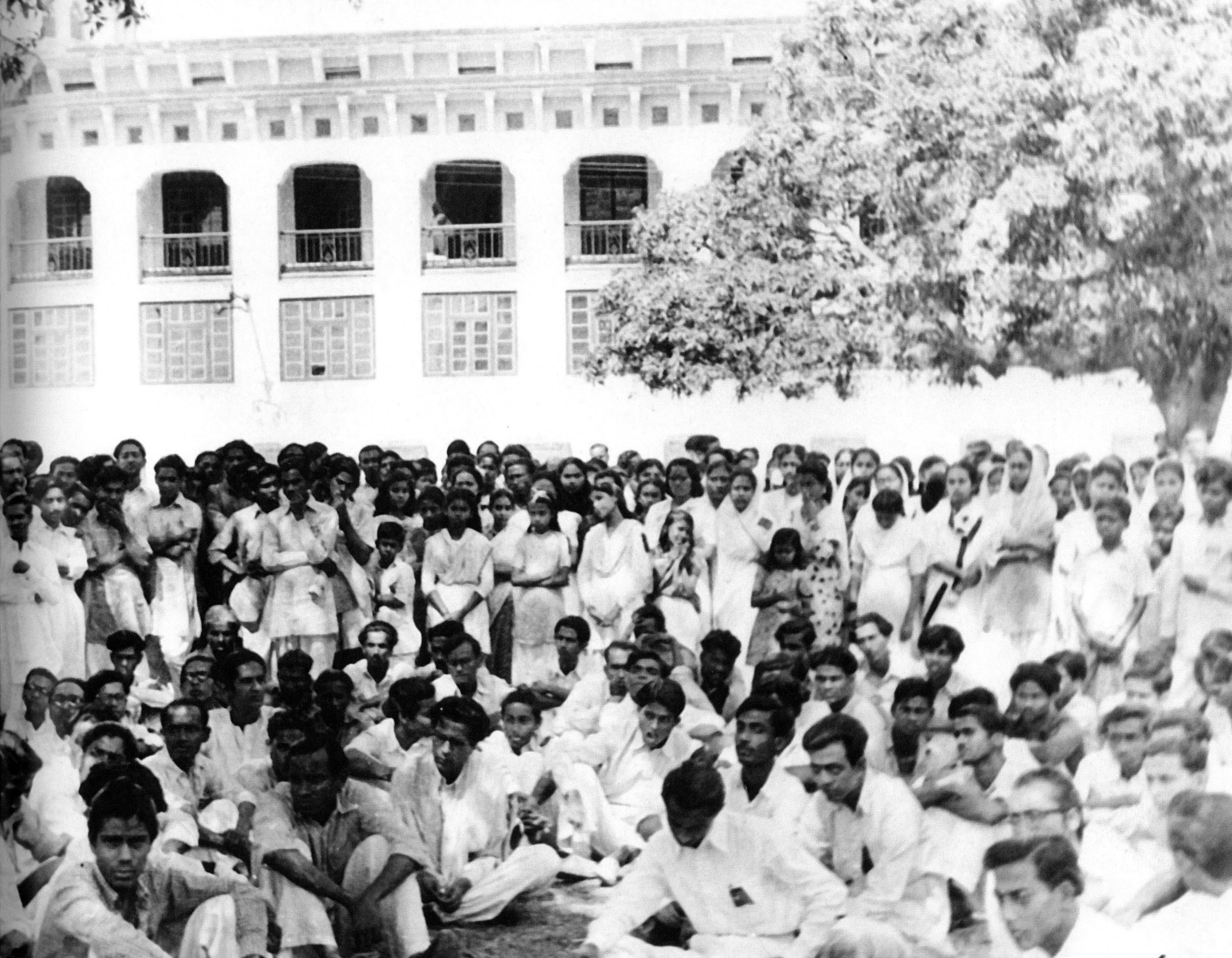
On the morning of Ekushey, a meeting began in the Arts Building premises. The gathering was so crowded that it was not possible to capture the entire scene from the ground. To take a top view, he would have to climb onto the roof of the two-storey building. But there was no staircase leading up to the roof, only a small opening. Through that opening, his friends helped him up. From the rooftop, under the bright Falgun sun, he photographed the student assembly, finishing one roll of film. He then moved into a patch of shade, placed the camera under his shirt, and changed the film.
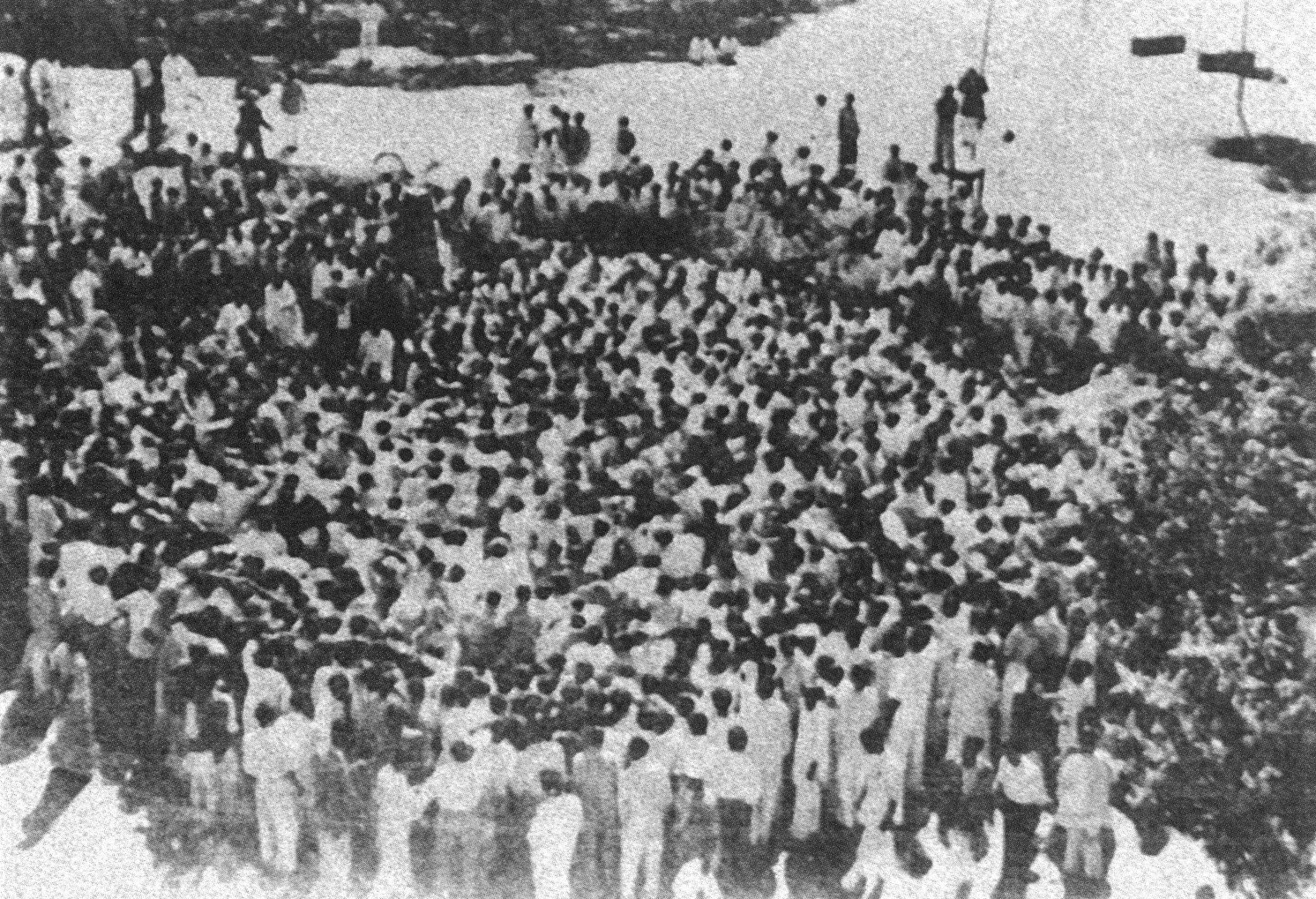
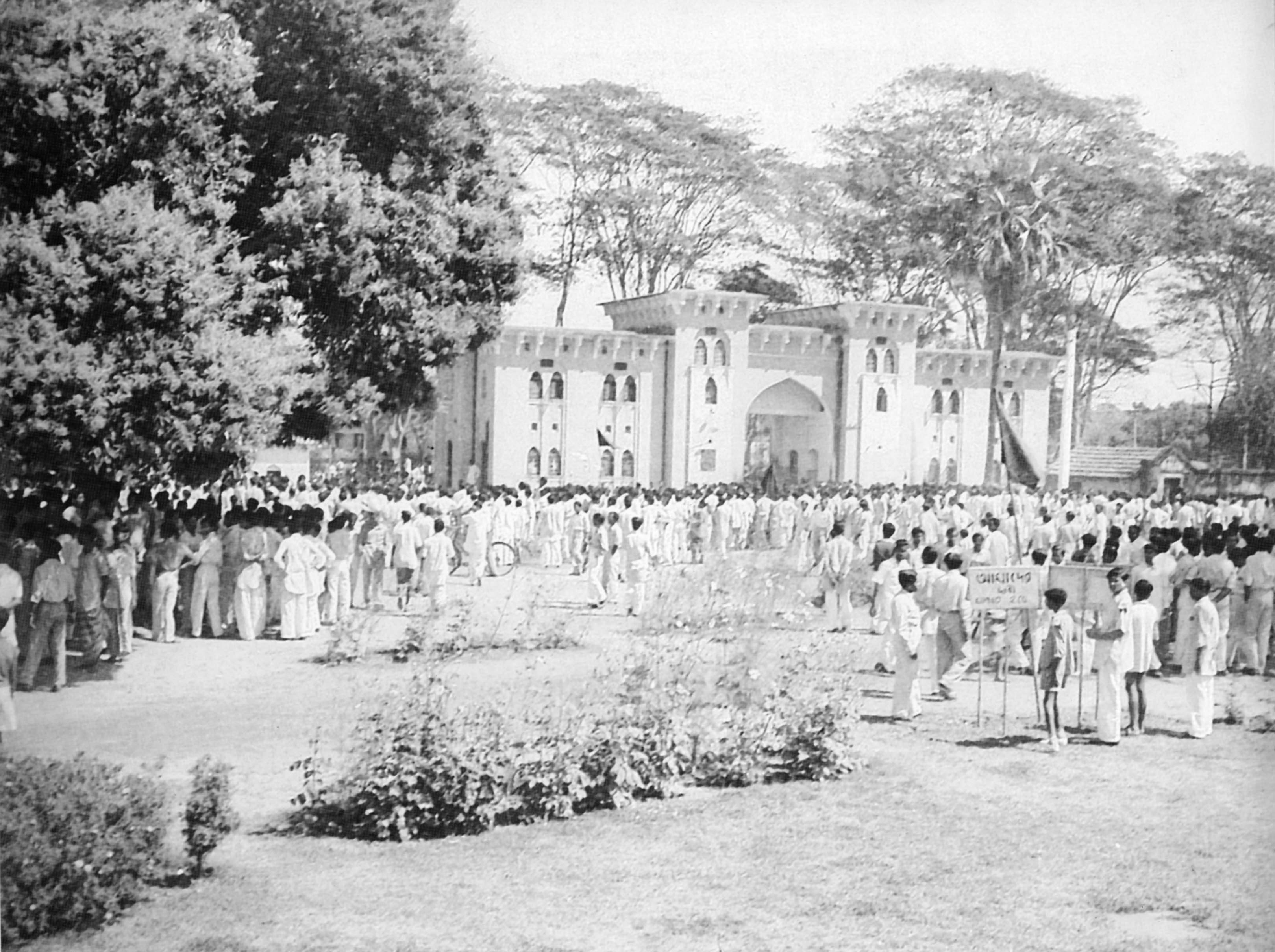
At around 11 a.m. the decision was taken to defy Section 144. The students moved towards the locked iron gate at the main entrance of the Arts Building to break the order. He photographed another roll at that point. Meanwhile, on the other side of the gate, the police began a baton charge, fired tear gas and carried out arrests. From the roof he could not see these scenes, so he was compelled to come down. By then, his film had run out.
All day long, clashes continued between the students and the police and EPR. Rafiqul stood right at the front line of that confrontation. At around three in the afternoon, several armed policemen entered through the gate of the Medical College hostel. They opened fire on the assembled students and public, bullets raining down on them. When the shooting began, he quickly left the hostel grounds and took position at the central entrance of the Medical College building. Within a short while, ward boys brought down a body on a stretcher from an ambulance. The man had been shot in the head. His skull had been blown apart, smoke rising from it; brain matter spilling out. Instead of being taken to the emergency section, the body was carried to a storeroom. It was kept there to conceal the death. Later he learned that it was the body of Rafiq Uddin Ahmed.
Abul Barkat, an MA student in Political Science at Dhaka University, was shot in the thigh and lower abdomen. Along with others, Rafiqul helped carry him to the emergency section. Blood was pouring from Barkat’s body. Writhing in pain from the bullet wounds, he repeatedly asked for water. His face was drenched in sweat, like drops of rain. He spoke clearly: “Please inform at the Bishnupriya Bhaban in Purana Paltan. My sister and brother-in-law are there.” Rafiqul took someone’s bicycle and went to Bishnupriya Bhaban. Barkat’s brother-in-law was not at home, so he informed his sister. In the evening his brother-in-law came to the hospital. That very night, Barkat died in the operating theatre.
Rafiqul then became anxious about the safety of the photographs he had taken that day. Police and intelligence officers were everywhere. It was not safe to keep the exposed film at home; a search could take place at any time. Thinking quickly, he went to Zaidi’s Photographers at 19 Topkhana Road, then the most renowned studio in Dhaka. Its owner, Sagir Ali Zaidi, was from Uttar Pradesh in India. Rafiqul left the two rolls of film at the studio, took new film, and returned home. He hid the film in a place where it would not be easily found. Soon afterwards, two intelligence officers arrived at his house. They asked whether he had taken any photographs. Handing over his camera, Rafiqul replied, “There was no film, so I could not take any pictures.” Finding no film in the camera, the officers left.
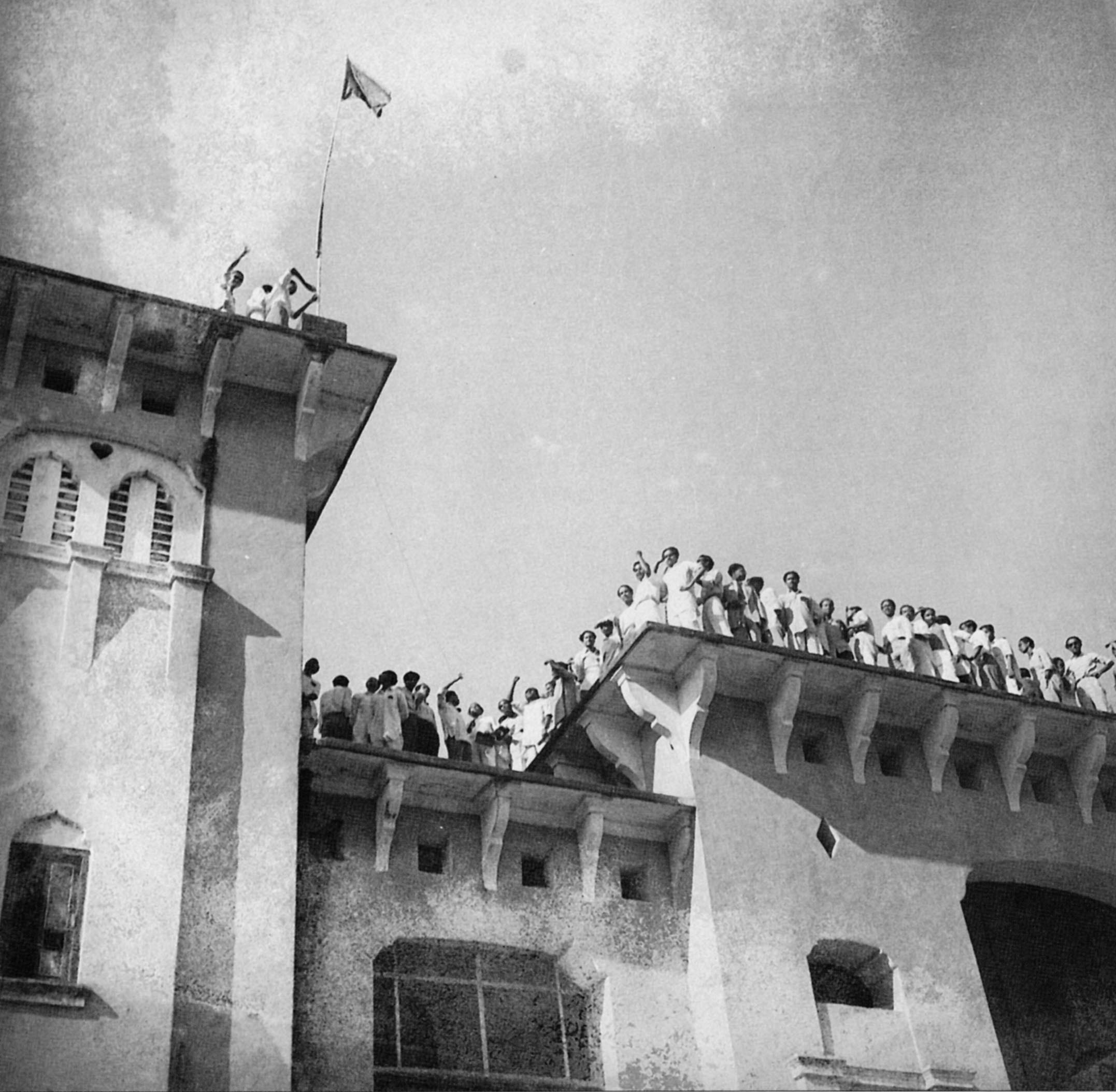
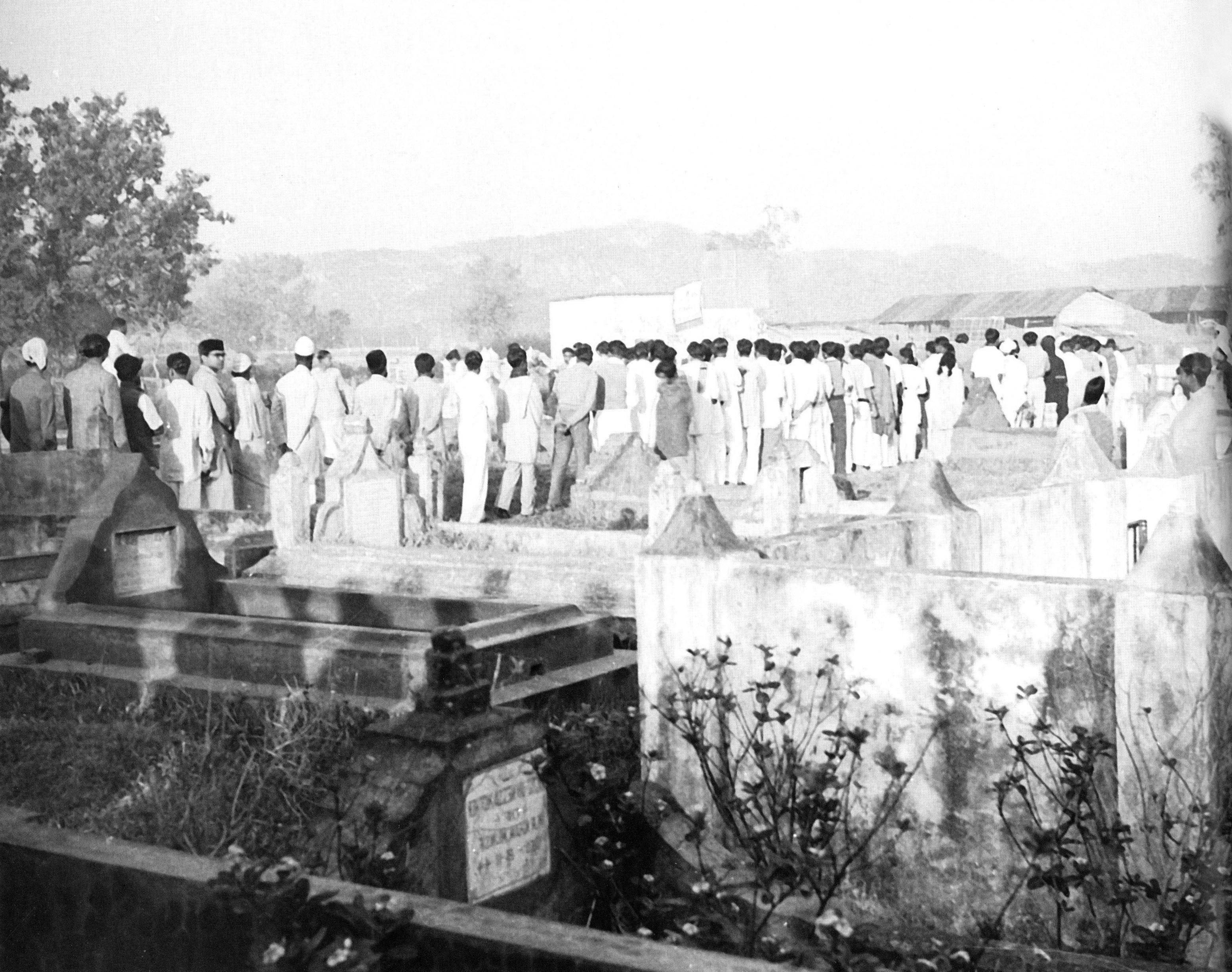
The next day, 22 February, Dhaka erupted in a tide of mourning and resolve for the martyrs. As daylight broke, people poured onto the streets like a breached flood. Rafiqul loaded fresh film into his camera and went out again. Ignoring the hostile glare of the police, students gathered at the mango tree courtyard of the old Arts Building. In protest against the killing of students, a mourning flag was hoisted atop the building. A funeral prayer in absentia was held in the grounds of Dhaka Medical College. After the prayer, a mourning procession was brought out. With a heavy heart, Rafiqul photographed those sombre moments.
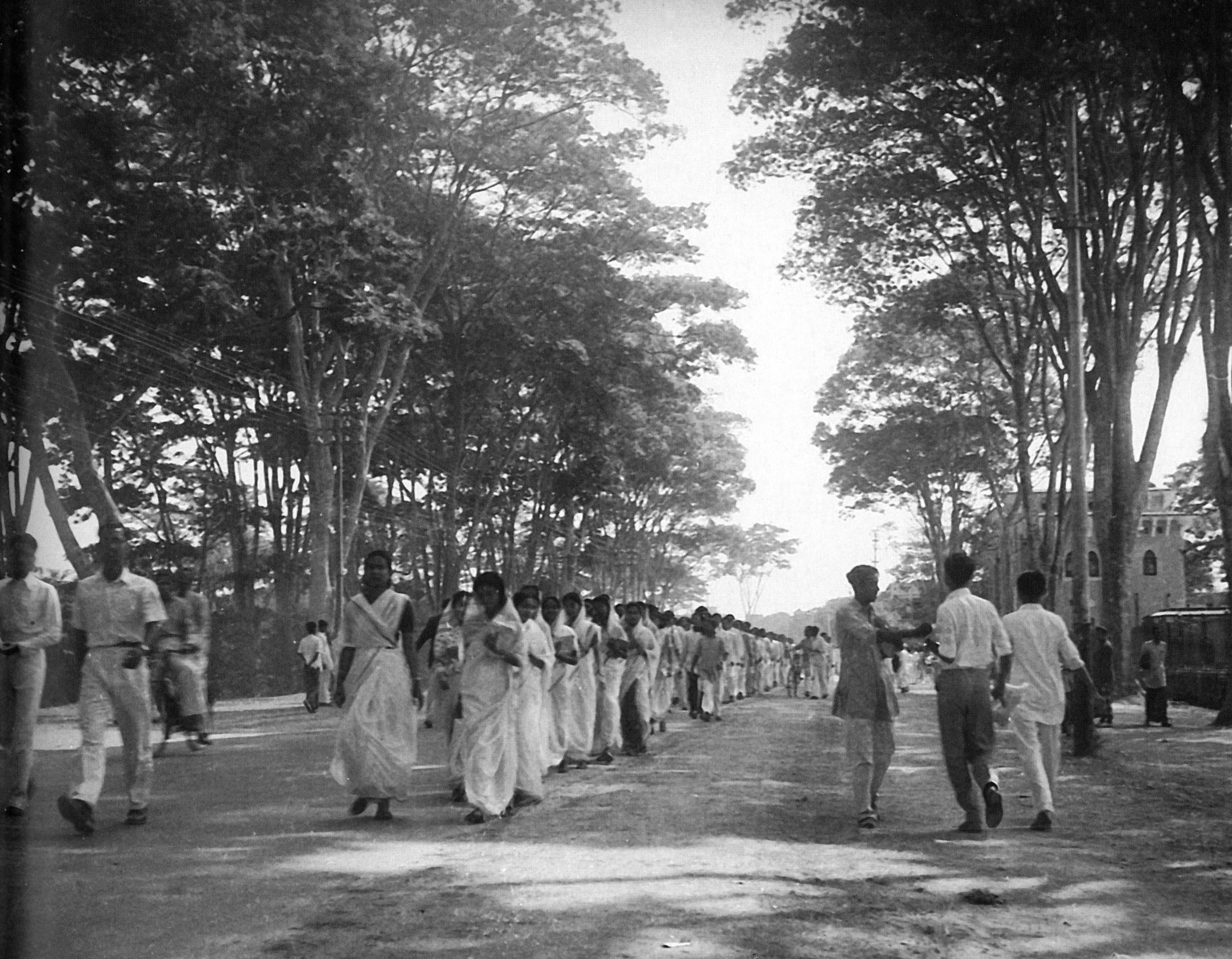
He continued to photograph Ekushey commemorations every year until 1956. He captured the Shaheed Minar built in 1953, processions of Dhaka University women students carrying festoons, the construction of a Shaheed Minar by students of old Dhaka College and Eden College, the procession of Dhaka Art College students at Paltan Maidan, street processions in 1954, and in 1956, the laying of the foundation of the present Shaheed Minar. Almost all the major photographs of Ekushey from that period were taken by him. This body of work, written in letters of blood, is now preserved at the Language Movement Museum of Bangla Academy. Most of his photographs also appear in CM Tareq Reza’s album Ekushey: A Pictorial History of the Language Movement (1947–1956).
The camera with which Rafiqul photographed the Language Movement had been presented to him in 1949 by a brother who had returned from Britain. It was fitted with a 3.5 Colour Skopar lens. As the camera was not automatic, he had to take into account the lens and distance settings while shooting that day. In 1943, at just nine years of age, Rafiqul had first held a Kodak Six-20 box camera. From that time, owing to his father’s posting, he lived in Dhaka. His father, Md Zulfikar Ali, was a doctor at the Railway Hospital. During the Language Movement of 1948, the headquarters of the State Language Action Committee was at Fazlul Huq Hall. Directly opposite the hall, in the Railway Colony, stood their residence. Though still a schoolboy then, the heat of the movement touched his awakening adolescence. Living in the campus area, the currents of every protest and struggle at Dhaka University flowed through his veins.
Rafiqul was an eyewitness to the Language Movement of 1948. At the time he was a Class Ten student at St Gregory’s School. In an interview with the noted journalist Baby Moudud, he spoke about those events. The interview was published on 21 February 2011 by BDNews.
On the morning of 11 March 1948, when students of Dhaka University laid siege to the Secretariat, Rafiqul rushed there out of intense curiosity. The Secretariat stood near his home. That day the students were baton charged and tear gas was fired at them. Numerous students were arrested. All this unfolded before his eyes. It was there that he first saw Bangabandhu. As students lay down at the entrance to block access, he noticed a student leader stretching himself out on the ground. He also saw that same leader later taking an injured person by rickshaw to the Medical College. At the time Rafiqul did not know who he was. Later he learned his name was Sheikh Mujibur Rahman.
Rafiqul wrote throughout his life about the Language Movement. Reading his work, one forms an impression of the man. It makes one want to hear from him directly about those turbulent days of struggle. When I telephoned him, he said, “Come to the University of Liberal Arts in Dhanmondi tomorrow.” On the morning of 18 March 2017, I went to ULAB to meet him.
In response to my questions, he said, “From 1 February the whole of Dhaka was vibrant for almost the entire month. On 4 February the first student meeting demanding Bangla as the state language was held at the mango tree courtyard of the Arts Building. That day I took several photographs of the protest meeting marking Flag Day and of the procession of students marching around the city. On 4 February it was announced that the budget session of the East Bengal Legislative Assembly would be held on 21 February. We decided to observe that day as State Language Day and to submit a memorandum to the Assembly. To make this programme successful, we observed Flag Day on 11 February and organised protest marches with students from nearly all schools and colleges in Dhaka.”
After a brief pause, he continued, “From 1 to 19 February there was no police attack on the movement. On the morning of 20 February, while sitting at Madhu’s Canteen in the old Arts Building, I heard the announcement that Section 144 would be imposed on 21 February. No meetings, processions or demonstrations would be allowed for a month. The announcement was being broadcast over a loudspeaker from a horse carriage. Immediately we erupted in protest. Our slogan rang out: we do not accept Section 144, we will not accept it. An emergency meeting was held at the mango tree courtyard. It was decided that the following morning a student assembly would determine whether Section 144 would be defied. We spent the whole night in a room at Dhaka Hall making festoons and banners of various kinds: ‘We demand Bangla as the state language’, ‘Free the political prisoners’, ‘We do not accept Section 144’, and so on. The next day at 11 a.m., the historic meeting began under the chairmanship of Gaziul Huq. The main gate of the Arts Building was locked and the entire area was surrounded by police and EPR. Students from the university and from various schools and colleges climbed over the wall near the old railway line to gather at the mango tree courtyard.”
Rafiqul’s story went on. He also spoke of his active participation in the Liberation War. Listening to his account of being captured and tortured by the Pakistan Army in August 1971 was chilling.
Rafiqul’s life has been a remarkable one. In 1956 he completed his Master’s degree in Bangla from Dhaka University, standing first in the first class. In January 1958 he joined the same department as a lecturer. From that time, he began his research on the poet Kazi Nazrul Islam. He became the first Nazrul Professor at Dhaka University and the founding Director of the Nazrul Research Centre. He wrote several important books on the poet’s life and works, including Nazrul Nirdeshika, Nazrul Jiboni, and Kazi Nazrul Islam: Life and Literature.
In 2018 he was honoured as a National Professor. For his outstanding contributions to research, literature and education, he received the Ekushey Padak in 2001 and the Independence Award in 2012. He was also awarded the Bangla Academy Award, the Nazrul Academy Award and the International Mother Language Medal, among many other honours. He served as Vice-Chancellor of the University of Liberal Arts Bangladesh. He was Director General of Bangla Academy and, towards the end of his life, served as President of the institution.
On 21 February 1952, Rafiqul took sixteen photographs. It had never crossed his mind that students might be shot for demanding their language. As his film had run out, he could not photograph the fatally wounded Barkat or the slain Rafiq that day. He considered this one of the great tragedies of his life. I asked him about the copyright of his photographs. Rafiqul said, “I took these pictures to preserve history. If anyone now wishes to use them for the sake of history, they may do so. There is no need to seek my permission. It is enough to mention the credit line.”
Listening to him, one cannot help but bow one’s head in respect.
Shahadat Parvez is a photographer and researcher. The article is translated by Ystiaque Ahmed.
Send your articles for Slow Reads to slowreads@thedailystar.net. Check out our submission guidelines for details.
How Milad-un-Nabi shaped Muslim cultural life in colonial Bengal
What Rashomon teaches us about truth and human behaviour
Why Chittagong never became a maritime city
The many worlds of Ghulam Murshid
Operation Jackpot: How Bangladesh’s naval commandos struck at Pakistan’s lifeline in 1971
The Yellow Butterfly: How Sheba shaped my world growing up
What Bangladesh’s historic Test victory in Australia means for Bangladeshi-Australians
Remembering Sumit Sarkar, a historian who questioned orthodoxy
The unfinished histories of Partition