Jinnah vs Fazlul Huq: The forgotten debate over Pakistan

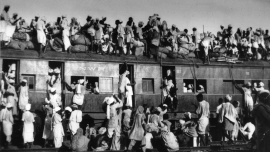
In the wake of Bangladesh’s mass uprising of 2024, the partition of India in 1947 has re-emerged as a subject of renewed political and historical interest. A range of narratives has surfaced that seeks to frame the 2024 uprising not in continuity with the popular movements of 1971 or 1990, but instead by drawing parallels with the political moment of 1947. Some of these voices go further, presenting the events of 1947 and 2024 as part of a shared historical trajectory and claiming joint authorship of both moments.
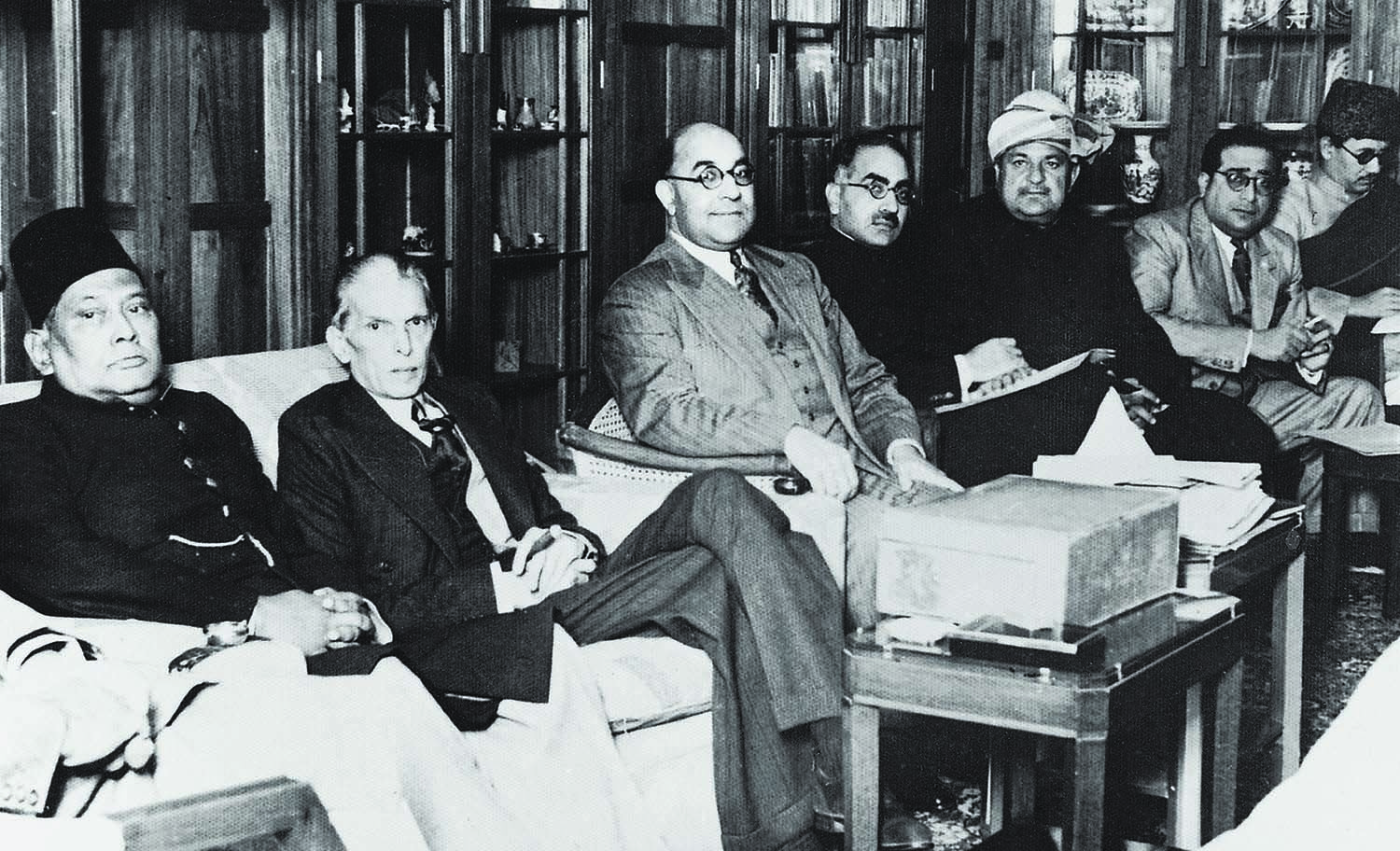
Against this backdrop, the noted researcher Altaf Parvez turns to the past to interrogate how Islamist parties positioned themselves during the creation of Pakistan in 1947. He has already written in four instalments on the three-way debate between M. A. Jinnah, Maulana Maududi, and Maulana Madani. In the final piece of this series, he briefly turns to the conflict that unfolded in Bengal during the Partition period between Jinnah and the Muslim League on the one hand, and the Krishak Praja Party and Fazlul Huq on the other.
Editor, Slow Reads
Part 1 - Jinnah vs Madani: The forgotten Muslim debate over Pakistan
Part 2 - Jinnah vs Maududi: The forgotten Muslim debate over Pakistan
Part 3 - Madani vs Maududi: The forgotten Muslim debate over Pakistan
Part 4 - Those who attempted to assassinate Jinnah and called him “Kafir-e-Azam”
Before and after 1947, there were many Islamist claimant parties in the Indian subcontinent. Alongside them existed a few parties that, while Muslim-majority in composition, also included non-Muslims, though in smaller numbers. The Unionist Party of Punjab and the Krishak Praja Party (KPP) of Bengal can be placed in this category. Even before the formation of the KPP, the public meetings that Fazlul Huq held across East Bengal on issues of agriculture and peasant welfare were attended in large numbers by Namashudras as well, as they too were oppressed by zamindars.
Following its initial formation and reorganisation, by 1934–35–36 Fazlul Huq had emerged as ‘Huq Saheb’, a mass leader of Bengal through the praja movement. This found its structural expression in the first broad-based election in Bengal’s history in 1937. Although his party secured fewer seats than the Muslim League, he emerged as the most popular leader in Bengal. During this period, he maintained organisational links with both the Congress and the League; at the time, it was possible for one individual to be associated with multiple parties. However, the KPP remained very much ‘his own party’.
After winning the election, and in the face of Congress’s reluctance, Fazlul Huq first formed a government with the League and later with the Hindu Mahasabha, becoming Prime Minister of Bengal. Ultimately, however, his government fell due to opposition from the League and Jinnah.
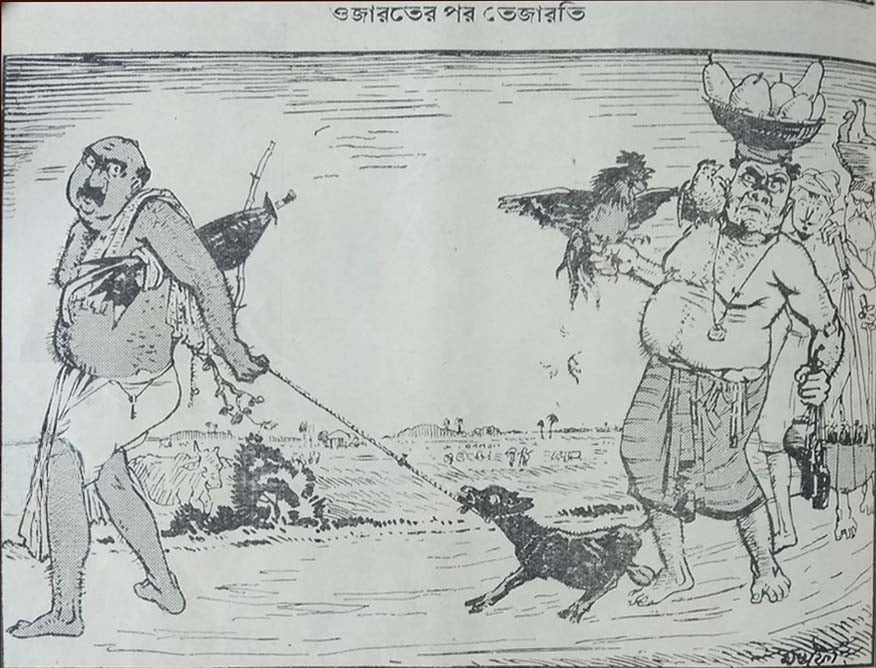
Fazlul Huq’s conflict with Jinnah was not confined merely to the question of provincial autonomy within the League. From the very beginning of their political lives, the trajectories of the two men diverged. Huq’s political career began with the Khilafat Movement and praja politics, and his organisational focus lay primarily in provincial politics. Jinnah, by contrast, was indifferent to the Khilafat Movement and was chiefly concerned with power politics at the centre.
Although both began their political lives within a non-communal framework, after 1937 Jinnah advanced the Pakistan Movement grounded in Muslim nationalism through the Two-Nation Theory. Huq, however, was marked by deep contradictions. While calling for separation from the League platform through the Lahore Resolution, he simultaneously remained nationally associated with ‘Indian nationalist’ Muslim-majority organisations such as the Jamiat-e-Ulama-e-Hind, the Khudai Khidmatgar, and the Momin Conference.
In pre-1947 politics, these ‘Indian nationalist’ Muslim-majority organisations, in terms of organisational reach, were ahead of the League across much of India. Yet they lacked a central leader capable of confronting Jinnah. As a result, they failed to stem the tide of the Pakistan Movement. As part of this failure, in the 1946 elections the KPP secured only four seats in Bengal, while the League won 113 seats.
Even in the face of this League wave, however, Huq Saheb won both his seats, demonstrating that he remained the principal mass leader of Bengal’s agrarian society. Before the election, Jinnah had effectively declared war against Huq. Suhrawardy, Nazimuddin, Ispahani, and Akram Khan carried that battle down to the village level. To prove the Huq–Shyama Progressive Coalition government a failure in Bengal, the British administration also displayed heightened activism.
In the middle of the last century—during the peak phase of its development—the Bengal Provincial Muslim League was divided into two sub-factions centred around a few individuals. One may be described as the ‘Calcutta group’ led by Suhrawardy, and the other as the ‘Dhaka group’ led by Khwaja Nazimuddin. There were clear economic and social differences between these two factions. The former represented the emerging middle class within the League, while the Khwajas primarily drew support from large wealthy families and landed elites.
Although these two groups were constantly engaged in intense internal conflict, they shared a common political adversary: ‘Huq Saheb’.
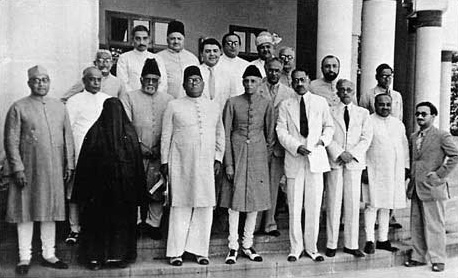
Under the patronage of Jinnah, Suhrawardy, and Hashim, hundreds of public meetings were organised across East Bengal during this period against Huq, portraying him as a traitor to the Muslims. Evidence of how the League’s anti–Huq Saheb, communally charged propaganda further polluted Bengal’s communal atmosphere can be seen in the riots that later erupted in Noakhali and Dhaka.
Huq’s relationship with Jinnah deteriorated sharply in September 1941. Among the many causes of this conflict was the question of Muslim policy towards the British Raj during the Second World War, particularly in July of that year. As Prime Minister, Huq favoured unconditional support for the British war effort. Jinnah, on the other hand, wanted to use the war as leverage to bargain with the British over the Pakistan question, while keeping exclusive control over decision-making on this issue. In December, Fazlul Huq was expelled from the League.
In February 1942, Jinnah visited Sirajganj and accused Fazlul Huq at a public meeting of betraying the Muslims of India. Around the same time, Suhrawardy was seen mobilising public opinion against Huq in Calcutta.
Eventually, the League succeeded in removing Fazlul Huq from power in 1943. Earlier, on 20 June 1942, Huq had sent a letter to League leaders in various provinces accusing Jinnah of running the party like Emperor Pharaoh. Since 1937, Jinnah had steadily expanded the powers of the party president within the League’s constitution, making Huq’s accusation far from baseless.
During this period, Fazlul Huq even filed a court case challenging Jinnah’s abuse of power within the League. He withdrew the case in 1946. However, before that, during court proceedings on 2 February 1945, Huq described the Muslim League as a “reactionary organisation”. His argument was that, through the Pakistan movement, the League had adopted a reactionary position within an undivided India. Ironically, he rejoined the same party the following year. By then, after sustained attacks from the League, he was politically weakened. Congress also bore responsibility for his political defeat: nationally, Congress leaders accepted the Two-Nation Theory in practice by elevating Jinnah as the sole spokesman of the Muslims, while in Bengal they aided the League’s growth by refusing to form a government with Huq Saheb.
One of Jinnah’s key political strengths was his strategic use of economic considerations in shaping Bengal’s politics. During the 1946 elections, he mobilised major Urdu-speaking business families—such as the Adamjees and the Ispahanis—in support of the League, indirectly weakening the KPP. Alongside the League’s older propaganda outlets (Star of India, Azad, and others), Abul Hashim launched a new weekly, Millat, which played a significant role in popularising the idea of Pakistan. To counter this, Huq Saheb brought out Nabajug, but with little success.
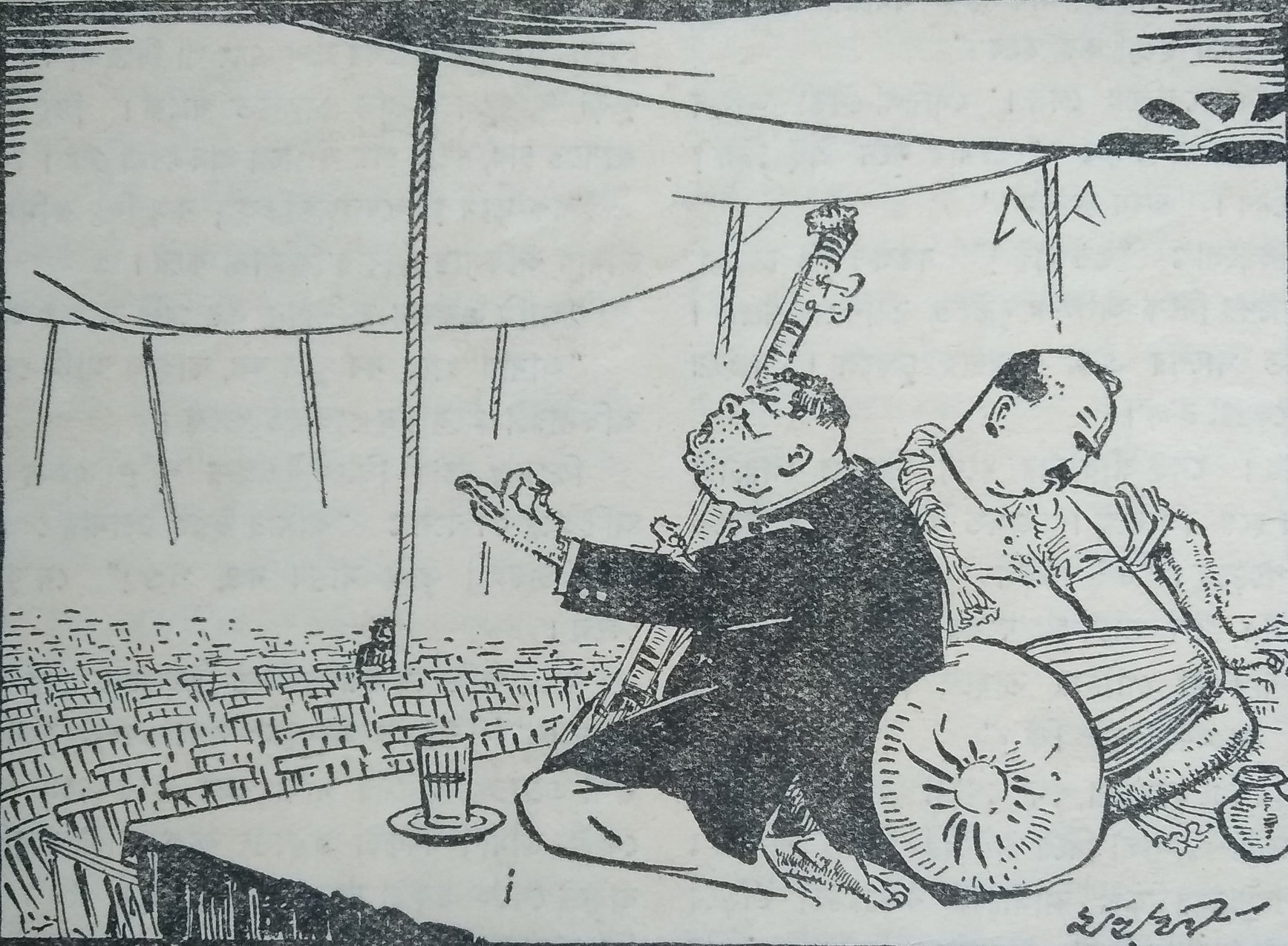
To draw Muslim votes away from the KPP, the League brought Maulana Sabbir Ahmed Usmani from the United Provinces. In the face of the League’s electoral surge, the KPP could not even field candidates in all constituencies; it managed to contest only 43 seats, and 63 per cent of its candidates forfeited their deposits.
Although the League was the KPP’s principal rival, Huq, observing the growing popularity of the Pakistan idea on the ground, began claiming at public meetings that he himself was the originator of this concept through the Lahore Resolution. This only added momentum to the League’s wave.
At the same time, the KPP’s core political appeal—its demand for the abolition of the zamindari system—lost much of its distinctiveness when the League incorporated the same demand into its manifesto.
Beyond the failure in the pre-Partition elections, another major failure of Huq in the subsequent period was his inability to play a decisive role in preventing the partition of Bengal—despite his desire to see his beloved city of Calcutta remain with East Pakistan. Although the Lahore Resolution he presented envisaged the creation of multiple Muslim-majority states, when Jinnah narrowed it down to a single Pakistan by 1946, hardly any major Bengali politician opposed him, apart from Abul Hashim, the League’s provincial general secretary, and Jogendranath Mandal. At that time, Fazlul Huq sought to move forward with an initiative to establish an all-party government in Bengal, but neither the League nor Congress was willing to accord him the importance he expected. In this way, both nationally and regionally, Jinnah’s project emerged victorious.
Altaf Parvez is a researcher specialising in history. The article has been translated by Samia Huda.
Send your articles for Slow Reads to slowreads@thedailystar.net. Check out our submission guidelines for details.
Women’s voices in Nazrul’s Dhumketu
How Milad-un-Nabi shaped Muslim cultural life in colonial Bengal
What Rashomon teaches us about truth and human behaviour
Why Chittagong never became a maritime city
The many worlds of Ghulam Murshid
Operation Jackpot: How Bangladesh’s naval commandos struck at Pakistan’s lifeline in 1971
The Yellow Butterfly: How Sheba shaped my world growing up

What Bangladesh’s historic Test victory in Australia means for Bangladeshi-Australians

Remembering Sumit Sarkar, a historian who questioned orthodoxy