


MOHAMMAD ABDUS SALAM
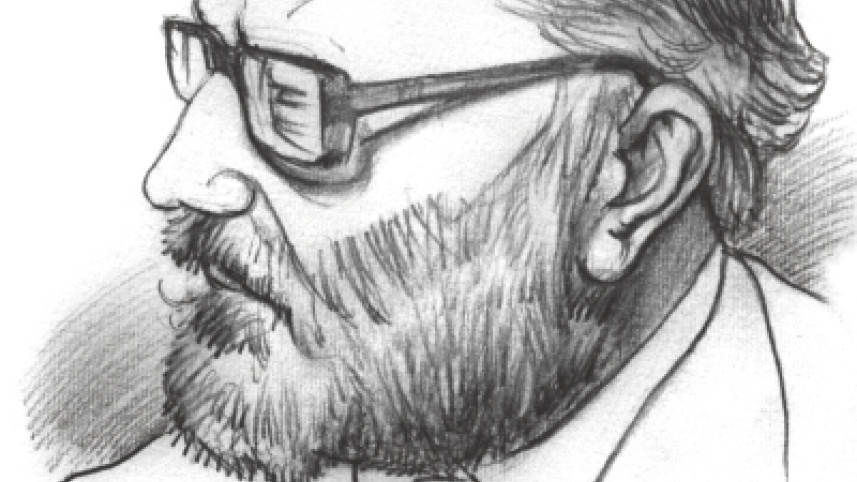
A significant figure in 20th century theoretical physics, Mohammad Abdus Salam was the first Pakistani to receive a Nobel Prize in science and the second from an Islamic country to receive any Nobel Prize. Salam made a notable contribution in quantum field theory and some of his significant achievements include the Pati–Salam model, magnetic photon, vector meson, Grand Unified Theory, work on supersymmetry and, most importantly, electroweak theory, for which he was awarded the Nobel Prize. As a teacher and science promoter, he is remembered as a founder and scientific father of mathematical and theoretical physics in Pakistan during his term as the chief scientific advisor to the president. Professor Salam used to consider holidays, entertainment and parties deductible so that he could accommodate more of his works that truly mattered to him in his life. Even until shortly before his death, Salam kept contributing to the world of Physics and kept undertaking a volume of activities to advocate for the development of science in Third-World countries.
"From time immemorial, man has desired to comprehend the complexity of nature in terms of as few elementary concepts as possible.

Scientific thought and its creation is the common and shared heritage of mankind.
The creation of Physics is the shared heritage of all mankind. East and West, North and South have equally participated in it. In this respect, the history of science, like the history of all civilisation, has gone through cycles.
Alfred Nobel stipulated that no distinction of race or colour will determine who received of his generosity."
Source: Wikipedia and Brainy Quotes
 For all latest news, follow The Daily Star's Google News channel.
Comments