


Am I turning into my mother?

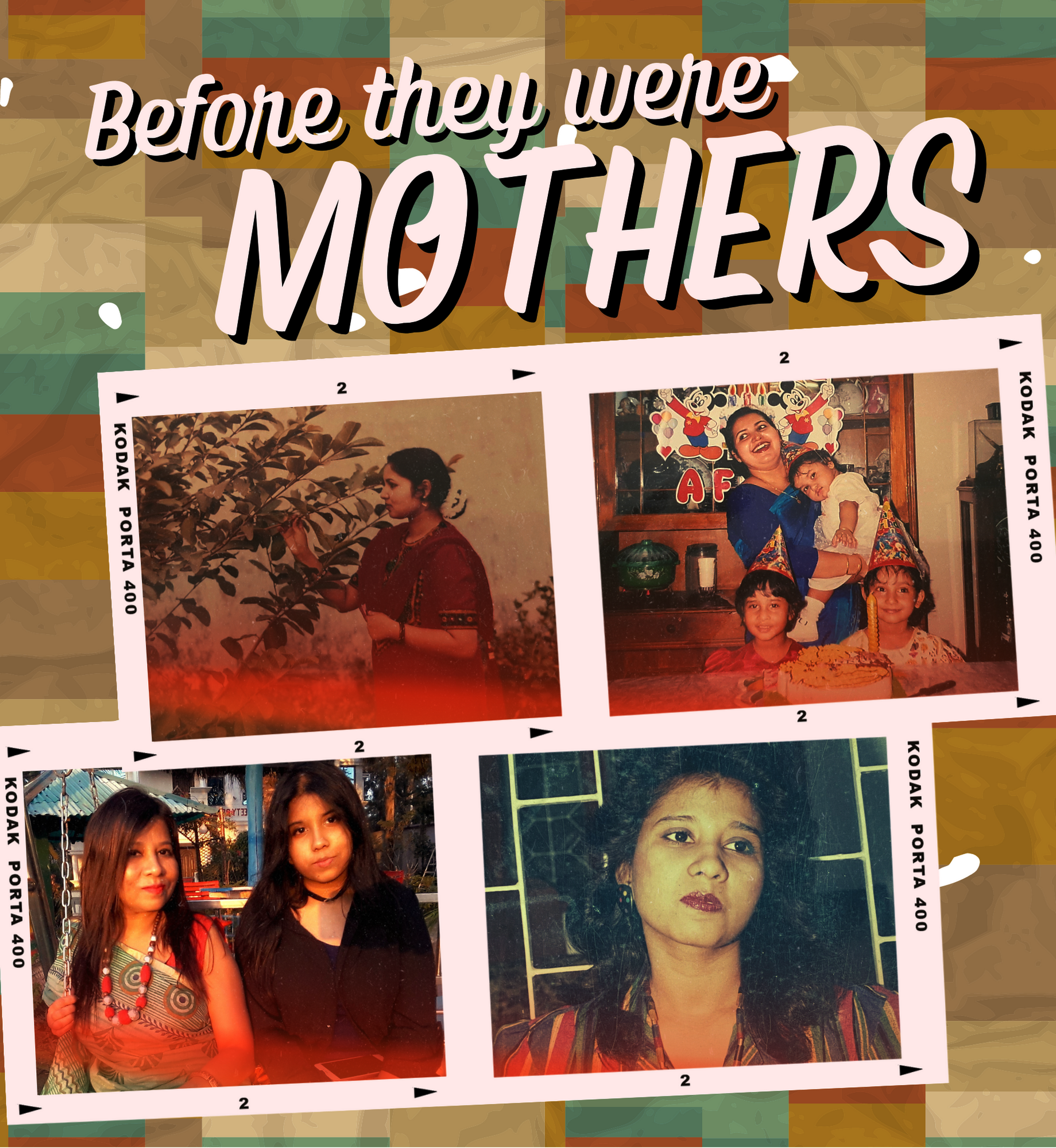
My mother used to ruin most of my school events by drawing eyeliner under my eyes. In every childhood photo taken on her digital camera, you’d see a little girl with dramatic kohl-stained tear cheeks, wrapped in one of her sarees, which she had tailored to my size. At 20 years of age, I wear my eyeliner dark and bold, something my angsty younger self would probably never have predicted. I obsess over every little detail of my life and get overly emotional over World War II films. More shockingly, I find myself saying, “that’s too sweet” on the first bite of a dessert. Eventually, in moments of eerie silence, the realisation comes quite dauntingly that I’m turning into my mother.
The paradox of turning into the very woman you spent your teenage years resisting can be quite an unsettling feeling, one you can’t easily make peace with. The epitome of teen angst is the arguments over clothes, slammed doors, and dramatic meltdowns. Much of adolescence becomes a tug-of-war between who we think we are and who our mothers expect us to be. Rebellion becomes instinctive, whether in style, opinions, or emotions. And then, somewhere in your late teens, you suddenly find yourself voluntarily mirroring her habits; getting anxious over the most trivial matters, consuming bottomless cups of tea as a magical fix to all your problems, and, in my case, inheriting her fear of fast-moving buses on Dhaka’s main roads.


As you grow older, the lens through which you saw her slowly begins to shift. The tables turn, and suddenly you feel anxious when she is outside and not picking up your calls. You’re the one reminding her to take her medication and watch her health. You begin to understand that you haven’t just adopted her habits, you have inherited her nervous system. Many of us carry our mother’s anger, the sharpness of her irritation, or her ability to leave a room thunderstruck by rage. Others call their mothers “overbearing”, only to realise they’ve developed the same perfectionistic urge to control every detail. And some of us receive the best parts: her empathy, her endurance, and her capacity to love.
The complexity of it becomes more visible over time. Her work ethic is revealed through your inability to rest until the task at hand is completed. The way you enter a room and immediately read the emotional temperature might be an echo of her compassion and selflessness. It’s not just quirks, but her characteristics that your younger self probably ridiculed at some point. I used to wonder why my mother refused to sit down before everyone had eaten until the first time I cooked for a group of people. Between analysing whose plate needs a refilling and whether there’ll be enough for everyone, my appetite became secondary, like hers.
Of course, the transformation isn’t comforting for everyone. Many people have rather complicated relationships with their mothers, which can evoke a sense of discomfort when they see someone with a conventional, healthy dynamic. You’re not used to letting your guard down around her, let alone finding similarities that you were adamant to accept. And when you do see the parallels, it’s hard to name the emotions that you never learned how to describe or share, only feel. I’ve seen the women in my life express different forms of maternal warmth, and it’s fascinating to see how their own histories shape their instinct to nurture.
There is also the idea of epigenetics, that some emotional responses are shaped by the experiences of the women before us. Our personalities are not entirely shaped by our mothers, but there are certain emotions that often feel like they’ve lived in us long before we could name them. It becomes a concept of generational pattern, something epigenetics explores for those interested in the science behind our emotional inheritance.
Despite the dynamic we have with our mothers, these suddenly evoked feelings of becoming her make you see her through a lens of identity, not duty. The first person I ever critiqued was her, holding her accountable for her words, choices, and actions. Little by little, through smudged eyeliner and the sarees borrowed from her, my scrutiny turned into understanding. Becoming even a fraction of her made me realise that resemblance doesn’t have to be a warning, but it can be its own subtle form of reconciliation.
Reference:
Arkansas Advocate (2023). Understanding epigenetics: how trauma is passed on through our family members
Zara Zubayer is a half-pianist, occasional grandma (she knits), and collector of instruments she never learns. Suggest a new hobby she won’t commit to at zarazubayer1@gmail.com
 For all latest news, follow The Daily Star's Google News channel.
Comments