

Faltering education is a national emergency, fix it now

When the foundation of governance of the state is shaky, public services such as education and healthcare also become weak and tottering. The general dysfunctionalities of state operations in Bangladesh are copiously reflected in the education system. The impact of failures in education, however, is much graver than just dysfunctional services. It puts in jeopardy the life prospects of the next generation and places at risk the future of the nation.
Long-standing Reform Crisis
The crisis in our education has been much discussed for a long time. A quick historical sketch will bear this out.
There are idealised and romanticised narratives of the ancient education system of the subcontinent from the Hindu, Buddhist and Islamic past – the residential monastic and gurukul institutions and maktabs and madrasas -- under monarchies and kingdoms. In the feudal societies of the time, education was the preserve of a tiny privileged elite. Moreover, emphasising theology and religion, it failed to promote new knowledge and discovery that would nurture science and technology and adapt to the evolving modern world. It is the Western colonisers who introduced modern education in our part of the world in the 18th century, but with a limited scope and aim to serve the purposes of the colonial administration. The quasi-colonial rule of Pakistan since 1947 saw essentially the colonial system continuing, keeping the opportunities, scope and purposes of education restricted.
In independent Bangladesh, the education commission headed by Dr. Qudrat-e-Khuda was tasked in 1972 to design an education system appropriate for a new nation. The commission submitted its report to the government in 1974. The assassination of President Bangabandhu Sheikh Mujibur Rahman in 1975 and the political shift that followed sent the Khuda Commission report to the archive. Since then every military and elected political regime has appointed one or more education reform commissions. We may recall the long list of these commissions – Kazi Zafar Commission (1978) under General Ziaur Rahman, Mazid Khan Commission (1983) and Mofizuddin Ahmed Commission (1988) under General H.M. Ershad, and Shamsul Haq Commission (1997) under the first Sheikh Hasina Government (1996-2001). Two commissions were appointed -- M.A. Bari Commission (2001) and Moniruzzaman Mia Commission (2003) -- by the BNP-Jamaat coalition government (2001-2006). The last was the Commission co-led by Prof. Kabir Chowdhury and economist Quazi Khaliquzzaman Ahmad appointed in 2009 during Sheikh Hasina’s second term. The 2010 National Education Policy based on the commission’s proposals still remains in operation.
In retrospect, it can be said that none of these commissions foresaw a basic change in the education system; they anticipated incremental change and some reform essentially within the existing structure. There was no vision of transformative change in respect to the right to education, the state’s obligation to fulfil this right, new thinking about the status and role of teachers, and decentralised education governance. It was also interesting that none of these were debated and approved by Parliament except the last one, and a systematic and concerted effort was not initiated to implement the recommendations.
In the case of the Shamsul Haq Commission, established during the first Hasina administration, the report was submitted to the government in 1998. Subsequently, a government-appointed committee drafted a national education policy in 2000, taking the Commission’s recommendations into account.
Faltering Reform Decision-making
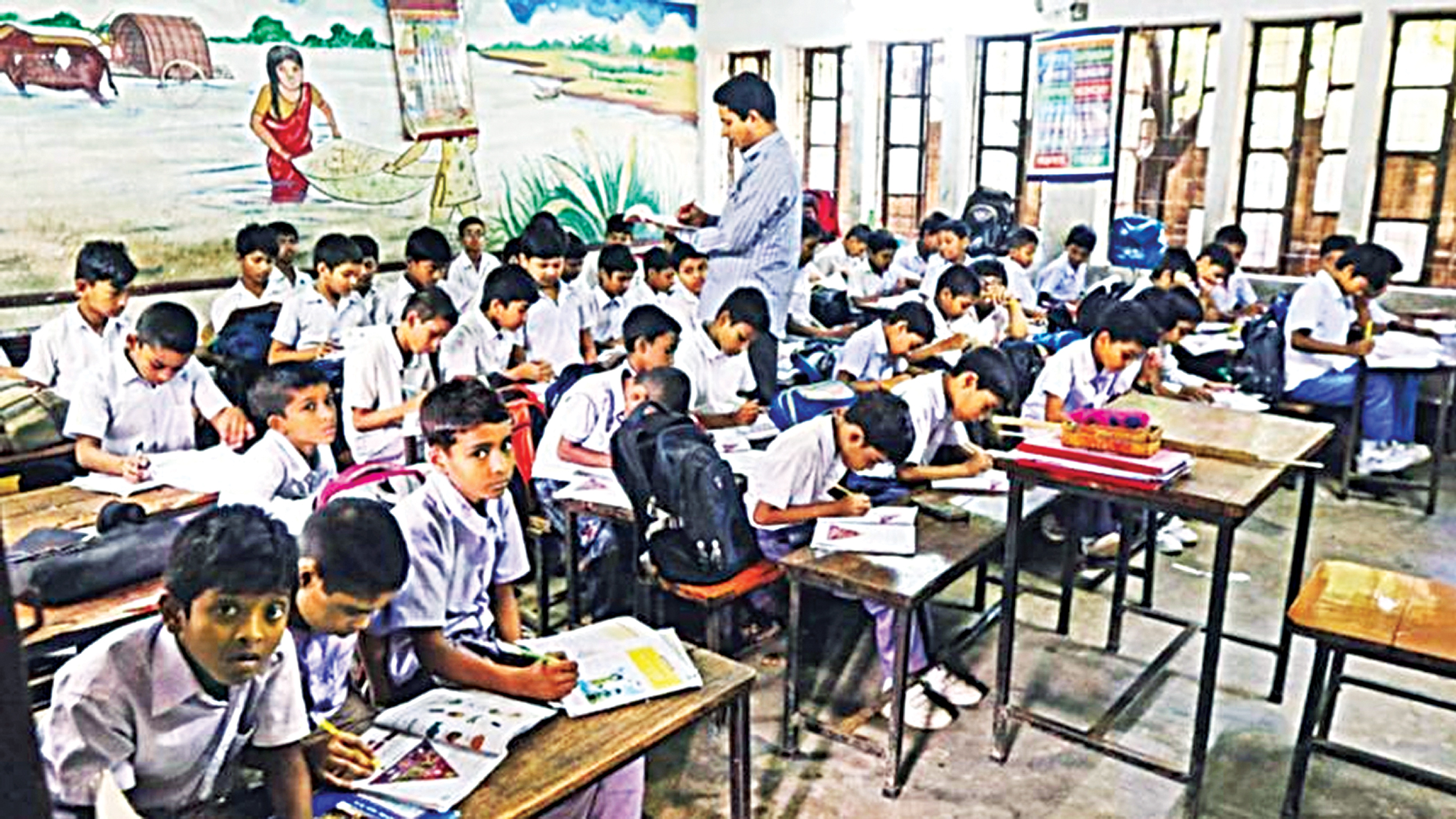
The national education policy of 2000 approved by the government did not anticipate basic change in promoting the right to education, bringing about qualitative change in public provisions or structural changes in education management. Its claim to fame may be that this policy gave legitimacy to the introduction of teaching English from class one in primary school, which was introduced by a diktat of General Ershad in the mid-1980s. Until then, English as a language was introduced lightly at the primary level, starting at class three, with lessons based on letters, numbers and rhymes. Proficiency in English was supposed to be acquired at the secondary level because a qualified English teacher could be appointed at that level. At the primary level up to class five, teachers are not appointed subject-wise; they are expected to teach all subjects with a focus on literacy in the main national language and numeracy.
The reality is that most primary teachers lack the proficiency to teach English. English as a compulsory subject throughout the primary school years became a waste of time and effort and a cause of much frustration for both students and teachers. More harmfully, it took precious learning time away from teaching the foundational literacy and numeracy skills, thus adversely affecting all of primary education.
The General’s populist argument in deciding to start teaching English from class one in all primary schools was that it should not be only the privileged kids going to private kindergartens who have the chance to learn English. It didn’t matter that the decision to teach it from class one in primary school became a false promise and a farce and distorted the purpose of primary education. Moreover, the syllabus for English was framed for the secondary level on the assumption that students enter class six with five years of instruction in English, which turned out to be a problem, since the children learned little English in their primary classes. The result is that most of the high school graduates today cannot read, write or communicate in English even at a basic level. The secondary public examination results also show a high percentage of failing scores in English, affecting the total pass rate.

Once a populist decision is proclaimed, it becomes difficult to have a rational reconsideration of the issue. The half-truth that a foreign language has to be learned early as a child is propagated and used to justify the futile toil of teaching English from class one, despite the worldwide evidence that a language can be learned by a motivated learner at any age.
This particular episode on English in primary school is symptomatic of the education decision-making process, often based on populist arguments and diktats from high-ups rather than evidence-based analysis with stakeholder participation, especially those involved in the education system. Political and partisan advantage or other vested interests, rather than educational logic and children’s interest, are frequently the dominant consideration in educational decision-making.
The 2010 education policy adopted during the second Hasina regime was the only one that was approved by the national parliament, though with little debate, on the last day of the session in December 2010. To what extent did this policy, which is still in effect, reflect the aspirations for education reform and change? Politics and statecraft in Bangladesh since its birth have failed to subsume the spirit and aspirations that inspired the liberation struggle – equality, human dignity and social justice as inscribed in the proclamation of independence, and democracy, nationalism, socialism and secularism, as enshrined in the constitution. As mentioned, this failing has affected state operations including the education sector.
Reforms – Expectations and Opportunities
Total consensus cannot be expected in policy for a complex and multi-faceted area such as education. The 2010 Policy is replete with compromises, and to a degree, it contains contradictions. For instance, the 2010 policy departed from the Khuda Commission recommendation of the primacy of Bangla as the medium at all levels of education. The policy accorded legitimacy to educational developments that emerged during the military and military-backed regimes from 1975 to 1990 – such as the rapid growth of the two types of madrasas as a parallel education system from pre-primary to university, and the acceptance of the multiple streams of schooling with quite different objectives, learning content and learning experience for the young people of our country. The policy mentioned the critical role of teachers in the education system and the need for major change in enhancing skills, capabilities, incentives and status of teachers. It recognized the problems of an over-centralized education governance and management and the importance of responsive and decentralized planning and decision-making. It recommended substantially larger public investment in education in line with the state ’s obligation for children’s education. However, the policy did not indicate specific strategic steps that would redirect the trajectory of reform and thus, contradictorily, acquiesced to the continuation of the existing structure.
Education reform is complex and difficult, requiring alignment on many fronts for sustained progress. A 2010 policy recommendation was to set up a permanent high-level education commission that could guide, monitor and inform the public about the course of education reform. The political and administrative decision-makers were averse to acting on this proposal. Arguably, they were content with the status quo and concerned about their authority and control being contested or challenged by an independent body answerable to the public.
The July-’24 uprising and the Interim Government (IG) in the wake of July ’24 had raised expectations for significant change in education as in other spheres of national development. High-level commissions were set up in key areas of political, economic and social issues. It is an irony that there was no commission for education reform, even though discrimination in education outcome in respect of job quotas was the spark for the uprising. Soon, the long-accumulated problems in various subsectors of education led to protests and demonstrations that spilled out on the streets. Some response from the government could not be avoided.
A consultative committee was set up in October (2024) last year, tasking it to present reform recommendations for primary education within a timeframe of three months. The Chief Adviser personally received the report of the 9-member consultative committee on 10 February (2025) this year, promising due attention and action on the recommendations. The education community is disappointed that the report has not yet prompted a systematic consideration of reform actions.
A year later, the Ministry of Education also appointed a 10-member consultative committee this October (2025) for making recommendations on secondary education, again allowing a three-month timeline. The committee is hard at work and expects to submit its recommendations based on consultation with stakeholders, visits to schools in different parts of the country and review of relevant research and analysis.

The Interim Government, with its tenure coming to a close and being burdened with its routine functions, as well as with setting the stage for the national referendum and election, does not have much opportunity to consider the suggestions of the two consultative committees on the two stages of school education. Had the IG established an education sector reform commission along with the other commissions, progress could have been made towards much-needed education reform. That opportunity has been lost.
The upcoming election and a newly elected political government will offer another opportunity for resuming the deliberation on education reform. The work of the consultative committees on school education is not necessarily the last word on reform in this area, which is the foundation for the total edifice of education. But the work already done can be the take-off point for a serious and systematic rethinking about the whole education system. That opportunity must not be lost.
Manzoor Ahmed is a Professor Emeritus at BRAC University, Chairperson of Bangladesh ECD Network, and Adviser to the Campaign for Popular Education.
Send your articles for Slow Reads to slowreads@thedailystar.net. Check out our submission guidelines for details.