


Beyond stereotypes: Rupert Grey’s ‘Homage to Bangladesh’

“Bangladesh is an international basket case!”
The comment, made by former United States Secretary of State Henry Kissinger in March 1972, reflects a mindset that still lingers in many Western narratives about Bangladesh today.

Rupert Grey, a descendant of Charles Grey and best known professionally as a leading libel and copyright lawyer stood against this statement. “If Bangladesh is a basket case,” Grey tells The Daily Star, “then it is so in the best possible way.” For him, the term collapses under the sheer vitality of the country. A single square metre of a Bangladeshi street, he argues, holds more energy than entire neighbourhoods in London. Where life in England often unfolds in rigid routines, Bangladesh thrives in spontaneity—where a hanging lighter at a tea stall can become a moment of shared choreography.
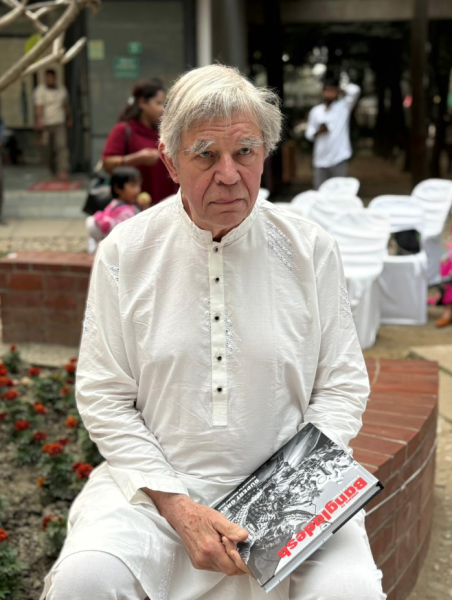
For decades, Bangladesh has been framed through a narrow international lens—one shaped largely by narratives of floods, fragility, and poverty. Rarely has the country been viewed by a patient observer willing to look beyond disaster and discover beauty. The stories of everyday resilience, humility, and quiet determination are often overshadowed by inherited prejudices of the Global North. “Homage to Bangladesh” is Grey’s attempt to challenge that perspective.
Grey’s photographic work reveals a deeply personal creative journey—one shaped not by passing curiosity, but by lived experience, long-term engagement, and respect.
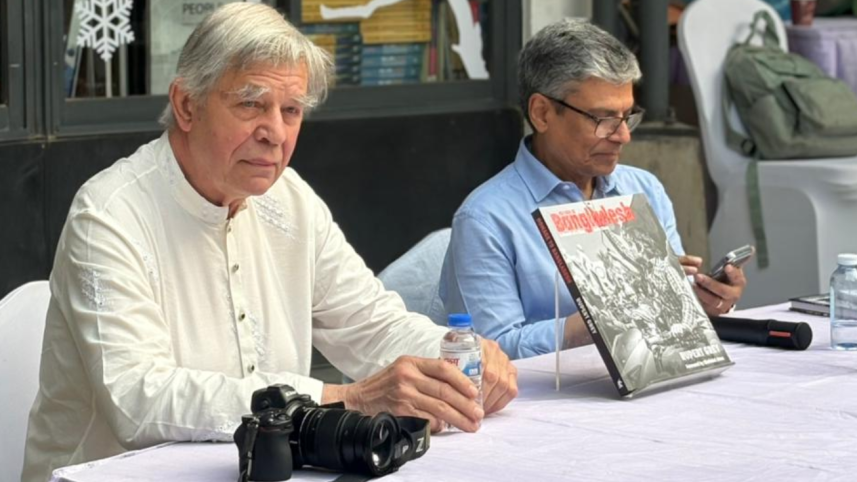
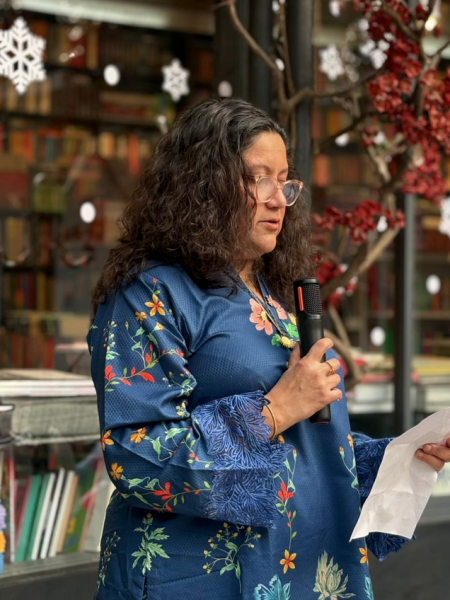
These ideas were explored further at a recent Book Talk at The Bookworm, held at Shahabuddin Park, where Grey was in conversation with Imran Rahman, Professor of Finance at the University of Liberal Arts Bangladesh. Sponsored by Securex under its initiative “Voices Shaping Society”, the event positioned the book as more than a visual archive—it became an invitation to rethink how Bangladesh is seen, remembered, and represented.
Grey’s relationship with Bangladesh began in 1992, when he travelled to the Sundarbans with his family. But it was his invitation from the British Council to attend Chobi Mela in 2004 that proved transformative. What began as a professional assignment evolved into a connection spanning nearly two decades.
Rather than foregrounding crisis, “Homage to Bangladesh” documents everyday life—faces caught in thought, labour unfolding at its own rhythm, communities shaped by history yet grounded in the present. In resisting spectacle, the book challenges the reductive stereotypes that have followed Bangladesh since its independence in 1971.
“Homage to Bangladesh” offers something rare: time. Time to look, to listen, and to recognise a country in its full human complexity.
 For all latest news, follow The Daily Star's Google News channel.
Comments