


Bangladesh looks beyond Hormuz for fertiliser imports
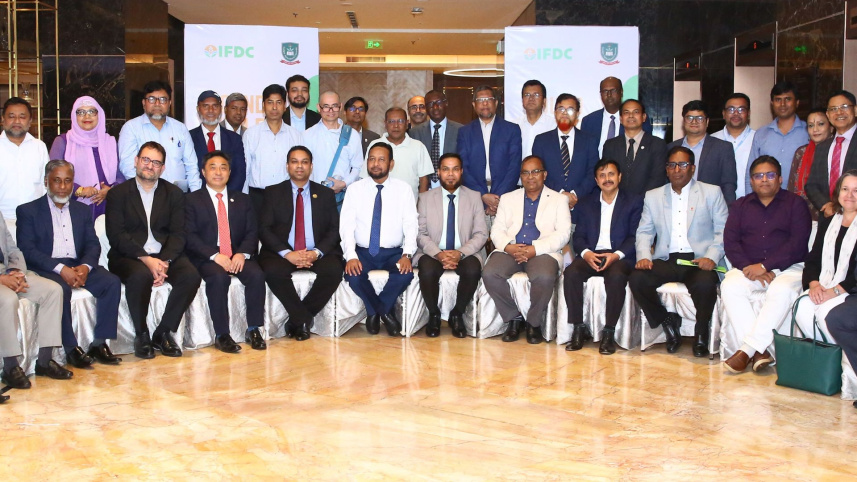
Secretary of the Ministry of Agriculture Rafiqul I Mohamed has said they are actively diversifying Bangladesh’s procurement corridors toward non-Hormuz routes while scaling climate-smart technologies to reduce our dependency on costly imports.
“Our immediate priority is ensuring the uninterrupted supply of fertiliser for the upcoming seasons,” he said as the chief guest at a roundtable yesterday at a hotel in Dhaka to address the critical intersection of global supply chain disruptions and national food security.

The event was organised by the International Fertiliser Development Centre (IFDC), in collaboration with Gazipur Agricultural University (GAU).
Rafiqul further said, “The technical support from partners like International Fertiliser Development Centre (IFDC), Food and Agriculture Organisation (FAO), and the World Bank, alongside private sector leaders like ACI, is vital for our national food security.”
The session brought together global experts and policy leaders to formulate a roadmap for navigating the "4F Nexus" -- fuel, fertiliser, feed, and food -- amidst escalating energy constraints.
Participants emphasised the urgent need to diversify procurement through non-Hormuz corridors, identifying Algeria as a key potential partner. Beyond immediate supply concerns, the dialogue focused on transitioning Bangladesh toward a resilient, low-carbon agricultural model.
Experts advocated for the scaling of fertiliser deep placement (FDP), precision agriculture, and balanced fertilisation, including bio-fertilisers, to double nutrient use efficiency and reduce heavy chemical dependency.
Speakers noted that by quantifying emission reductions and utilising the “Farmer’s Card” for inclusive subsidy targeting, the country can unlock new climate financing and maintain high-yield production despite global volatility.
The roundtable concluded with a unified call for rapid policy intervention and enhanced public-private coordination to synchronise energy-efficient irrigation with mechanised fertilisation.
Henk van Duijn, president and CEO, IFDC, said, “We must act with urgency to adopt science-driven, climate-smart technologies that restore soil health. By scaling farmer-centered solutions like fertiliser deep placement (FDP), we can simultaneously enhance crop yields and significantly reduce greenhouse gas emissions, ensuring Bangladesh remains a global leader in agricultural sustainability.”
Jean Pesme, divisional director, World Bank, said, “Integrating solar irrigation and AWD is not just about building resilience -- it is about creating tangible value. These low-carbon production models offer Bangladesh a unique and timely opportunity to access international carbon markets, rewarding farmers for environmental stewardship while securing the nation’s food future.”
Md Mahmudur Rahman, additional secretary (PPC Wing), Ministry of Agriculture; Jiaoqun Shi, FAO representative in Bangladesh; FH Ansarey, president, ACI Agribusiness; Debra Boyce, Senior Trade Commissioner, High Commission of Canada, among others, spoke.
 For all latest news, follow The Daily Star's Google News channel.
Comments