


March rainfall 31% above average; crops damaged but diesel for irrigation saved

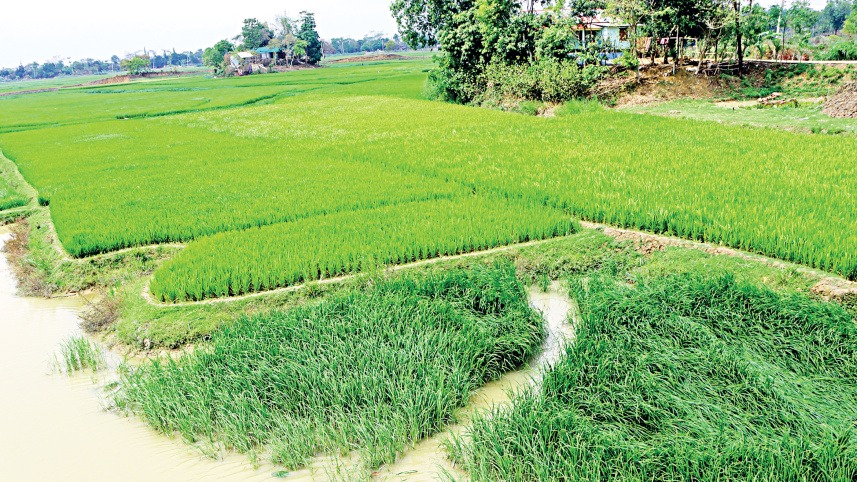
Bangladesh got 31 percent more rainfall than the seasonal average this March, according to the Bangladesh Meteorological Department (BMD), with 62 mm recorded nationwide against a normal average of 47 mm.
The downpour caused crop damage worth Tk 83.39 crore across 16 northern districts, but also provided much-needed water for Boro cultivation, saving approximately 2 lakh tonnes of diesel.

Afroza Sultana, assistant meteorologist at the BMD, shared detailed data with The Daily Star.
Dhaka recorded 68 mm of rain, 45.9 percent above average, while Sylhet received 240 mm, a 110.5 percent increase.
Rajshahi and Rangpur saw 54 mm (89.6 percent above average) and 123 mm (328 percent higher) respectively, with Mymensingh at 116 mm, or 217 percent above its seasonal norm.
In contrast, the Chattogram, Khulna and Barishal divisions experienced below-average rainfall -- 44.4, 7.9, and 48.6 percent short respectively.
The average national temperature in March was 0.3°C above normal.
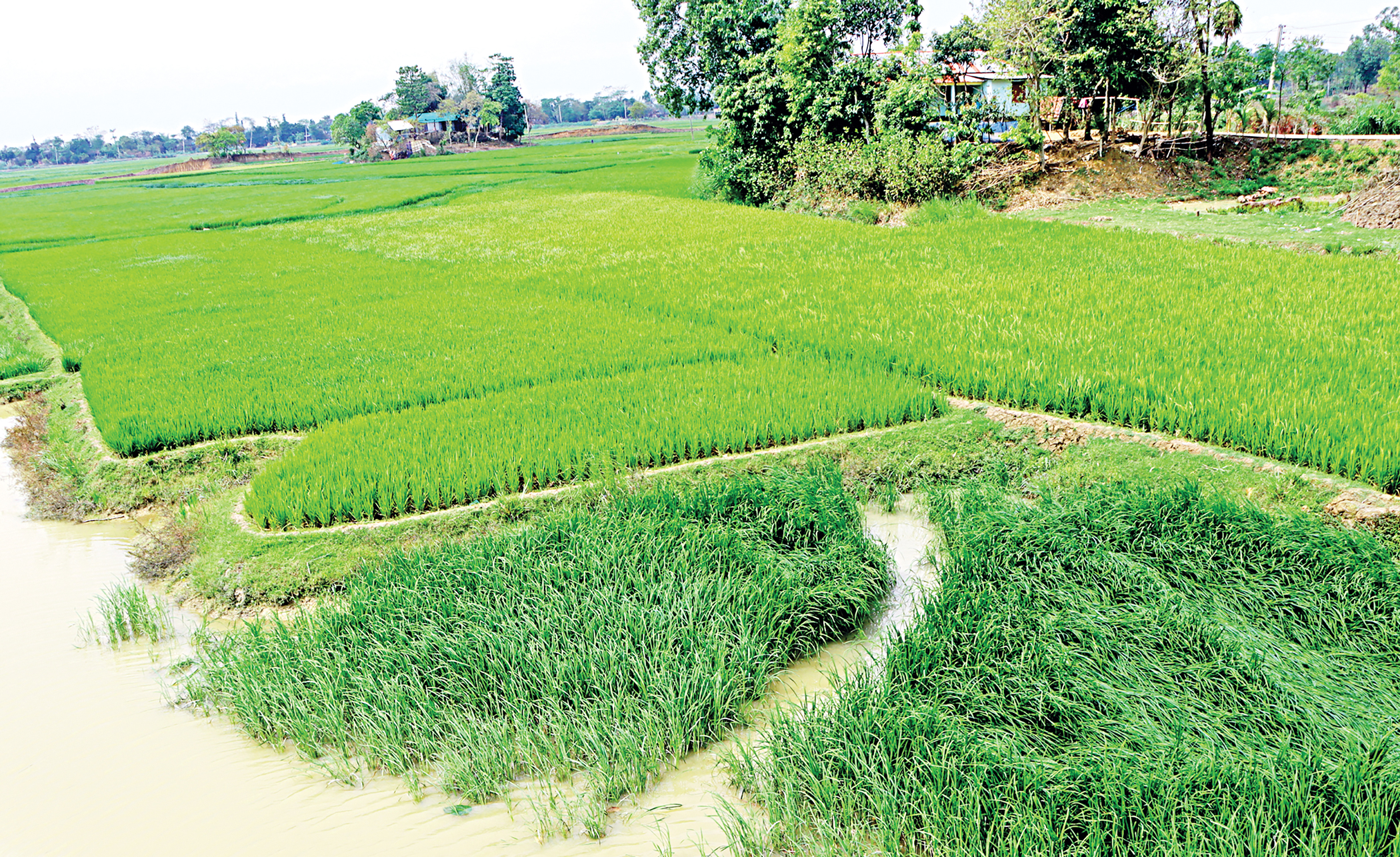
Department of Agricultural Extension (DAE) reported that between March 12 and 19, a total of 19,614 farmers across 16 districts in the Rangpur and Rajshahi divisions suffered losses due to Kalbaishakhi (nor’wester) storms and heavy rainfall.
Crops on 2,131 hectares were completely destroyed, with potatoes bearing the heaviest damage on 916 hectares.
Other losses included 229 hectares of bananas, 78 hectares of vegetables, 628 hectares of maize, 102 hectares of wheat, 10 hectares of sunflower, 7 hectares of onion seeds and 9 hectares of chilli, alongside various seasonal crops.
Despite the damage, the excess rainfall proved a boon for Boro paddy farmers, particularly amid the ongoing global energy crisis.
DAE Additional Director (Inputs, Field Wing) Md. Rowshan Alam told The Daily Star that the rain helped save around 2 lakh tonnes of diesel.
Typically, about 12 lakh metric tonnes of diesel are needed in March and April for irrigation, representing roughly 20 percent of total requirements. Electricity was also saved in regions using power-driven pumps.
 For all latest news, follow The Daily Star's Google News channel.
Comments