


Economy stable

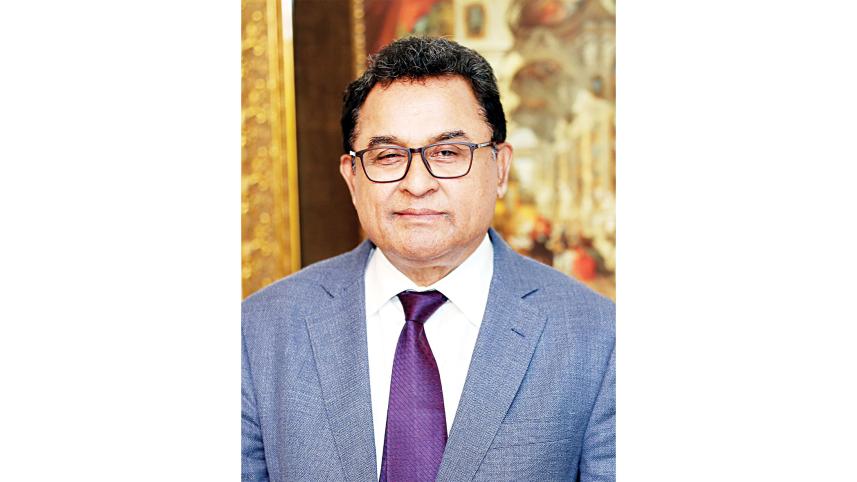
Although Bangladesh stepped into a new year with various economic pressures stemming from global events, Finance Minister AHM Mustafa Kamal said he was confident that the country would not backtrack but make steady progress from where it was now.
"Our economy is stable. I hope (in 2023) the country will stably go forward," he told The Daily Star.

Last year, after the start of the Russia-Ukraine war, Bangladesh's economy faced pressure as at one end its foreign currency reserve had started to decline while at the other end inflation had started to increase.
Back in June, the government in the national budget estimated that the country's GDP will grow by 7.5 per cent.
However, global lenders, including the World Bank and International Monetary Fund (IMF), estimated that Bangladesh's GDP growth will remain between 6 per cent and 6.5 per cent.
In December, the finance ministry, while reviewing the budget, revised the GDP growth estimate to 6.5 per cent.
The finance minister said many voiced concerns that Bangladesh's foreign currency reserve would see a significant decline but it still remains at $34 billion, which was equal to five months' import bills whereas the global standard was three months.
According to Bangladesh Bank statistics, as of December 29 last year, the country's foreign currency reserve stood at $33.84 billion.
On June 30 last year, the reserve was at $41.82 billion.
The finance minister said they had earlier told that the country's economic situation would start to improve from January 2023. "The improvement is already visible," he said, adding that this trend would continue.
He said at present every country was concerned about the global economic situation and Bangladesh was not an exception.
However, Bangladesh is still out of danger. Yet, the government took a conservative step while revising the GDP growth, he added.
The minister said inflation may increase to 8 per cent during the current fiscal year.
However, in the national budget the target was set to keep the inflation rate within 5.6 per cent.
Amid the present economic situation, inflation is high in every country, he said.
When the Awami League came to power in 2009, the country's inflation was at 12.3 per cent whereas since then the government was able to keep it stable within 5 per cent for many years.
Inflation increased only during the current fiscal year which is because of the global economic meltdown, he further said.
On getting a $4.5 billion loan from the IMF, the finance minister said they were expecting the global money lender to approve it soon.
Both parties have already agreed to terms and conditions regarding the loan deal. Once approved, Bangladesh will get $1.5 billion per year for the next three years, he added.
The minister, however, said Bangladesh was not relying on the IMF loan to bolster its foreign exchange reserve.
 For all latest news, follow The Daily Star's Google News channel.
 Bangladesh regularly receives about $1.5 billion to $2 billion per month in the form of remittance sent by the expatriates, he said.
The IMF loan deal is expected to be placed before the IMF board towards the end of this month.
Before that, IMF Deputy Managing Director Antoinette Monsio Sayeh will visit Bangladesh.
Comments