


Even a switch to maize fails to save many farmers


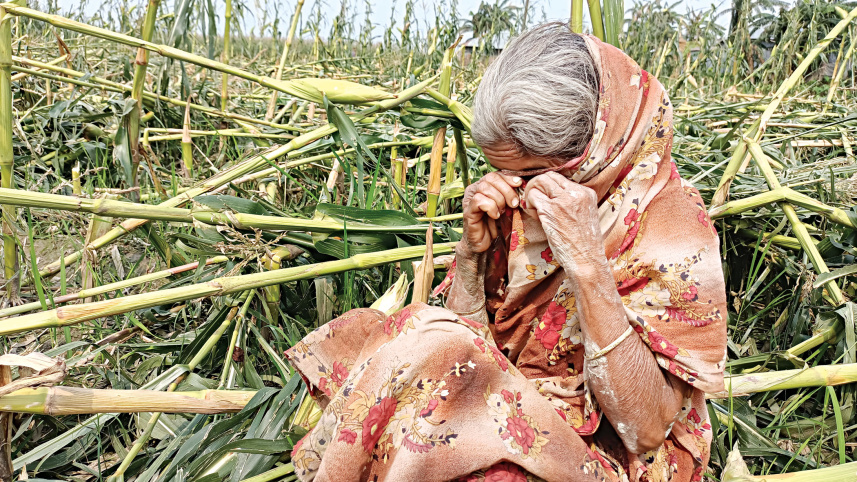
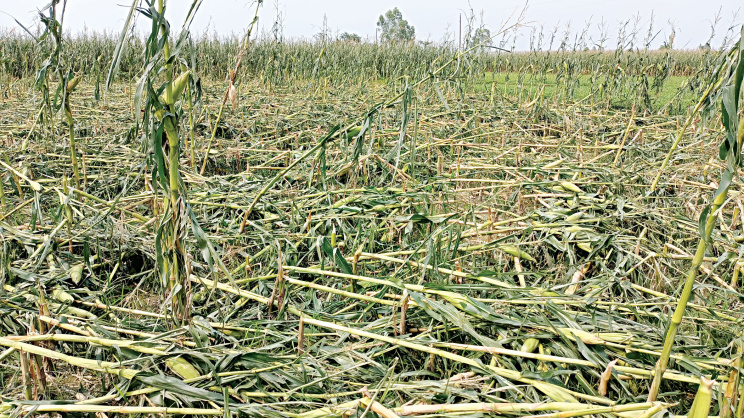
Storms and heavy rain last month damaged a range of crops, including maize. For maize farmers, it was a cruel blow, as many had turned to the cereal after repeated losses from low potato prices.
In northern districts, maize acreage has expanded gradually in recent years.

Farmers were encouraged by demand from the poultry and livestock feed industry, where prices are usually stable. For many, maize seemed a safer option.
This season, the cereal has been cultivated on about 1.27 lakh hectares across five districts of Rangpur region: Lalmonirhat, Kurigram, Rangpur, Nilphamari and Gaibandha, according to the Department of Agricultural Extension (DAE).
The department says the rains in March damaged 520 hectares. The hit was particularly severe in the char areas.
For Nurjahan Begum, the damage was devastating. She cultivated maize on 1.5 bighas of land in Char Gobardhan on Teesta river. The 60-year-old from Aditmari upazila in Lalmonirhat said around 60 percent of her crop was destroyed by the storm.
Having lost much of her investment, Begum fears she may have to take out loans to continue farming.
In its assessment covering 18 districts, the DAE ranks maize as the second-worst-affected crop after potato. Banana and vegetable growers, as well as a number of Boro farmers, have also reported losses.
Potato growers were already under pressure from throwaway prices before the storms hit.
Rafiqul Islam, 45, from Barunagaon at Thakurgaon Sadar upazila, cultivated potatoes on 12 bighas at a production cost of about Tk 11 per kilogramme. Since the harvest began, prices have hovered between Tk 8 and Tk 9 per kilogramme.
After the rains, the rates rose slightly to Tk 13 per kilogramme. But Islam could not benefit. Heavy rain and waterlogging in mid-March left about 40 percent of the crop on four bighas rotting in the soil. The fields became too muddy to harvest.
Md Jamal Uddin, additional director for monitoring and implementation at the DAE field service wing, said they are currently compiling a list of affected farmers. Once the listing is complete, the government will decide on the support measures.
The DAE estimates production costs for potato varieties such as Asterix, Diamond and Granola at Tk 16.64 per kilogramme this season. Over the past month, field prices were somewhat stuck at Tk 8 to Tk 9 per kilogramme, well below the production costs.
In a statement yesterday, Bangladesh Khetmajur and Krishok Songothon, a platform representing landless labourers and small farmers, urged the government to act swiftly.
“Every year, crops are damaged due to various natural disasters. But there is no permanent system for crop compensation. We have been demanding the introduction of crop insurance for a long time,” it said.
“We expect the government to take steps to introduce crop insurance for farmers affected by natural disasters. In addition, we strongly demand the immediate listing of farmers affected by the storm and their compensation.”
Earlier, the Bangladesh Cold Storage Association called on the government to include storm-hit potato farmers in an agricultural rehabilitation programme.
In a letter to the Ministry of Agriculture on March 25, the association said early storms and heavy rain in the first half of the month had severely affected major potato-growing districts.
Waterlogging during the harvest period caused extensive damage to potatoes left in the fields, as well as crops yet to be harvested, the letter said.
Even those who managed to harvest face losses. Poor quality has made much of the crop unsuitable for storage, forcing farmers to sell at Tk 5 to Tk 6 per kilogramme, well below prevailing market rates, according to the association.
 For all latest news, follow The Daily Star's Google News channel.
Comments