


Upcoming WTO MC14: What is at stake for Bangladesh?

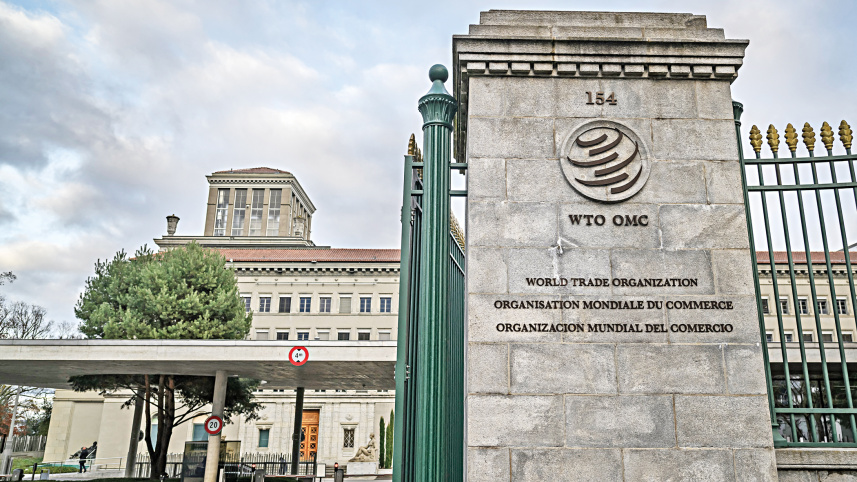
By any measure, the upcoming WTO Ministerial Conference (MC14), scheduled for 26 to 29 March 2026 in Yaounde, Cameroon, is expected to be a watershed moment for the multilateral trading system (MTS), which has evolved over the past three decades since the establishment of the World Trade Organization (WTO) in 1995. As the institution tasked with setting rules for global trade, the WTO is now under pressure to respond to growing attacks on the rules-based trading system and to calls for deep reform of the organisation itself. Against this backdrop, MC14 is likely to emerge as a Reform Ministerial.
For Bangladesh, a country scheduled to graduate from the group of least developed countries in November 2026, the stakes are particularly high. MC14 will be the last WTO Ministerial Conference before Bangladesh’s graduation from LDC status after more than five decades in the category. Even if Bangladesh succeeds in securing a deferral of graduation by up to three years, decisions taken at MC14 will carry major implications for the country’s participation in the multilateral trading system. Both as a graduating LDC and as a future developing country, the outcomes of MC14 will have long-term significance for Bangladesh.

In Geneva, discussions ahead of MC14 are focusing largely on reform of the WTO. These include the consensus-based decision-making process, the single undertaking principle, where nothing is agreed until everything is agreed, the framework for negotiations and decision-making, special and differential treatment for developing countries, including LDCs, and ways to ensure a level playing field for all members. These are high-stakes issues for Bangladesh. The country and its allies in the WTO will need to engage proactively in these debates in order to safeguard the interests of low-income and developing countries at MC14.
A SHIFTING GLOBAL TRADE LANDSCAPE
In recent years, the growing use of trade measures by major economies to pursue national economic interests has become a defining feature of global commerce. The principles on which the WTO was founded are increasingly under strain. Protectionist policies surged during the Covid-19 pandemic and weakened the authority of the WTO. However, breaches of WTO principles have intensified even further in recent years. Trade is being weaponised in ways rarely seen before.
At the same time, there is a growing view that the WTO will have little future unless significant reforms are undertaken in its decision-making structure, negotiating agenda and institutional objectives. The organisation now faces what many observers describe as an existential crisis.
The use of trade policy to pursue economic and geopolitical objectives is clearly on the rise. This trend increasingly takes the form of unilateral measures, non-tariff barriers, reciprocal tariffs and stringent conditions attached to market access.
Against this backdrop, several critical questions arise. Does the WTO have a viable future? What reforms are required for the organisation to remain relevant? How can the interests of developing countries be protected within the global trading system? What alliances or power blocs might emerge as global economic power shifts, particularly with the rise of BRICS? And could a new global trade body eventually replace the existing WTO?
POSSIBLE PATHS AHEAD
Five scenarios may unfold in response to these challenges. The first scenario is that WTO members succeed in reforming and revitalising the organisation through negotiations that address the concerns of different members. Notably, around 80 percent of global merchandise trade still takes place under the Most Favoured Nation principle, one of the core foundations of the WTO system.
A second scenario would involve the dissolution of the WTO and the creation of a newly negotiated global trade organisation. Proponents of this view argue that persistent violations of WTO rules and the increasing resort to unilateral tariffs and security-based trade restrictions have weakened the current system to such an extent that a new multilateral framework with updated rules may be required.
The third plausible scenario is the emergence of a new multilateral trading system with membership limited to countries willing to uphold non-discriminatory rules, while excluding those prone to arbitrary and self-serving measures. Such a system could potentially exclude the country that has shown the strongest inclination to pursue unilateral tariffs and non-MFN arrangements, namely the United States.
The fourth scenario is based on the survival of the WTO, while its negotiating function becomes increasingly organised around open plurilateral agreements and Joint Statement Initiatives. These would focus particularly on new issues such as e-commerce, investment facilitation, services domestic regulation and digital trade. Some countries, including the United States, prefer this option.
A fifth scenario concerns the emergence of a more cohesive coalition of Global South economies that views the crisis facing the WTO and unilateral policies pursued by the United States as both an opportunity and a catalyst to deepen South-South cooperation and develop alternative governance structures led by BRICS countries.
For Bangladesh, a rules-based multilateral trading system that incorporates special and differential treatment for weaker economies, as represented by the WTO, remains the more preferable option. At the same time, it is evident that the WTO is showing clear limitations. While a consensus-based organisation works to Bangladesh’s benefit, the slow pace of WTO decision-making has become a growing concern for many countries and deserves careful attention.
REFORM DEBATES INSIDE THE WTO
Current WTO reform discussions are structured around three interconnected tracks.
Track 1 concerns governance. This includes decision-making procedures such as consensus and Article IX, negotiating instruments, existing agreements and negotiations, and the dispute settlement mechanism.
Track 2 focuses on fairness. Issues here include transparency, development and special and differential treatment, market access including tariffs, reciprocity and non-tariff barriers, subsidies, unfair practices and the broader question of a level playing field.
Track 3 addresses contemporary challenges such as supply chain resilience, economic security, climate change, digital trade and artificial intelligence.
 For all latest news, follow The Daily Star's Google News channel.
 Across recent rounds of discussion, a shared baseline has emerged. Consensus remains the foundation of WTO decision-making and is not itself under challenge. At the same time, there is growing concern that consensus is sometimes used as a de facto veto.
For Bangladesh, the governance track is particularly important. As a relatively weak economy, its interests lie in a consensus-based and genuinely member-driven system that safeguards its trade interests. At the same time, Bangladesh also needs a WTO capable of taking decisions without consensus-based decision-making becoming a permanent stumbling block.
Bangladesh’s interest also lies in strengthening the development dimension of trade. Core priorities include support for a smooth transition following LDC graduation, reforms to special and differential treatment so that these remain effective, and a functional dispute settlement mechanism.
While special and differential treatment for LDCs is not being questioned in the proposals, the position of the European Union and the United States is that eligibility for such treatment for developing countries should be determined through objective criteria, should be time-bound, and should include clear pathways for transition to regular WTO disciplines.
At the same time, concerns remain over the lack of meaningful discussion regarding unilateral tariffs, particularly reciprocal tariffs introduced by the United States, which have adversely affected the trade interests of many WTO members. This represents an important fairness issue and highlights a significant inconsistency with the broader principle of fairness. Members of BRICS and other countries are likely to raise these issues at MC14.
BANGLADESH’S PRIORITIES AT MC14
Bangladesh will need to remain attentive to the evolving demands on the multilateral trading system, developments within the WTO and growing calls for deep reform. Preparation will be essential to advance both offensive and defensive interests in this changing environment.
There is hope that ongoing work in Geneva ahead of MC14 may lead to a reformed WTO grounded in predictability, fairness and flexibility. However, how these principles will be defined in practical terms remains uncertain. Reaching an agreement will not be easy.
The United States, on one side, and countries such as India and China on the other, are expected to represent the two ends of the negotiating spectrum, with the European Union likely to occupy a middle ground. Bangladesh will need to participate in these discussions in an informed manner so that its interests as a graduating LDC and as a future developing country are effectively safeguarded and advanced.
Mustafizur Rahman is distinguished fellow, and Tanbin Alam Chowdhury is programme associate (Research) at the Centre for Policy Dialogue (CPD)
Comments