


Local firms eye global fish fillet market

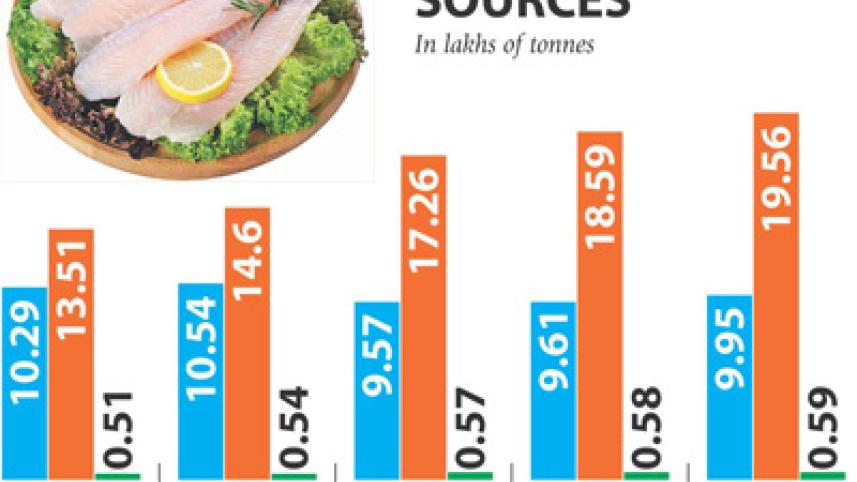
Local firms are pouring in crores of funds to tap the huge global market for fish fillets, a move that will diversify the country's fish export basket now largely dominated by shrimps.
It is a highly promising sector, said Mahbubul Mosaddek Chowdhury, managing director of Earth Agro Farms that has taken up a Tk 140 crore-scheme to construct a factory in Gazipur to make fillets from pangasius and sea fish.

“The world market for fillets is quite big and we have the advantage of producing fish in high quantities.”
Chowdhury's factory will have the capacity to process 60 tonnes of pangasius a day and the by-products will be used to make fishmeal and fish oil.
Chowdhury said 95 percent of the construction of the factory has been done, meaning it is scheduled to go into production by January next year.
Virgo Fish & Agro Process, S&K Associates and at least two other companies have also lined up to process pangasius and telapia, which account for more than 20 percent of Bangladesh's fish production.
Bangladesh produced 6.69 lakh tonnes of the two fresh water fish varieties in fiscal 2013-14, up 29.9 percent year-on-year, according to data from the Department of Fisheries.
The massive expansion of aquaculture, particularly of pangasius and telapia, over the last three decades has helped the country ensure protein at low-cost for many people.
It has also created thousands of jobs. Today, Bangladesh is the world's fifth largest producer of fish from inland aquaculture, according to the Food and Agriculture Organisation.
Despite increasing production and farming, neither telapia nor pangasius is processed to make fillets, for which there is high demand abroad. And in the absence of industrial processing, farmers do not get fair prices of their farmed fish during supply glut, said stakeholders.
Fillet processing would increase demand and facilitate farmers to get fair prices, said the Earth Agro MD, adding that the company has started negotiating with fish farms to grow pangasius through contract farming.
The global market for fillets stands at around $200 billion a year and processors from Vietnam dominate the trade, he said. The market for pangasius and telapia is rising due to the declining supply of marine catches and various regulations on sea fishing imposed by the nations, said M Shamsul Kibria, managing director of S&K Associates that plans to invest Tk 164 crore to build a factory.
The firm plans to start construction of the plant in October to process 60 tonnes of fish a day, said Kibria, former joint secretary of the fisheries ministry.
The US and Europe are the main markets for fish fillets, with demand rising in the Middle East and other parts of the world as well, he added. The domestic market prospects are also looking good thanks to the rising number of restaurants and international chain hotels.
A senior official of Virgo Fish said the firm is targeting both the domestic and export markets.
However, there are shortcomings. Currently, the pink-fleshed pangasius sutchi variety is widely cultured, the demand for which is low in the global market.
As buyers prefer the white-fleshed ones, fries of the pangasius hypophthalmus variety are being imported for cultivation here, Chowdhury said. The pangasius hypophthalmus variety has white coloured flesh.
Nittyaranjan Biswas, principal scientific officer of DoF, said fillet-making would open a new avenue for seafood business in Bangladesh. “Until now, we have remained shrimp-based. Fillets will diversify our fish export basket.”
But its entry into the world market will depend largely on quality control from farm to processing, he added.
 For all latest news, follow The Daily Star's Google News channel.
Comments