


Diversify exports to Asian markets amid shifting global trade: economist
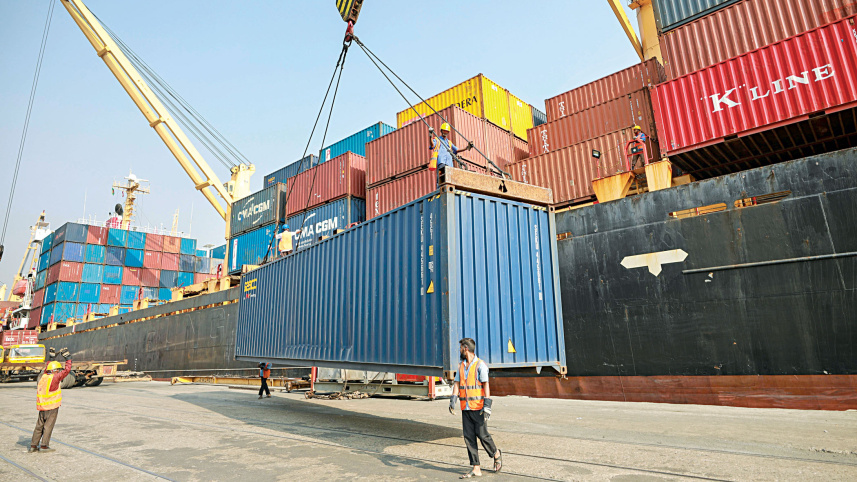
Bangladesh should step up efforts to tap Asian markets as global trade and investment patterns shift rapidly, economist Mustafizur Rahman, distinguished fellow of the Centre for Policy Dialogue (CPD), said yesterday.
South Asia, Southeast Asia and East Asia offer significant opportunities at a time when trade is increasingly being “weaponised,” he said.
 For all latest news, follow The Daily Star's Google News channel.
 He was speaking at a discussion on Bangladesh’s economic transformation and trade competitiveness, organised by the South Asian Network on Economic Modelling (SANEM) and the Foreign Affairs and Trade Department of Australia at the BRAC Centre in Dhaka.
He added that currently about 12 percent of Bangladesh’s exports go to Asia—a share he described as disproportionately low given the region’s market potential.
India imports goods worth about $750 billion annually, yet Bangladesh exports just over $1.5 billion to its neighbour despite enjoying preferential access as a least developed country (LDC).
China, the world’s second-largest economy, imports around $3 trillion worth of goods each year. However, Bangladesh’s exports to China remain below $1 billion, even though 99 percent of Bangladeshi products enjoy duty-free access.
Rahman also stressed the need for product diversification. Globally, more than 70 percent of garments are made from man-made fibres, while Bangladesh’s exports remain heavily cotton-based.
He highlighted strong prospects in leather and leather goods, which have about 90 percent local value addition compared to 35 percent in garments. Developing a central effluent treatment plant (CETP) to secure Leather Working Group (LWG) certification would help the sector fetch better prices.
Completing the Active Pharmaceutical Ingredient (API) park is also critical to unlocking export potential in pharmaceuticals, he added.
Rahman urged faster implementation of the Smooth Transition Strategy (STS) ahead of Bangladesh’s graduation from LDC status in November, noting that progress has been slow.
SANEM Executive Director Selim Raihan warned of major challenges in the post-LDC period due to inadequate preparedness in both public and private sectors.
Maintaining competitiveness in global value chains, meeting compliance standards and diversifying products will be key, he said.
He also called for reforms in industrial and trade policies, including rationalising tariffs and para-tariffs.
Fazlul Hoque, managing director of Plummy Fashions, pointed to gaps in industrial infrastructure, particularly the lack of a CETP for knitwear in Narayanganj and limitations in developing such facilities for the tannery estate in Savar.
Additional Commerce Secretary Abdur Rahim Khan said policy inconsistencies, especially between import and export regimes, remain a concern, while Australia’s Deputy High Commissioner Clinton Pobke flagged slow progress in financial and administrative reforms, including tax system restructuring.


Comments