


EV duty benefits to hurt competitiveness of reconditioned cars: Barvida
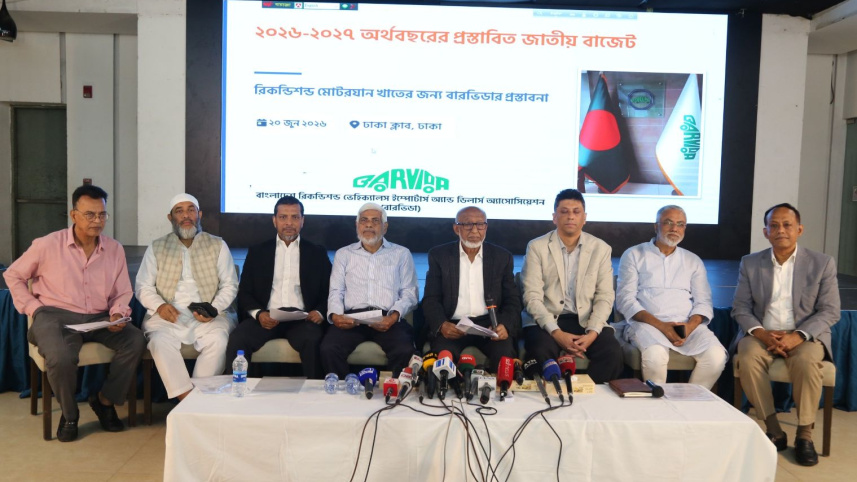
Reconditioned vehicle importers today urged the government to review the proposed duty structure for automobiles, saying budgetary benefits for electric vehicles (EVs) could erode the competitiveness of hybrid and fossil-fuel-powered reconditioned cars in Bangladesh's developing automobile market.
Abdul Haque, president of the Bangladesh Reconditioned Vehicles Importers and Dealers Association (Barvida), made the call at a press conference at Dhaka Club.

The association said the proposed budget grants significant duty benefits to EVs while raising the tax burden on popular reconditioned vehicles, particularly mid-range fossil-fuel-powered cars used by middle-income consumers.
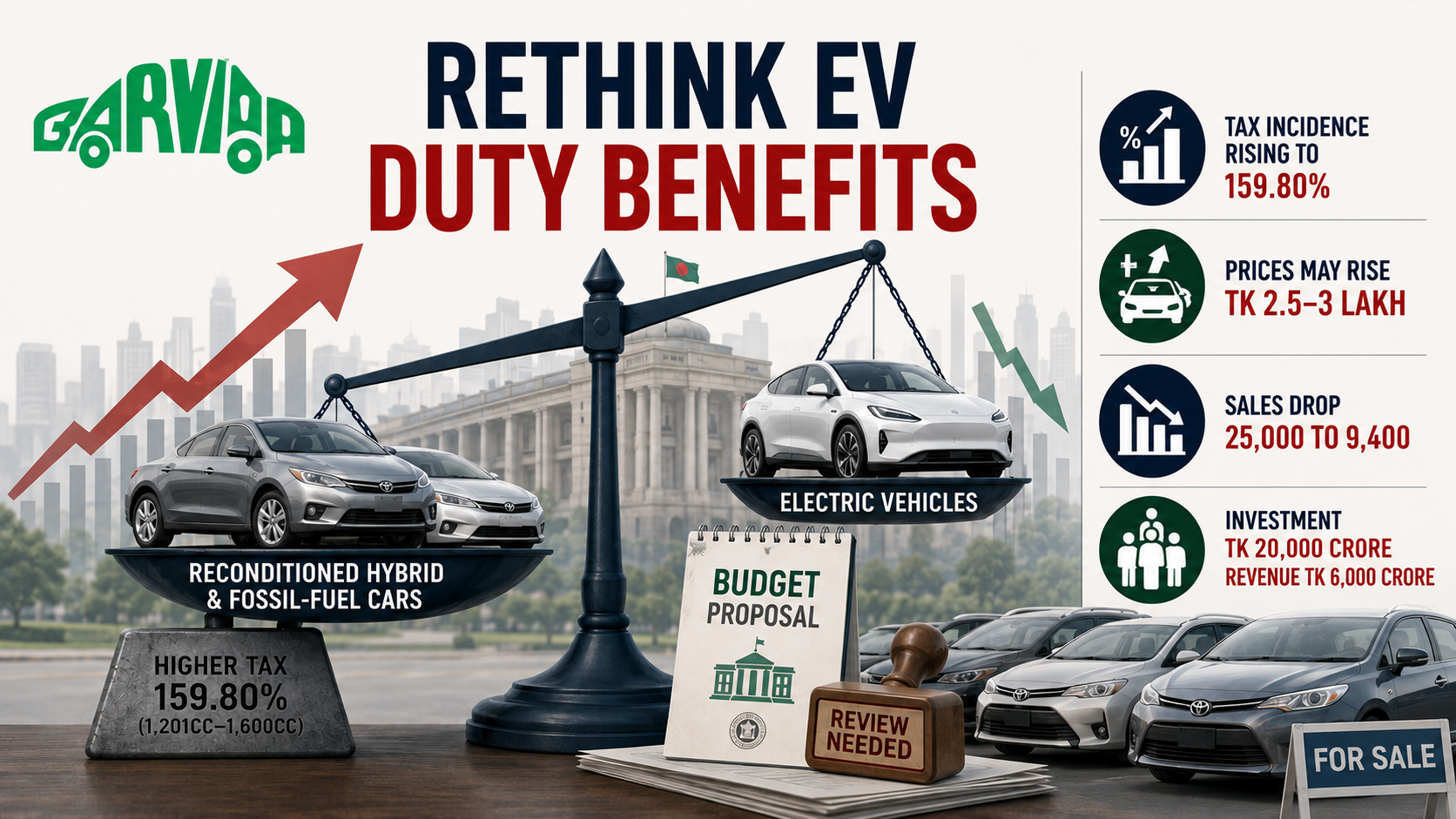
The overall tax incidence on cars in the 1,201cc-1,600cc segment would rise to 159.80 percent from 132.36 percent under the proposed restructuring of engine-capacity slabs, the association said.
As a result, prices of popular models such as the Toyota Premio and Axio may rise by Tk 2.5 lakh to Tk 3 lakh, Barvida said.
Haque said these vehicles are mostly bought by middle-income and first-time buyers, who are already affected by taka depreciation, higher import costs, and the economic slowdown.
"The burden will ultimately fall on consumers," he said.
Reaz Rahman, secretary general of Barvida, said the government should restore the previous duty structure for the 1,200cc-1,600cc segment, which is widely used by middle-class consumers.
Otherwise, car sales and government revenue will both decline, he said.
Vehicle registrations have already fallen from around 25,000 units to 9,400 in a year, hurting businesses and reducing revenue, the association said.
Barvida members have invested around Tk 20,000 crore locally and pay about Tk 6,000 crore in annual revenue, Haque said, adding that the sector also supports many small and medium-sized entrepreneurs and employs several lakh people, directly and indirectly.
Haque said Bangladesh lacks adequate charging and servicing infrastructure to support a rapid shift to EVs, unlike its established hybrid ecosystem.
"EVs may be the future, but policy support has to reflect ground reality," he said.
Barvida also flagged unequal duty treatment between brand-new and reconditioned plug-in hybrids, noting that the government cut supplementary duty on new plug-in hybrids of up to 2,000cc and withdrew regulatory duty on those of up to 1,800cc, while reconditioned versions in the same range still face higher duties.
The association urged the government to include reconditioned plug-in hybrids in the same benefit structure, rationalise tax slabs for 2,001cc-2,500cc vehicles, and withdraw the proposed tax hike on mid-range fossil-fuel-powered cars.
It also called for stricter customs valuation of new EVs to prevent under-invoicing.
"We want a level playing field," Haque said.
 For all latest news, follow The Daily Star's Google News channel.
Comments