


Exporters seek wider use of UK trade scheme
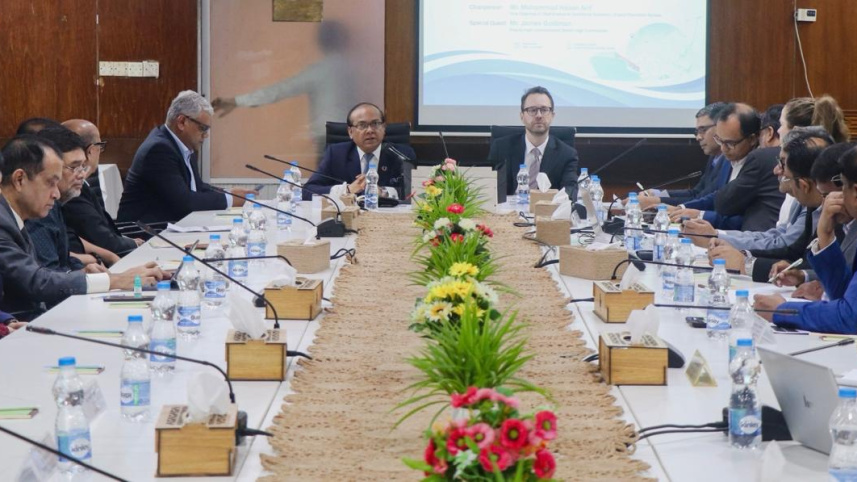
Bangladeshi exporters have called for fully utilising the British government's duty-free market access scheme for developing countries, known as the Developing Countries Trading Scheme (DCTS).
The call came at a roundtable on the scheme jointly organised by the Export Promotion Bureau (EPB) and the British High Commission at the bureau's office in Dhaka today, according to an EPB statement.

The event brought together representatives from leading export associations, chambers and trade bodies to discuss strategies for enhancing the utilisation of DCTS preferences, addressing market access challenges and preparing Bangladeshi exporters for the country's graduation from LDC status.
The discussion focused on raising awareness and increasing utilisation of the DCTS, barriers to accessing the UK market, and lessons from the ready-made garment (RMG) sector for diversifying exports across other promising industries.
Participants welcomed the initiative and called for continued collaboration among the government of Bangladesh, the British High Commission and the private sector to maximise the benefits of the DCTS and strengthen Bangladesh's competitiveness in the UK market after LDC graduation, the press release said.
To support this objective, the EPB and the British High Commission agreed to undertake a series of awareness and capacity-building initiatives in the coming months.
In her keynote paper, Ellie Parker, regional trade for development adviser for South Asia, Central Asia and South Caucasus at the British High Commission, highlighted the implications of Bangladesh's LDC graduation, recent improvements under the DCTS, and opportunities available to Bangladeshi exporters.
Mohammad Hasan Arif, vice chairman and chief executive (additional secretary) of the EPB, informed participants that a comprehensive DCTS booklet would be published to provide exporters with practical information and guidance on eligibility requirements, rules of origin, documentation procedures and preference utilisation.
He also said a series of sensitisation workshops would be organised in Dhaka and Chattogram in collaboration with the British High Commission and relevant sector associations and chambers to strengthen exporters' understanding of the scheme and improve utilisation rates.
Both organisations will also undertake broader information dissemination activities through business associations and digital platforms to reach exporters across the country.
The roundtable was attended by the presidents of the Bangladesh Ceramic Manufacturers and Exporters Association (BCMEA), Bangladesh Plastic Goods Manufacturers and Exporters Association (BPGMEA) and Banglacraft.
Representatives of major trade and industry bodies, including the Bangladesh Garment Manufacturers and Exporters Association (BGMEA), Bangladesh Knitwear Manufacturers and Exporters Association (BKMEA), Federation of Bangladesh Chambers of Commerce and Industry (FBCCI), Dhaka Chamber of Commerce and Industry (DCCI) and Metropolitan Chamber of Commerce and Industry (MCCI), also took part in the discussion.
How the DCTS works
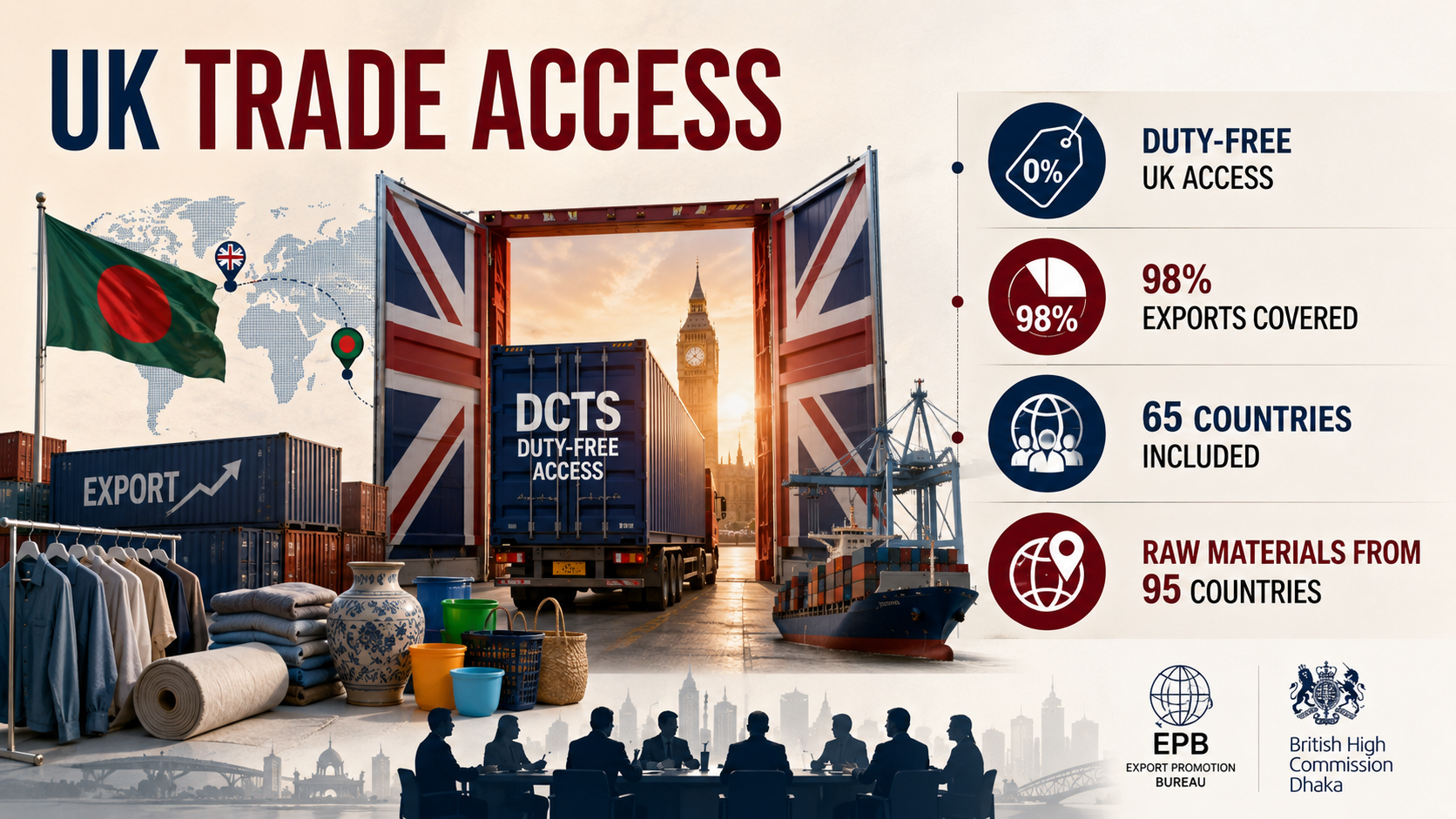
Following Brexit, the British government introduced the DCTS to provide duty-free market access to 65 least developed and developing countries, including Bangladesh.
Bangladesh is due to graduate from LDC status in 2026. Changes made under the DCTS mean the country will retain duty-free access for 98 percent of its exports, including ready-made garments. The scheme is more generous than the European Union (EU) arrangement under which the UK previously operated.
The DCTS is expected to help developing countries integrate more deeply into the global economy, create stronger trade and investment partnerships, and strengthen supply chains.
The scheme also makes it easier for exporters to use components sourced from other countries without losing duty-free status.
Under the DCTS, Bangladesh can participate in global value chains involving raw materials from 95 countries, and export finished products to the UK duty-free, provided specified requirements are met.
The scheme promotes free and fair trade, human rights and good governance. Continued access to DCTS preferences is contingent on respect for human and labour rights and compliance with relevant international conventions, including those relating to civil and political rights, anti-corruption, climate change and environmental protection.
 For all latest news, follow The Daily Star's Google News channel.
Comments