


Compress(space): A love letter to indie games from Bangladesh

Growing up as an ardent gamer, I would often tell people that I wanted to be a game developer. The more I came to understand the reality of our country, the more I thought there was no future here for it, at least when it came to me.
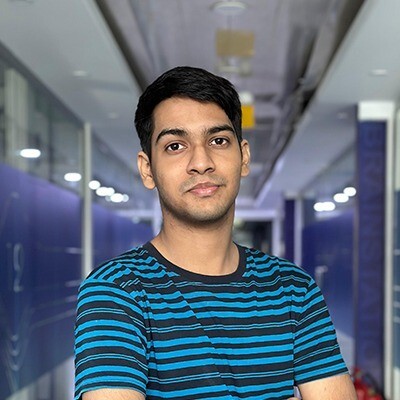
For Fahim Faysal, however, this was a challenge he was willing to take on. “Games shaped my childhood,” he says. “Over time, I felt I wanted to give something back to the industry that inspired me.”

That motivation led him to study computer science and engineering (CSE) at Bangladesh University of Engineering and Technology (BUET), where he began exploring game development more seriously. Alongside his academic work, Fahim took part in game jams—fast-paced competitions where developers build games within days. Several of those projects later grew into commercial releases on Steam, Xbox and other platforms, collectively reaching over 30,000 downloads.
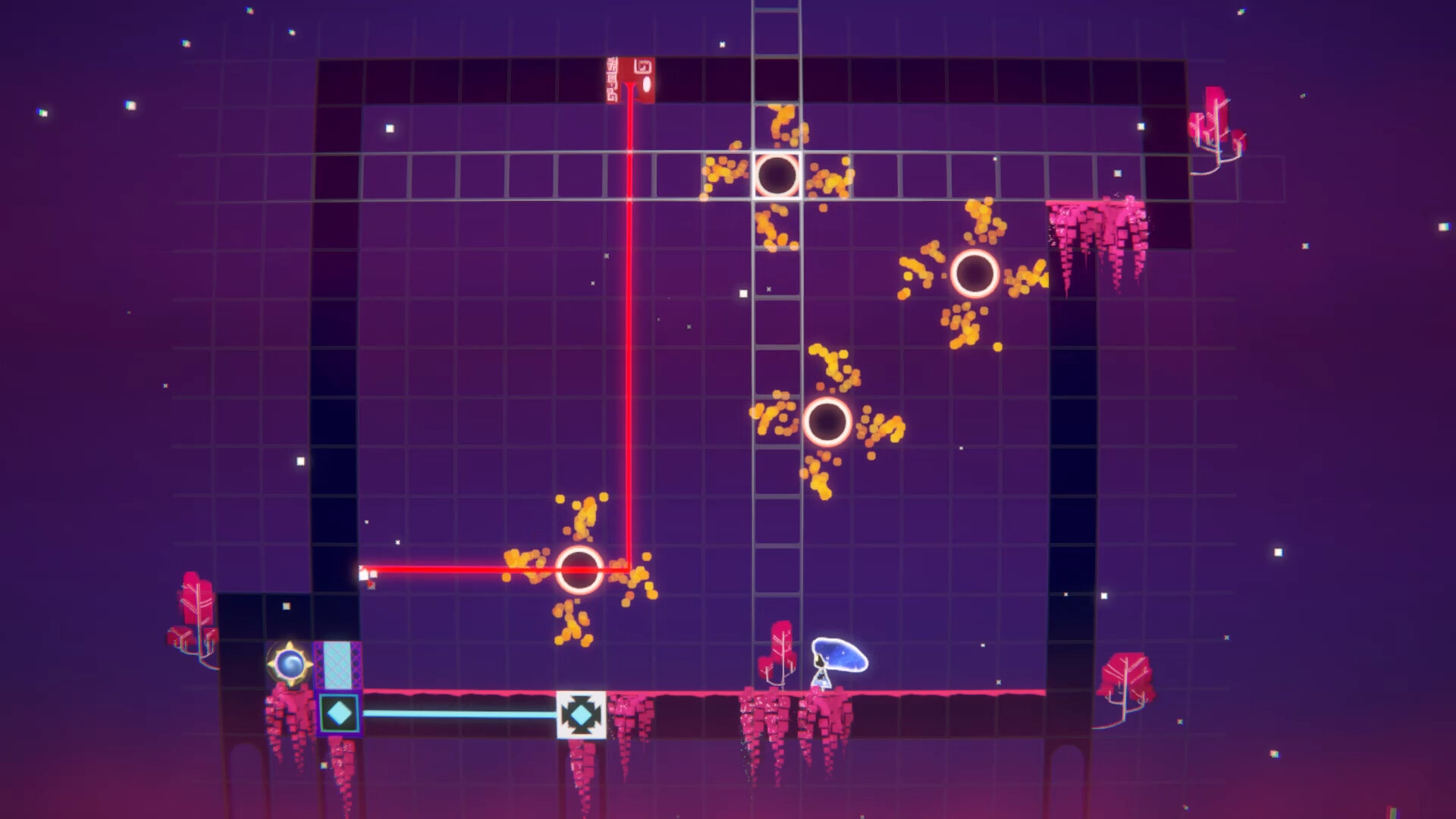
One of those experiments became Compress(space). It is a minimalist puzzle game built around a striking central idea: instead of moving through the world, players manipulate space itself. By compressing and folding distances, the game asks players to rethink scale, proximity, and movement in ways that feel both intuitive and surprising. Each puzzle introduces a new spatial constraint, gradually expanding on the core mechanic without relying on lengthy tutorials. The result is a thoughtful, physics-defying experience that rewards experimentation and curiosity, drawing clear inspiration from modern cerebral puzzle games while establishing an identity of its own.
Games shaped my childhood. Over time, I felt I wanted to give something back to the industry that inspired me.
“The idea came from a game jam,” Fahim recalls. “It was rough, but the concept stayed with me. I felt it could be turned into something much bigger.”
The game challenges players to manipulate space itself, folding and compressing distances to solve puzzles.
Development was not easy. For nearly two years, Fahim worked alone. “There is very little government or institutional support for game developers in Bangladesh,” he says. “Because of that, I had to look abroad for funding and mentorship. Finding people with the right skills locally was also a challenge.”
Gradually, the project evolved into a three-person, multinational team. Redwan Abir, a BUET architecture student, joined as the 3D artist, shaping the game’s visual identity. Drew Marcum, a US-based sound designer with more than 50 million streams on Spotify, brought professional-grade audio design, with credits including Pixar, Apple TV+ and Deadmau5.
A major breakthrough came in 2025 when Compress(space) was selected for the Draknek New Voices Puzzle Grant, an international programme supporting puzzle game developers from under-represented backgrounds. The grant provided USD 15,000 in funding and direct mentorship from established puzzle game designers.
“That support made a huge difference,” Fahim says. “It gave us confidence that we were on the right path.”
Today, Compress(space) stands as a notable example of how Bangladeshi developers are quietly making their mark on the global gaming landscape. Fahim remains focused on completing the game while working on other ideas in the background.
“This is my main project right now,” he says. “But I am always experimenting.”
“I hope this shows that meaningful games can come from Bangladesh too, even if the ecosystem is still growing,” he adds.
 For all latest news, follow The Daily Star's Google News channel.
Comments