


The heavy toll of long commutes on students

For a significant portion of university students, the academic day starts at 6:00 AM, standing on a dusty kerb, eyes scanning the horizon for the familiar, battered silhouette of a local bus. As the city’s traffic congestion continues to reach record-breaking levels of stagnation, the commute has transformed into a primary source of stress that dictates every facet of a student’s life.
Whether they are enrolled in a public institution or private university, those living far from campus are bound by a common thread: the agonising loss of time, energy, and the university experience to the unmoving sea of vehicles that defines the capital.

The scale of this struggle has expanded from personal frustration to a documented urban crisis. According to a 2018 study by the World Bank, the amount of time lost due to traffic congestion is around 3.2 million hours per day in Dhaka. For a student travelling from Uttara to Nilkhet or from Mirpur to Badda, this translates into an average of three to four hours spent in transit every single day.
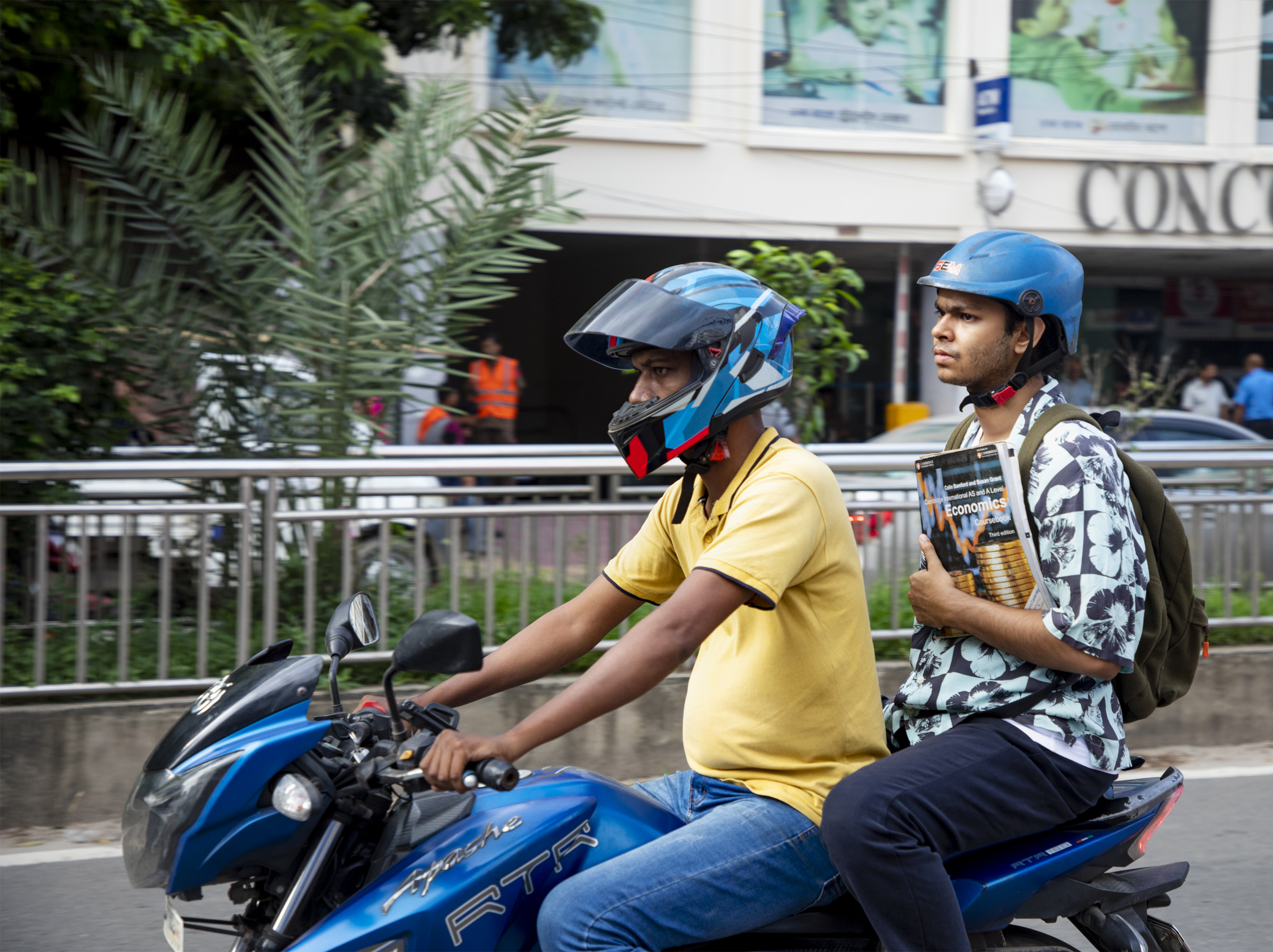
A systematic review published in the National Library of Medicine highlights that long-distance commuting is consistently associated with lower levels of life satisfaction and higher psychological distress among people. For students, this chronic stress often manifests as learning engagement fatigue. When the brain is forced to spend two hours in a state of high alert, it arrives at the classroom in a state of exhaustion.
This struggle affects students across all institutional boundaries. Rafid Chowdhury, a third-year student from the Physics Department at Dhaka University (DU) who commutes daily from Uttara, describes the physical toll of relying on the city’s public transport infrastructure. "By the time I reach TSC for my 8:00 AM class, I feel like I have already finished a full day’s work. There is no such thing as a 'peaceful' commute on a local bus. You are constantly fighting for space, dealing with the heat, and breathing in fumes. I spend the first two periods of the day just trying to stop my head from spinning. My notes are often incomplete because I’m physically too drained to focus on the nuances of a lecture," he says. For Rafid, the academic day is a battle of endurance rather than an intellectual pursuit.

The narrative is strikingly similar for Sarah Khatun, a second-year economics student at North South University (NSU) who lives in Dhanmondi. While the socioeconomic backgrounds of students may differ, the gridlock of Bijoy Sarani and Banani remains the same. "There’s a common misconception that private university students have a more comfortable journey, but the traffic provides the ultimate offset," Sarah explains.
"I have had to drop core courses because the unpredictability of the morning rush meant I was consistently ten to 15 minutes late for quizzes. In a competitive academic environment, those minutes matter. It directly drags down my CGPA.”
Beyond the classroom, the commute acts as a silent thief of the social and extracurricular opportunities that define university life. Hafsa Rushdi, a final-year student at the CSE Department of Jahangirnagar University (JU) who lives in Mohammadpur, describes the isolation that comes with being a day scholar in a city of traffic jam. "The university experience is supposed to be about clubs, late-night hangouts, and networking. For me, it’s a race against the clock. If I don’t leave the campus by 5:00 PM, I won’t arrive home before 9:00 PM. I’ve had to decline leadership roles in several clubs because I simply cannot stay for evening meetings. You end up feeling like a guest at your own university, constantly checking your watch while your friends are making memories."
The financial and mental burden also weighs heavily on those navigating the city's outskirts. Tanvir Raihan Badhon, a third-year BBA student at the University of Liberal Arts Bangladesh (ULAB) residing in Bashundhara, discusses the mental burnout that follows a four-hour round trip. "The noise, the dust, and the constant heat leave you in a state of perpetual irritability. When I finally get home, I don’t have the mental capacity to engage with my family or work on assignments.”
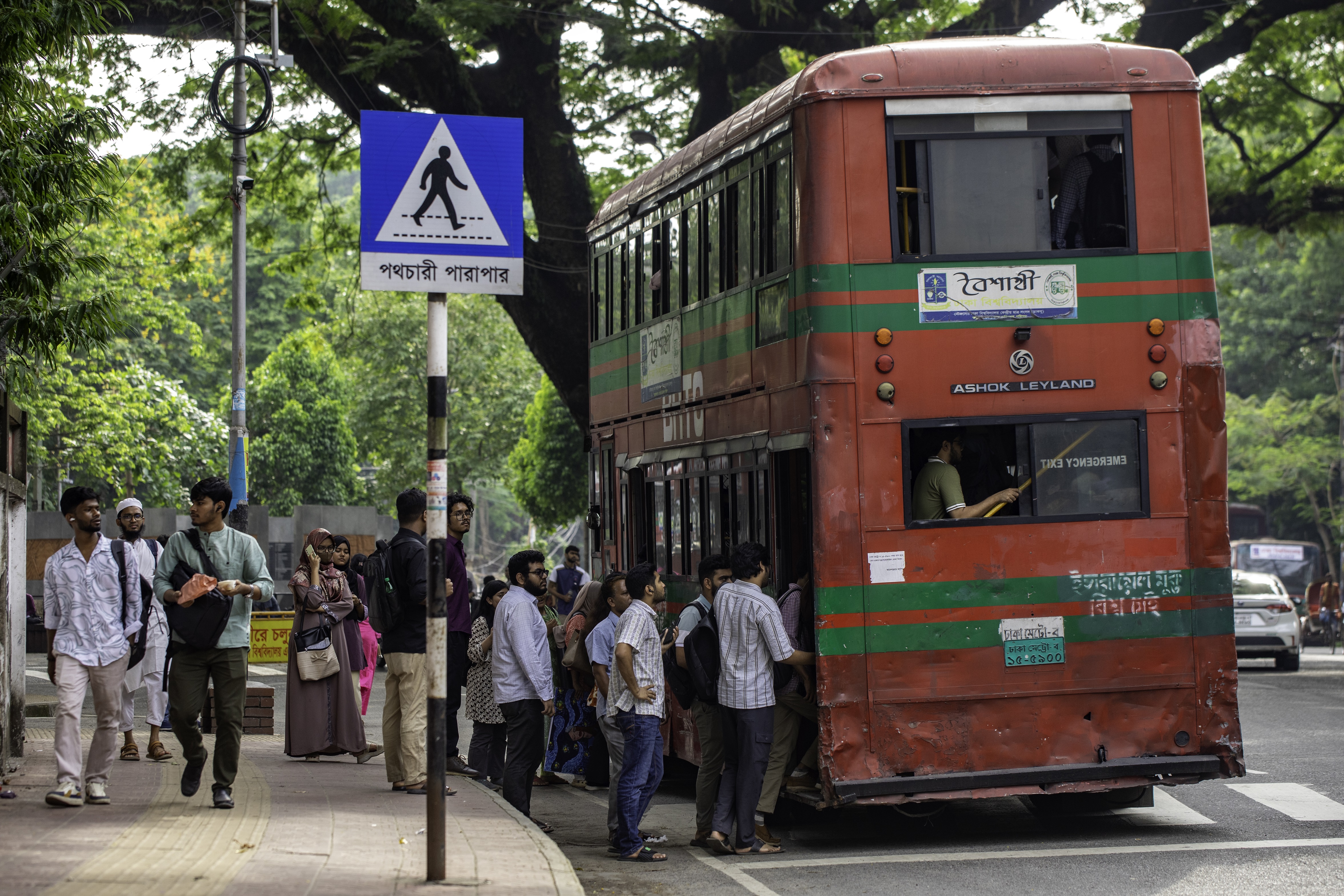
For students at Jagannath University (JnU), the congestion of Old Dhaka adds a unique layer of difficulty. Fahim Faraaz, a second-year student studying chemistry at the university, who travels from Jatrabari to Sadarghat, notes how the commute dictates his entire physical health. "Public buses are an exercise in uncertainty. Sometimes I wait 20 minutes just to board a bus that isn't already overflowing. The pollution in Old Dhaka is also a major factor; I’ve developed chronic respiratory issues just from standing in traffic for hours every day. It’s hard to stay motivated when your environment is physically making you ill."
Research from the Bangladesh Institute of Planners (BIP) suggests that the lack of decentralised educational hubs forces thousands of students to converge on the same corridors every morning, creating a perfect storm of congestion. For a student like Mehedi Hasan at United International University (UIU), whose campus is located in the relatively isolated United City, the journey from Old Dhaka’s Wari feels like an expedition to another district. "The dust and the multiple transfers required to reach the campus were enough to make me want to stay home. In the first year, my attendance was barely 70 percent because the thought of the commute was so overwhelming."
However, the narrative is beginning to change as several private universities recognise that the commute is a major barrier to student success. In a city where public transport is often unreliable and unsafe, the introduction of dedicated, university-managed shuttle services has become a beacon of hope for thousands.
For students at BRAC University (BRACU), the relaunch and expansion of the student transport service have been transformative. The service now covers ten major routes, reaching as far as Narayanganj and Savar. "The university bus is more than just a vehicle; it’s a sanctuary," says Maria Kamal Sheikh, a first-year student of microbiology at BRACU. "Though we often rush to claim seats with shoes, notebooks, or bags, this AC bus is a sanctuary. It beats the local gamble I used to do with the bus conductors for a seat and has helped me achieve two productive hours back for studying, finally restoring my mental peace."
Similarly, NSU’s expansion of its shuttle system has provided a sense of security that was previously missing. The use of fixed timings and designated pick-up points allows students to plan their days with a level of certainty that the public transport system cannot offer. "Having an NSU bus means I don’t have to haggle with CNG drivers who refuse to go on short distances or charge double during rain," says Fatin Farhan, who is studying law at the university. "It’s a safe space, especially for female students who often face harassment on public buses. Knowing that you are surrounded by your peers makes the two hours in traffic much more bearable."
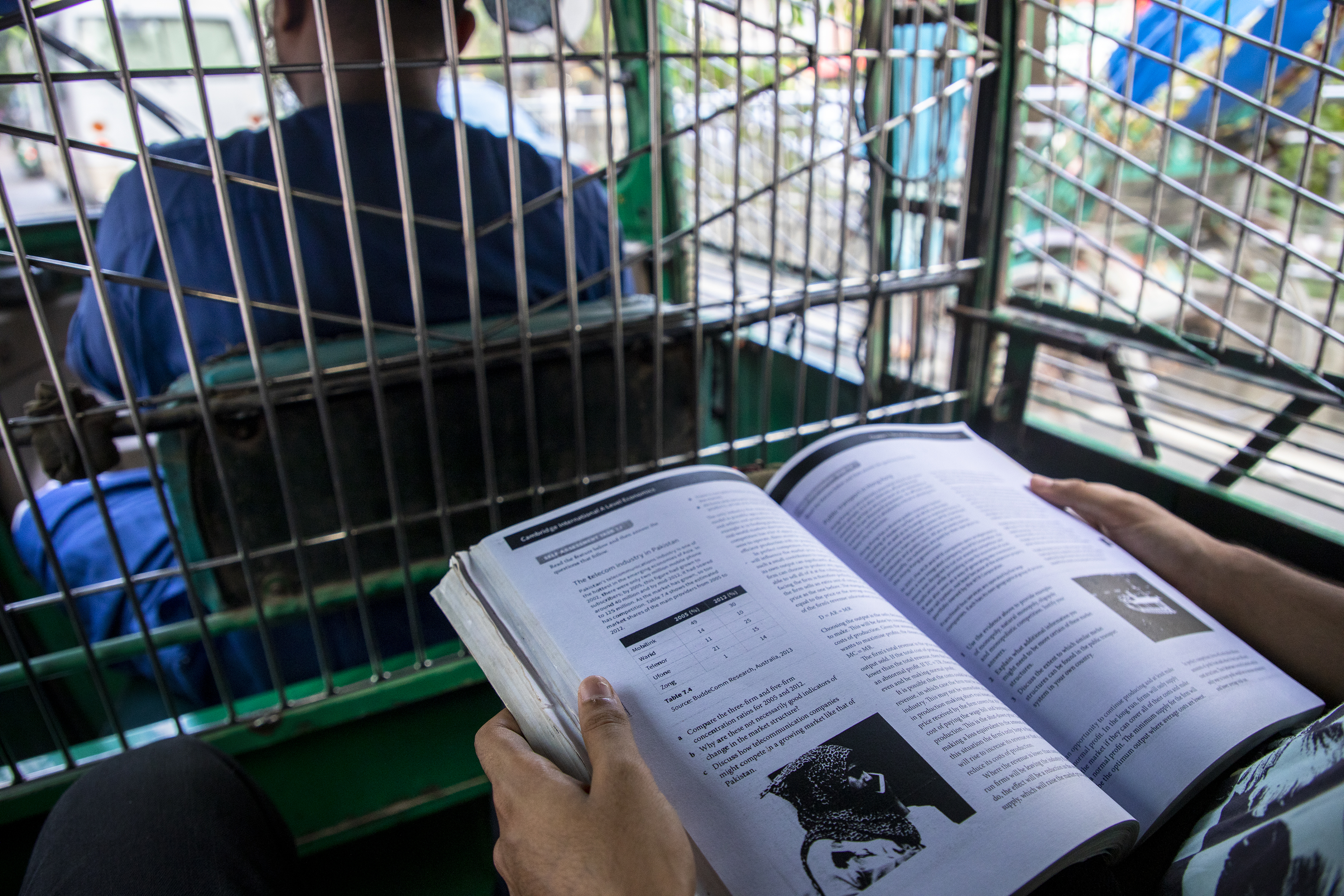
At UIU, the shuttle service has bridged the gap between its state-of-the-art campus and the city's residential hubs. By utilising the Elevated Expressway for certain routes, the university has effectively optimised the traffic system, significantly reducing travel times. "The first time I took the university shuttle via the Expressway, I reached home in 40 minutes, which is a journey that usually took more than an hour," Mehedi recalls.
“It felt like a miracle. When the university takes responsibility for how you get to campus, it shows they value your time and your safety. It makes me more willing to stay back for lab work or club activities because I know I have a reliable way to get home." The success of these transport systems highlights a crucial reality: while the city's infrastructure is failing, institutional solutions can provide immediate relief.
Yet, for the thousands of university students who still rely on the "murir tin" (local buses) or other public transportation, the struggle remains a daily ritual of survival. Without a massive overhaul of the public transport system, including the completion of all Metro Rail lines and the implementation of Bus Rapid Transit (BRT), the student population will continue to bear the brunt of the city’s poor planning.
Until that day comes, the university experience for many will remain defined by the view from a bus window. The hours lost in traffic are hours that could have been spent on research, on innovation, or on building the relationships that form the foundation of a professional career. The resilience of Dhaka’s students is remarkable, but it is a resilience born of necessity, not choice.
 For all latest news, follow The Daily Star's Google News channel.
 References:
- National Center for Biotechnology Information (NCBI) (2023). Impact of Commuting on Mental Health and Academic Performance of University Students: A Systematic Review.
- Elsevier (2012). “The influence of control and related variables on commuting stress.
- Elsevier (2015). Student commute time, university presence and academic achievement.
- Roads and Highways Department (RHD), Government of Bangladesh (2024). Improving the Reliability and Safety on National Highway Corridors of Bangladesh by Introduction of ITS.