


Adivasis' rights ignored despite sacrifices
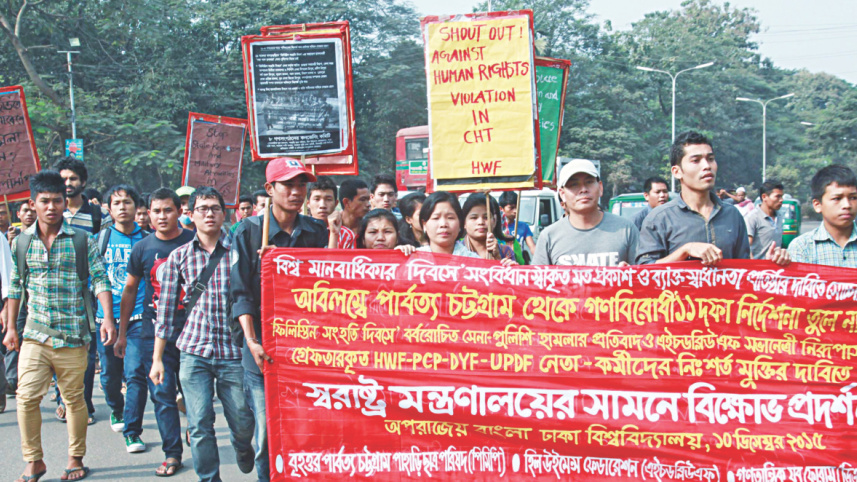
Though the country got indigenous peoples beside it during the Liberation War and other movements, their rights are still being ignored, Civil Aviation and Tourism Minister Rashed Khan Menon said yesterday.
"We could not give them their constitutional rights after the Liberation War. And many years later while the fifteenth amendment was passed, their rights were still ignored," he told a seminar titled "Indigenous Peoples in Bangladesh: Human Rights and Sustainable Development Goals" at the capital's Lakeshore Hotel.

"Though the CHT Peace Accord has been signed for a long time, we could not implement the accord completely," Menon said at the event, organised by Bangladesh Indigenous Peoples Forum (BIPF) with support from the International Labour Organization (ILO).
Adivasis' participation in mainstream politics is very nominal, and it is impossible to make progress leaving them behind, the minister said.
President of BIPF Jyotirindra Bodhipriya Larma said like elsewhere in the world, inequality and poverty among indigenous peoples in Bangladesh were driven by factors like forced displacements, alienation of lands, cultural discrimination, and poor access to education, healthcare, employment and social services.
Santu Larma also said, "The core issues of the CHT Peace Accord relating to political and constitutional rights, economic and land rights, withdrawal of all temporary military camps and rehabilitation of returnee refugees are left unaddressed."
Ambassador and head of delegation of European Union Pierre Mayaudon said, "We are relying on the government engagement to implement the full CHT Peace Accord".
Danish Ambassador in Dhaka Hanne Fugl Eskjær said indigenous people should be the partner in the growth of the country and be able to share the benefit of this development.
 For all latest news, follow The Daily Star's Google News channel.
Comments