


Rain water harvest can meet clean water need
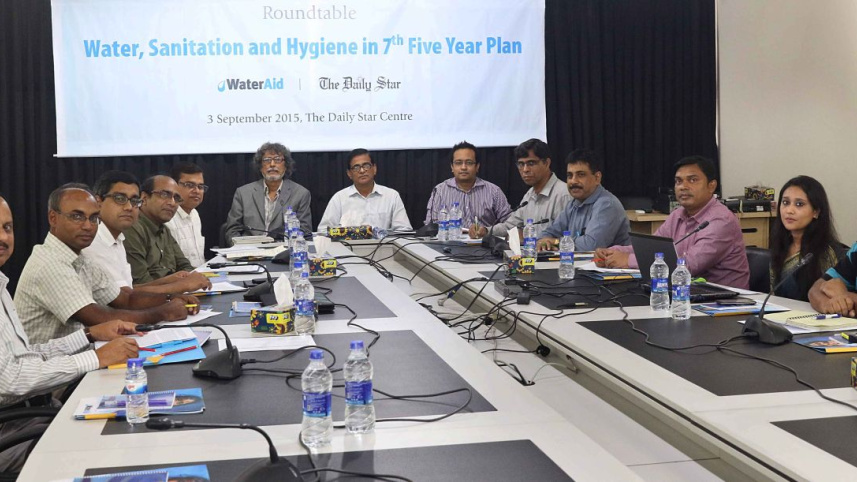
Speakers at a roundtable yesterday emphasised the need for rain water harvest as a way of meeting the need for clean water. They also suggested faecal sludge and menstrual hygiene management to prevent deaths by poor sanitation and hygiene facilities.
They were addressing the roundtable on "Water, Sanitation and Hygiene (WASH) in the 7th Five Year Plan" organised by WaterAid Bangladesh and The Daily Star at the latter's office in the capital.
 For all latest news, follow The Daily Star's Google News channel.
 Dr Tahmeed Ahmed, senior scientist and director of the Centre for Nutrition and Food Security of icddr,b, said almost 50 percent of children under the age of five suffer from fever, diarrhoea and pneumonia caused by poor hygiene facilities.
Lack of WASH facilities has made one-third of children stunted and less meritorious than they would have been, he said.
Referring to a research of icddr,b, Dr Tahmeed said a mother used to feed her child with a spoon without cleaning it properly, exposing the child to life threatening bacteria.
Prof Dr Shamsul Alam, senior secretary and member of the GED of Planning Commission, advised people not to leave everything upon the government and take initiatives to ensure better hygiene and sanitation.
Liakat Ali, director of Programme, Policy and Advocacy of WaterAid, said although the problem of defecating in the open has reduced significantly, human waste is now channelled to water bodies creating severe water pollution.
Policy and Advocacy Specialist of WaterAid Robaiya Nusrat gave a keynote presentation in which she said more than 70 percent of WASH allocation is for urban settlements, whereas remote areas receive less than one percent allocation in WASH budget.
Shamim Ahmed, head of the Policy and Advocacy of WaterAid, moderated the roundtable where Shah Md Anowar Kamal, executive director of Unnayan Shahojogy Team; and Syed Shahnoor Wahid, special supplements editor of The Daily Star, among others, spoke.
Comments