


The mosque for 'manoth'
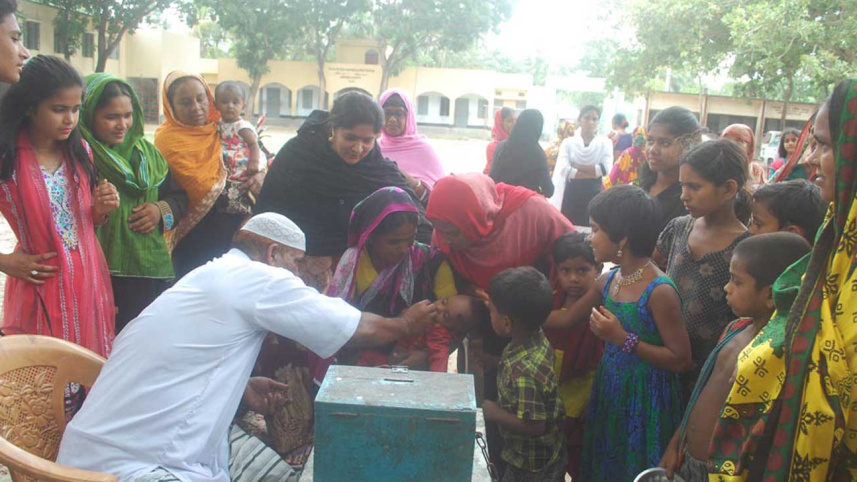
Undecided, the monsoon sky is intermittently optimistic with patchy sunlight. People gather regardless of the threat of rain, as they do every Friday at the historic Bharara Shahi Mosque eight kilometres from Pabna town. Unlike the sky, their' hopes are always bright.
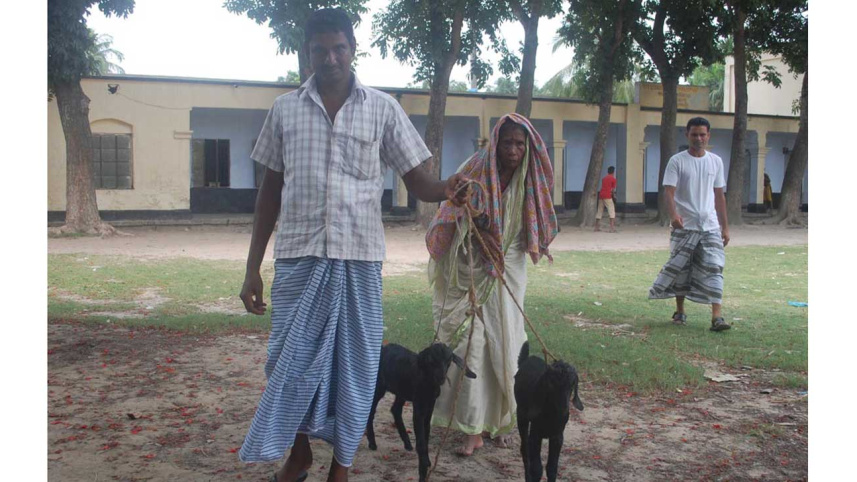
A man leads a goat into the yard. Another is preparing to cook goat meat while under a nearby tree a family rests, drinking tea. Two women have reached the gate, each carrying an infant; one is juggling baby and purse to retrieve money for the CNG fare. In any instant the activities at Friday's mosque are many, but purpose is shared. They seek divine blessing.

"Anybody of pure mind who makes an offering here," says local Md. Abdul Karim Sheikh, 80, "will see prayers answered. People have been journeying here for centuries because of the mosque's special reputation."
Abdul Wahab Sheikh, 70, of Char Manikdir village of Pabna's Sujanagar has arrived in the hope of securing better health. "I'm suffering from many diseases and have found no cure," he says. "There are many legends about this mosque so I thought to donate Tk 100 as a last chance."
The mosque is said to bring special blessing to any newborn who takes their first solid food here. Shanta Begum has brought her 6-month-old nephew Shimul for this purpose. "It's a spiritual place," she says, "We have decided to give Shimul his first solid food at this mosque in the hope of his successful future."
By tradition many offerings are given as "manoth", representing an expression of gratitude for an earlier prayer already granted.
Jahanara Begum, 50, has come from her home of Bonpara in Natore District for this reason. "My six-month-old grandson Sazal suffered from digestive problems for the last couple of months," she says. "Medical treatment offered no cure so I promised in prayer to sacrifice a goat at Bharara if my grandson became well." With her grandson out of danger, Begum will honour her promise.
Local stories abound about the mosque's creation, commonly attributed to a jinn spirit, though historians ascribe its foundation to the landlord Asalat Khan in 1769. Originally established on six decimals of land the mosque was subsequently expanded while maintaining the original three-dome design. The mosque is famed for having survived many Padma River deluges while other buildings perished.
"The well-constructed mosque preserves the heritage of eighteenth century Islam," says the Imam, Md. Shafikul Islam.
In earlier times Bharara Shahi brought brisk business to the area, particularly trade in domestic livestock used for sacrifices; but mosque donations, particularly for manoth, were not always well managed, according to Md. Akkas Ali Sheikh, a member of the mosque management committee. "There was a time when donations were looted," he says, "They used to sell the domestic animals and donate the money to the mosque fund; but the system has changed."
"Islam does not oppose manoth," says Md. Adbus Samad, deputy director of the Islamic Foundation in Pabna. "But there are religious rules. For example, cash and other materials for manoth may be used for mosque development work but not to benefit anybody related to the mosque." He is unconvinced the relevant rules are always adhered to.
Yet the belief in blessings from Bharara Shahi mosque still draws more than a thousand believers each Friday. Whether or not religious systems are strictly observed, the practice is a well-established part of the region's cultural landscape and to many the site remains a source of hope.
 For all latest news, follow The Daily Star's Google News channel.
Comments