


When ‘Little Women’ turns to murder: Katie Bernet reimagines a classic

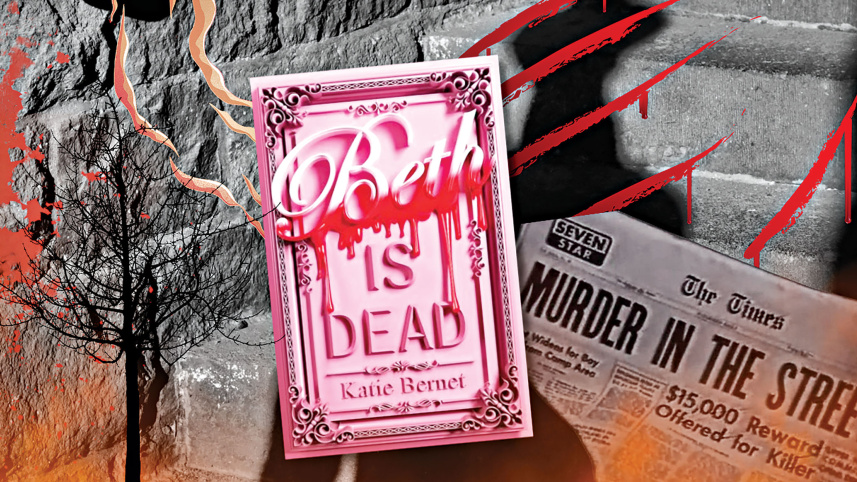
What if Beth March in Little Women (1868) hadn’t died of scarlet fever, but had been brutally murdered instead?
That chilling premise drives Katie Bernet’s debut novel, Beth Is Dead, a sharp, modern reimagining that trades Louisa May Alcott’s gentle domestic warmth for suspicion, secrecy, and a house thick with unease.
 For all latest news, follow The Daily Star's Google News channel.
 While respecting Alcott’s choice to let Beth die, Bernet moves the March family into the present day. The sisters now face peer pressure, toxic relationships, social media scrutiny, and the chaos of sudden fame.
In Bernet’s version, the Marches are already famous before Beth’s death. Their father has written and published Little Women, a thinly veiled novel based on his daughters’ real lives. The book controversially ends with Beth dying in a car crash—even though she actually survived the accident. Its success thrusts the family into a spotlight and forces the father into hiding.
Then, on New Year’s Day, Beth is found murdered in the woods. The crime feels both shocking and eerily inevitable, as if violence were less an intrusion than an escalation of the public’s fixation on their private lives. The media frenzy that follows mirrors our current reality: once a personal tragedy goes public, it becomes ‘content’ to be dissected, debated, and consumed.
The story alternates between two timelines. In the present, we follow the three surviving sisters—Meg, Jo, and Amy—as they wrestle with grief and rising paranoia. Flashbacks reunite all four sisters, showing Beth at her piano, her gentle spirit, and her tentative steps toward self-discovery. These tender scenes make her loss hit even harder.
The novel borrows true crime’s investigative, suspicion-fuelled style and weaves it into fiction. Meg, Jo, and Amy actively investigate Beth’s murder, digging up motives and secrets while turning suspicion inward—toward family and close friends. This echoes how true crime audiences and content creators obsess over clues, red herrings, and ‘whodunnit’ theories. The approach lands especially well with those of us hooked on podcasts and documentaries about real cases. We start reading conversations and memories like clues. The novel shows how quickly suspicion takes over—and how easily vulnerability becomes something to analyse. Though the frequent timeline and viewpoint shifts may feel disorienting at first, they soon build into a gripping, fast-paced rhythm.
At its core, Beth Is Dead questions who gets to tell a story. The father’s novel—eerily prefiguring Beth’s death—exposes how easily art can edge into exploitation. The damage it leaves behind shows the cost of making private pain public.
Bernet frames suffering as a form of capital, circulated and consumed. Jo, an aspiring author with a significant online following, understands this all too well. “I’ve written loads of personal essays in my life,” she says, “some light, some dark, and the ones that get compliments, real traction, are the ones about pain, strife.” The novel presses on the uncomfortable truth: once grief is packaged for an audience, it no longer belongs solely to the bereaved.
If this critique gives the book its intellectual edge, the enduring sisterhood provides its emotional core. Bernet resists idealising the March sisters. They emerge as complex, sometimes unlikeable young women—marked by resentments, jealousies, and long-kept secrets that strain their bonds. Yet their deep love for one another persists, even as suspicion threatens to rip them apart.
While the mystery’s twists may not always shock seasoned thriller readers, the real pleasure comes from watching these iconic characters navigate suspicion and grief while clinging to the same unbreakable bonds that made Alcott’s original timeless. Beth Is Dead is both unsettling and unexpectedly satisfying — a reimagining that honours Alcott’s legacy while holding a mirror to our own appetite for spectacle.
Shababa Iqbal is a journalist with a background in entertainment, fashion, lifestyle, literature, and youth-focused stories. Reach her at shababa@icloud.com.


Comments