


Harmony Festival brings indigenous voices to the fore

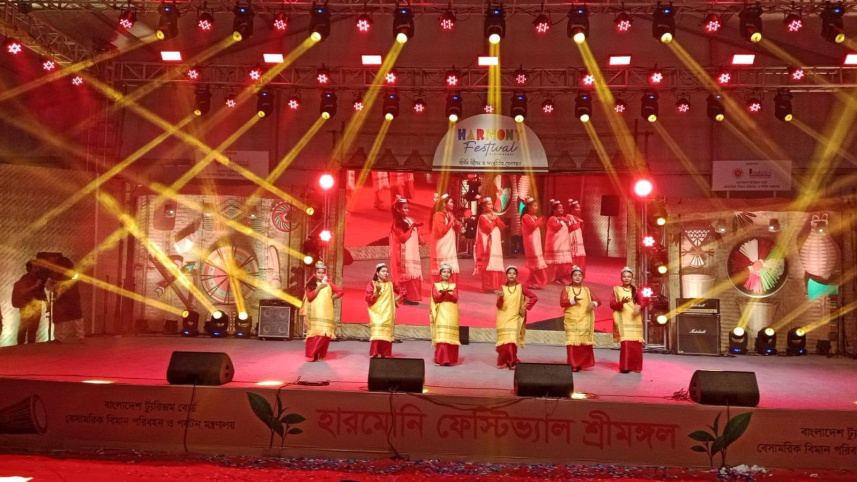
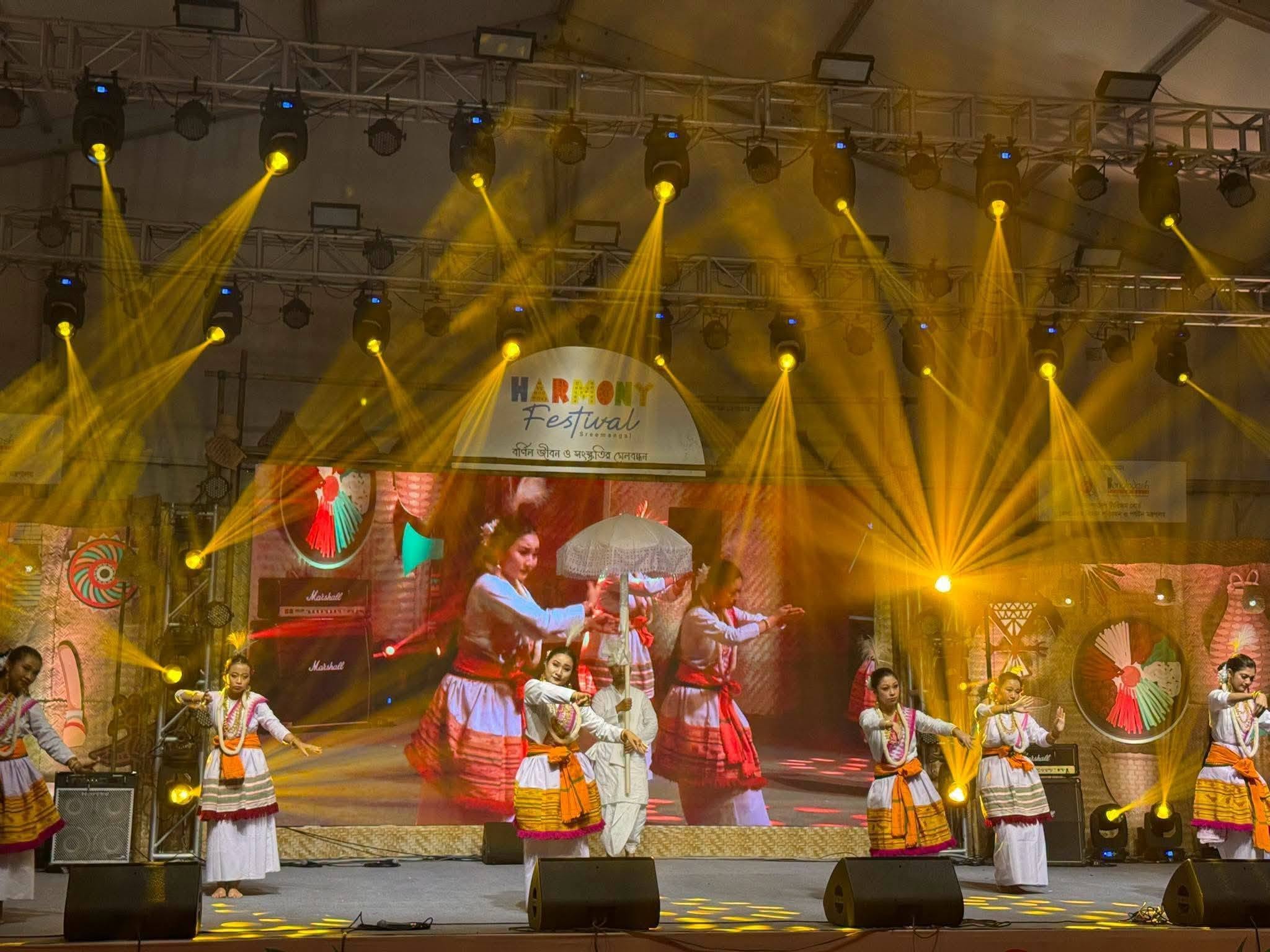
The second Harmony Festival opened yesterday in Moulvibazar’s Sreemangal, bringing together the culture, cuisine, and handicrafts of 27 small ethnic communities from the Sylhet division under one roof amid the lush surroundings of a tea garden.
Civil Aviation and Tourism Minister Afroza Khanam inaugurated the festival, with the ministry’s Secretary Fahmida Akhter in the chair.

State Minister for Civil Aviation and Tourism M Rashiduzzaman Millat and Moulvibazar-3 and Moulvibazar-4 lawmakers M Naser Rahman and Md Mujibur Rahman Chowdhury attended the inaugural programme as guests of honour.
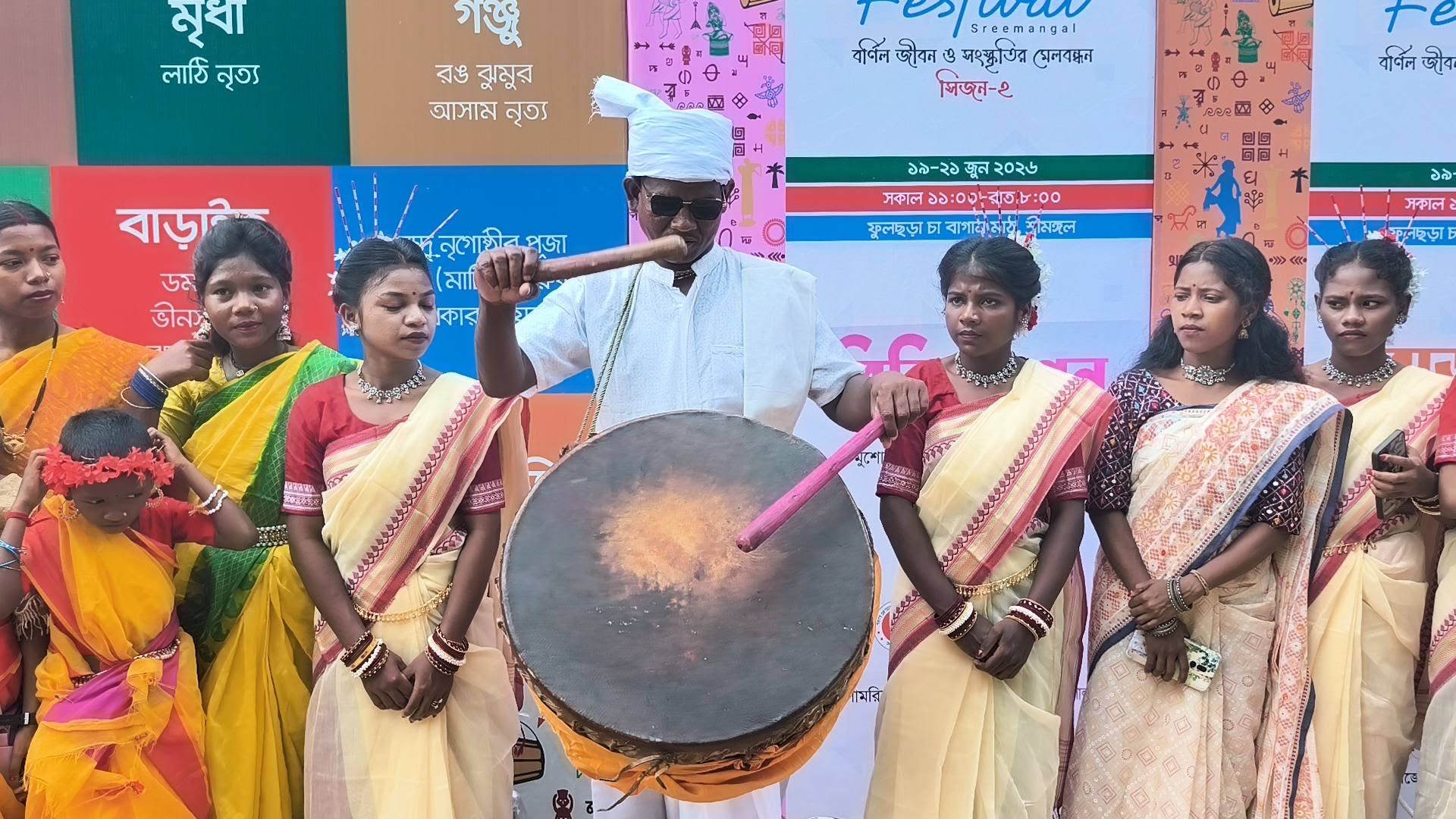
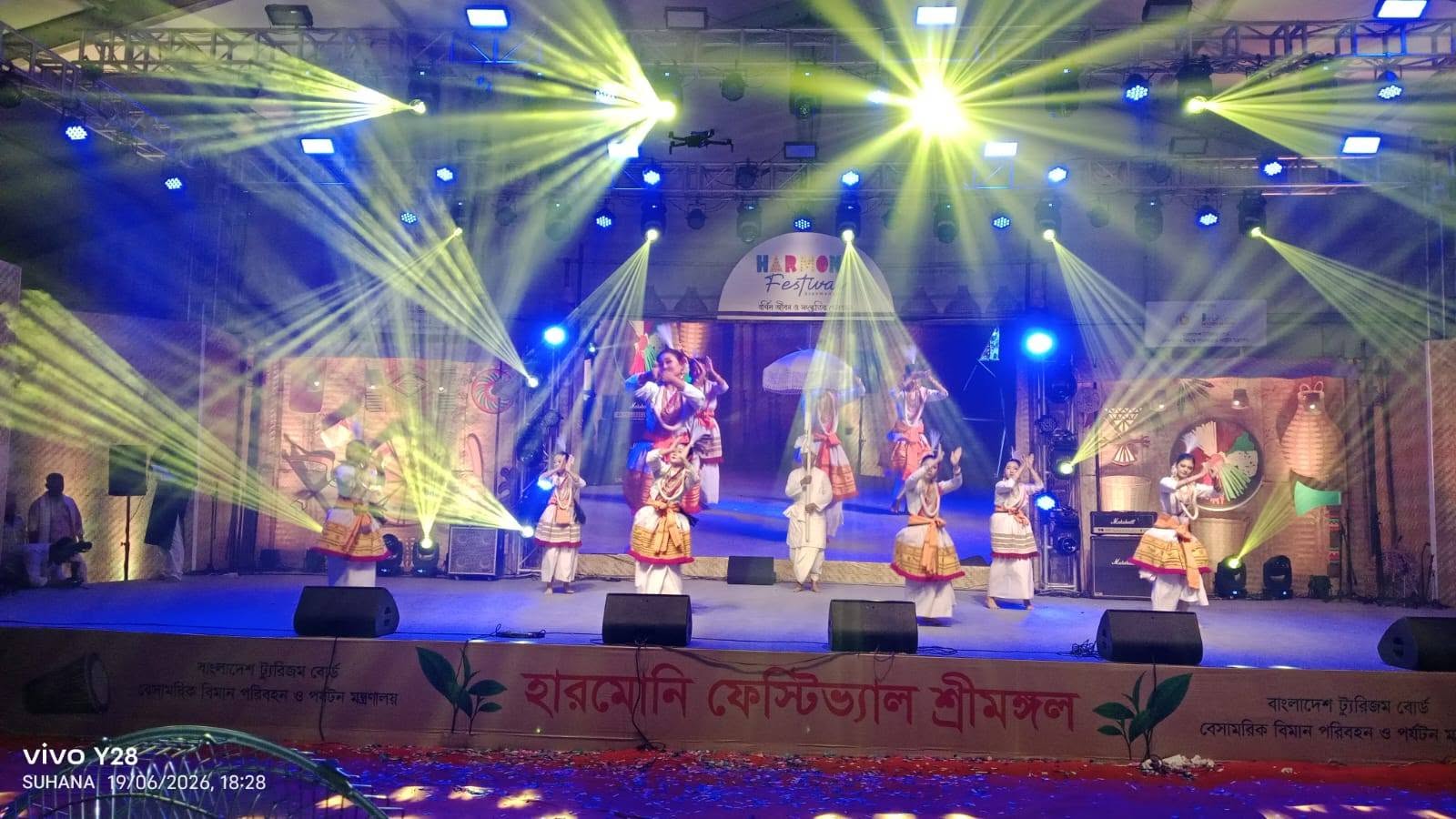
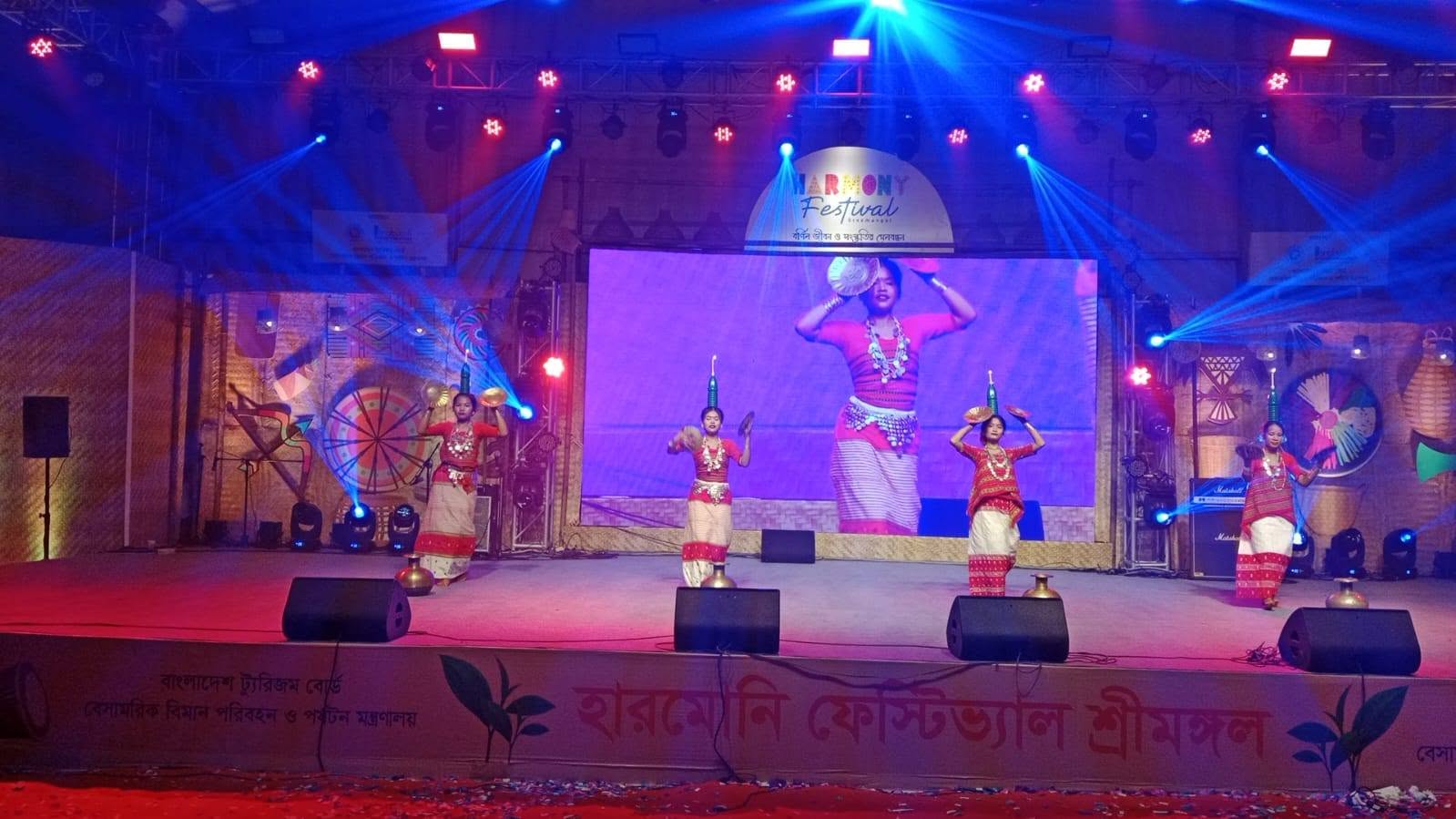
From the Khasia tradition of preparing paan to the intricate weaving of the Manipuri community, the Tripura waist loom, and the dances of the Shabar and Munda communities, the festival offered a vibrant showcase of the region’s indigenous heritage. Participants arrived in traditional attire and performed cultural dances throughout the event.
After the inauguration, the dignitaries visited stalls showcasing the unique customs, crafts, and products of different ethnic communities.
Speaking at the event, Minister Afroza Khanam said the festival had given her a deeper understanding of the country’s cultural diversity.
“You are the soul of our national culture,” she told representatives of the ethnic communities, adding that their contributions to the Language Movement of 1952 and the Liberation War of 1971 deserved greater recognition.
She described the festival as more than a cultural celebration, saying it would contribute to the local economy by promoting handicrafts and tourism. She expressed hope that the Harmony Festival would one day attract international visitors, noting that Sylhet has been included in the Tourism Board’s master plan to develop the division into an internationally competitive destination.
The minister also pledged to raise the ethnic communities’ demand for an academic building with the prime minister.
Partho Hajong, an indigenous resident of Harinchara Tea Garden, said the festival was giving indigenous communities a platform to share their stories and traditions.
“When I sit at my waist loom here at Finlay Tea Garden and people stop to watch and ask questions, it is not just tourism — it is recognition,” he said.
“We have kept these crafts alive through generations. I hope this platform helps our children feel proud of who they are,” he added, saying the minister’s pledge to raise their demand for an academic building had given them hope.
Rafi Ahmed, a visitor from Dhaka, said he came to Sreemangal for its tea gardens but discovered a different side of Bangladesh through the festival.
“Watching the Shabar and Munda dances, tasting food I had never heard of, and seeing Khasi paan preparation up close felt like 27 different worlds opening at once,” he said.
He said such experiences should be included in every traveller’s list and hoped the Tourism Board’s international promotion plan would bring global attention to the festival.
 For all latest news, follow The Daily Star's Google News channel.
Local resident Kamal Hossain said although he had lived alongside these communities for decades, the festival helped him discover the richness of their traditions.
“Sreemangal feels alive this weekend — with more visitors, more business, and more pride,” he said.
He added that he planned to buy handicrafts from the stalls to support local artisans.
Bangladesh Tourism Board and Sreemangal upazila administration jointly organised Harmony Festival in January for the first time.
Comments