Thank you, Raghu Rai, for showing me the 1971 I had not known

In December 2012, I walked into a photo exhibition in Dhaka as a young journalist and came out a changed man.
The exhibition featured Raghu Rai’s photographs from the 1971 Liberation War. I did not know then that I was about to meet not just a photographer’s work, but a chapter of our history that had somehow lived outside my own imagination.

Until that day, my understanding of 1971 had been rooted in Feni and Cumilla, in family stories, and especially in my father’s memories as a freedom fighter. The version I inherited was one of frontline danger, survival, and courage -- people taking the war head on and living to tell the story.
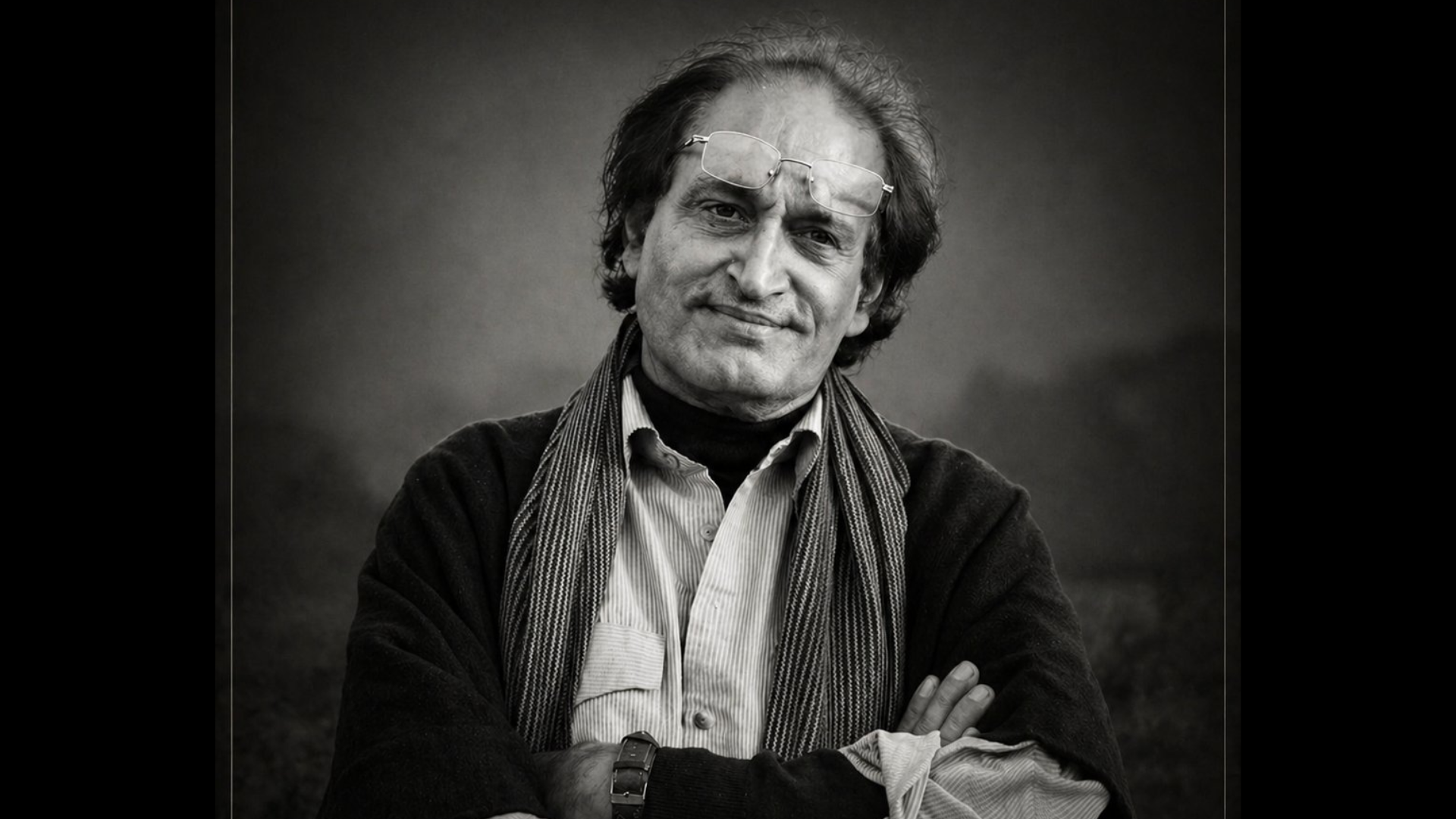
But Rai showed me another war.
The war of mothers carrying children through mud. The war of old people being carried because their bodies could no longer keep going. The war of families who left behind homes, cattle, trees, ponds, graves, their identity and sense of belonging. Imagine becoming a refugee overnight.
Raghu Rai, then working for The Statesman, was sent to photograph the exodus from then East Pakistan. The refugees would eventually number around 10 million, streaming into West Bengal and neighbouring Indian states to escape atrocities by the Pakistani army. Rai was only five years into photography then. Yet somehow, he understood something many men with power failed to understand: suffering is not a statistic, it has a face.
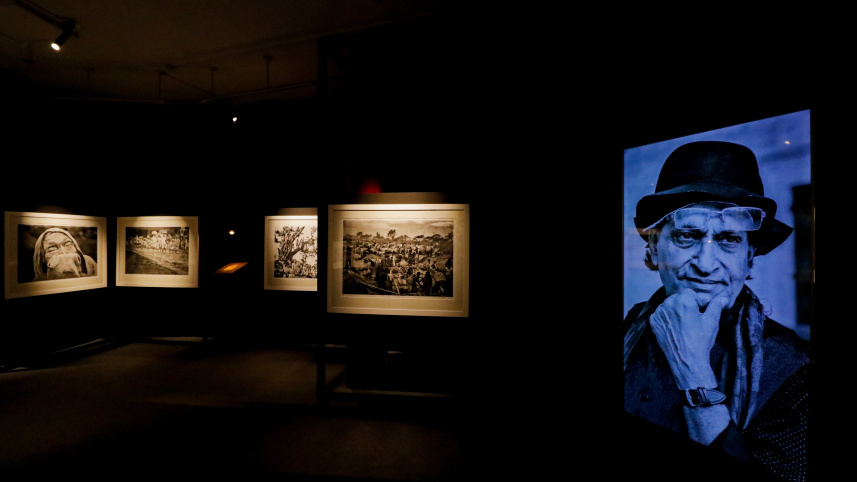
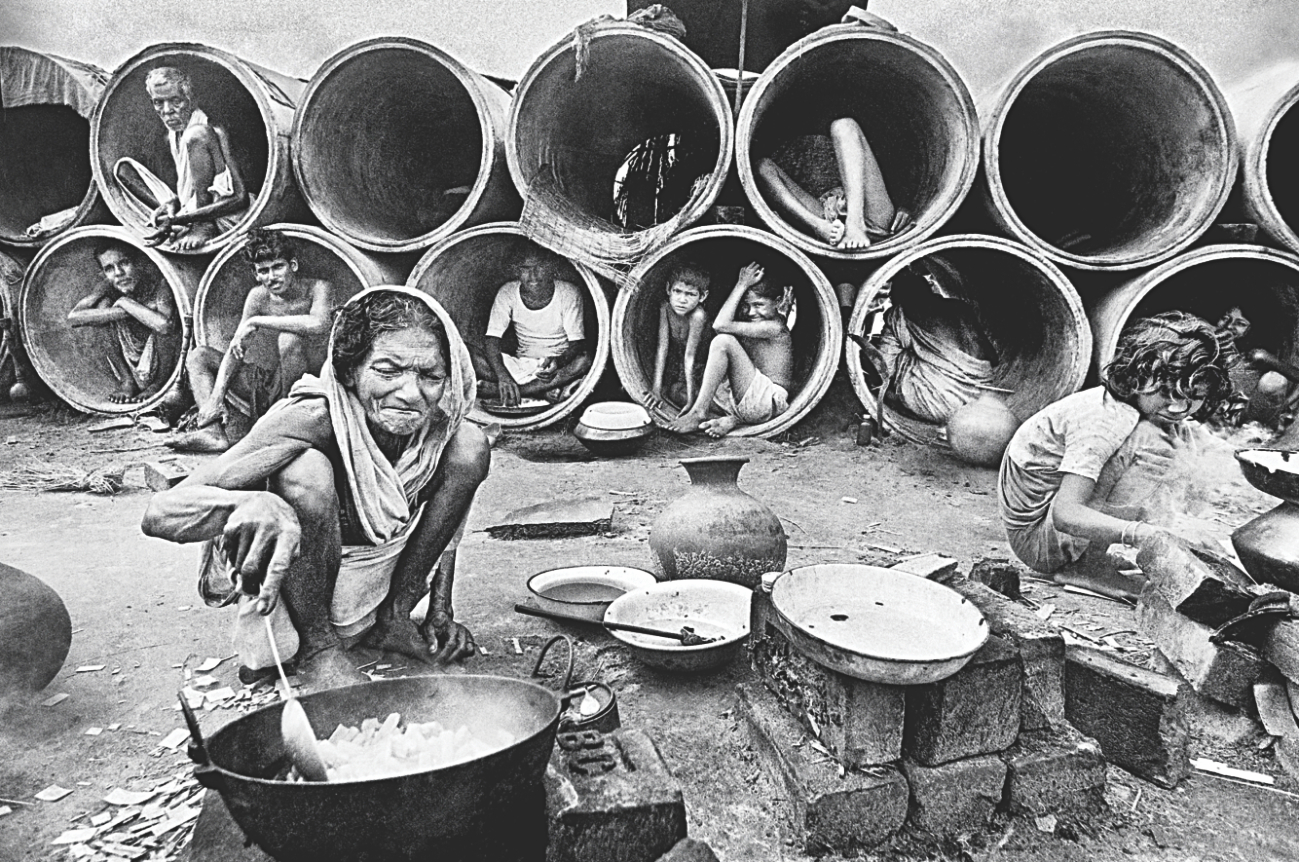
There were people drenched in monsoon rain, carrying sacks and bundles. There were bodies thinned by hunger. There were families taking shelter in hume pipes. There were refugees walking shoulder to shoulder. There were sunken eyes waiting to return home.
And in those faces, I saw the birth of Bangladesh differently.
We often remember 1971 through victory. Victory matters, of course. The red and green waving in the wind matters. But Rai’s photographs forced me to consider the cost. Freedom was not only won by those who fought. It was also carried by those who walked mile after mile barefoot. It was carried by women who had lost husbands, by children too hungry to cry, by elderly parents held up by the same children they had once carried.
Rai once recalled arriving in Kolkata by morning flight and driving towards Khulna via Jessore Road in August 1971, when the monsoon was at its peak. The sky was grey. It rained all the way. Refugees poured in with meagre belongings. There was, he said, a kind of silence. Nobody talked.
American poet Allen Ginsberg heard that silence too. In “September on Jessore Road,” he made the road speak for those the world had chosen not to hear.
Millions of souls nineteen seventy one
homeless on Jessore road under grey sun
A million are dead, the million who can
Walk toward Calcutta from East Pakistan
But here is what I want to thank Raghu Rai for. He did not steal dignity from the people he photographed.
 For all latest news, follow The Daily Star's Google News channel.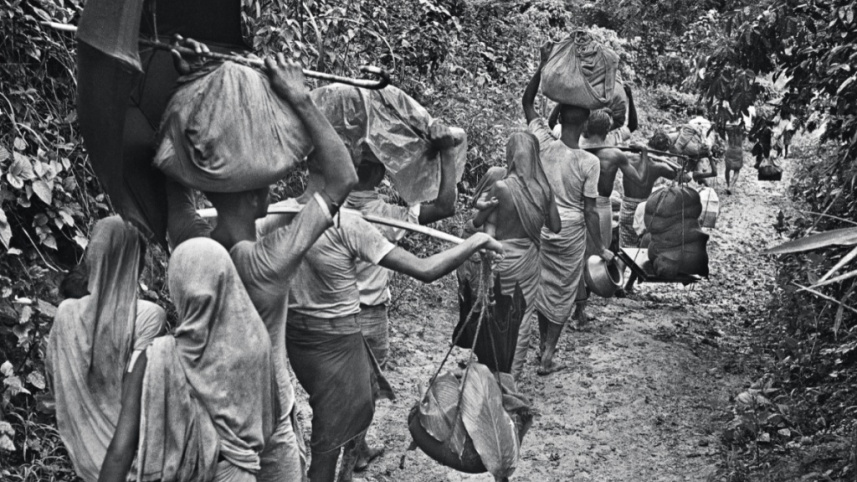
Cameras can be cruel. Cameras can turn suffering into spectacle. Cameras can make the poor perform their pain for people who will later sip tea and say, “How moving.” But Rai’s lens had conscience. He did not make our people look small.
He photographed refugees as human beings caught in the cruel war machine, not as props in war coverage. Perhaps his own past had something to do with it. Rai was born in Jhang, now in Pakistan, before Partition. He later said that because he himself had been uprooted in 1947, he became deeply involved while watching the plight of refugees from East Bengal.
And now, after Raghu Rai’s death, it feels necessary to say thank you.
Thank you for going to the border when the world was still calculating.
Thank you for looking at our people without pity.
Thank you for giving our suffering form, but not reducing us to suffering.
‘The scarcity of actors forced me back on stage’
Ilias Kanchan returns home after 15 months of treatment
How 'Mukh O Mukhosh', Bangladesh’s first film, was made
As ‘Dhakai’ cinema reaches 70, stars laud Abdul Jabbar Khan
Rotterdam-premiered 'Bokshi' heads to Indian theatres on Oct 9
‘The Legacy’ released to mark 55 years of The Concert for Bangladesh
Miles, Warfaze to headline 'Concert for Democracy' at Suhrawardy Udyan on Aug 5
Chorki unveils August lineup with four new titles

Kona releases new song as US concert tour continues