Rohingyas coming in through hidden hill routes

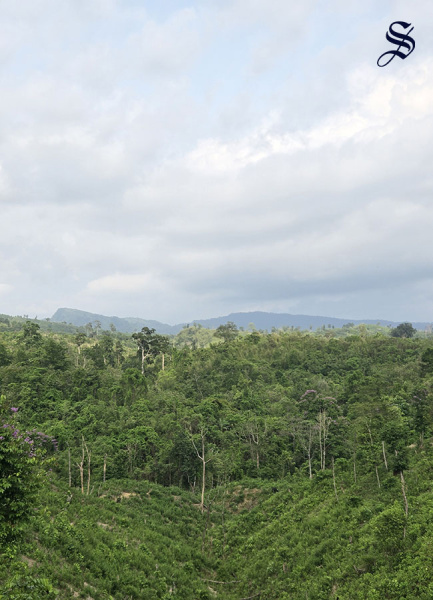
The Mro village in Fatra Para, tucked into the hills of Bandarban’s Alikadam upazila less than a kilometre from the Myanmar border, had shut down for the night.
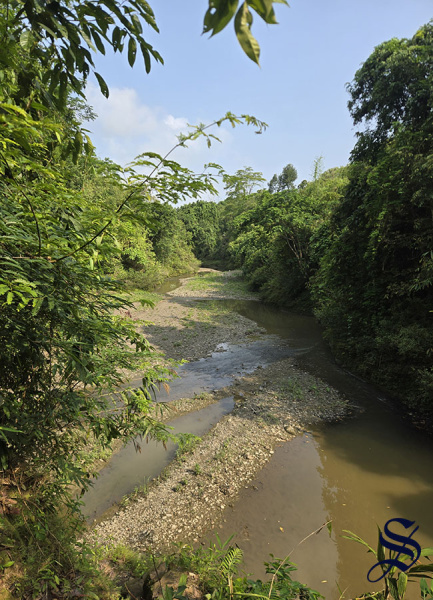
Houses were dark and their doors closed. The only sounds came from insects and the steady flow of water through Fatra Jhiri, a narrow stream cutting through the valley below.

Around 8:30pm on May 20, we took position on a hillside overlooking the stream. For nearly half an hour, nothing moved. Then, without warning, the 52-year-old Mro man beside this correspondent tightened his grip.
“Look there. Keep quiet,” he whispered.
About 100 metres below, faint beams of torchlight came into view through darkness.
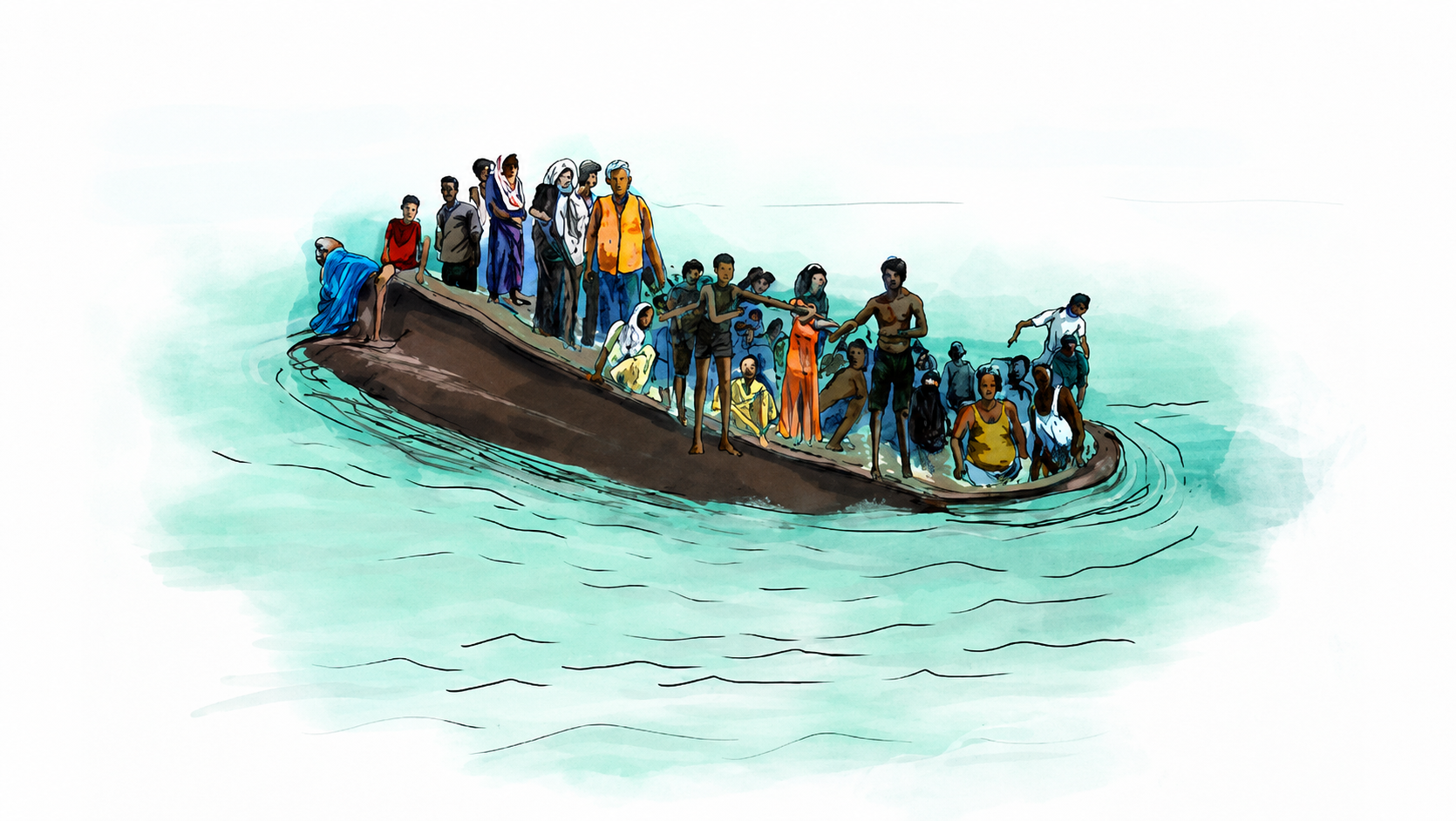
One by one, figures emerged along the stream bed. Three women walked in front, each carrying a small bag. Behind them, nine men slowly followed in a line, careful not to make any sound.
“They are Rohingyas,” said the Mro man, who agreed to accompany this correspondent in this risky trail on condition of anonymity.
To experience full interactive click HERE
Within minutes, the group disappeared further along the stream. We left the spot soon after and started to follow them, keeping a safe distance.
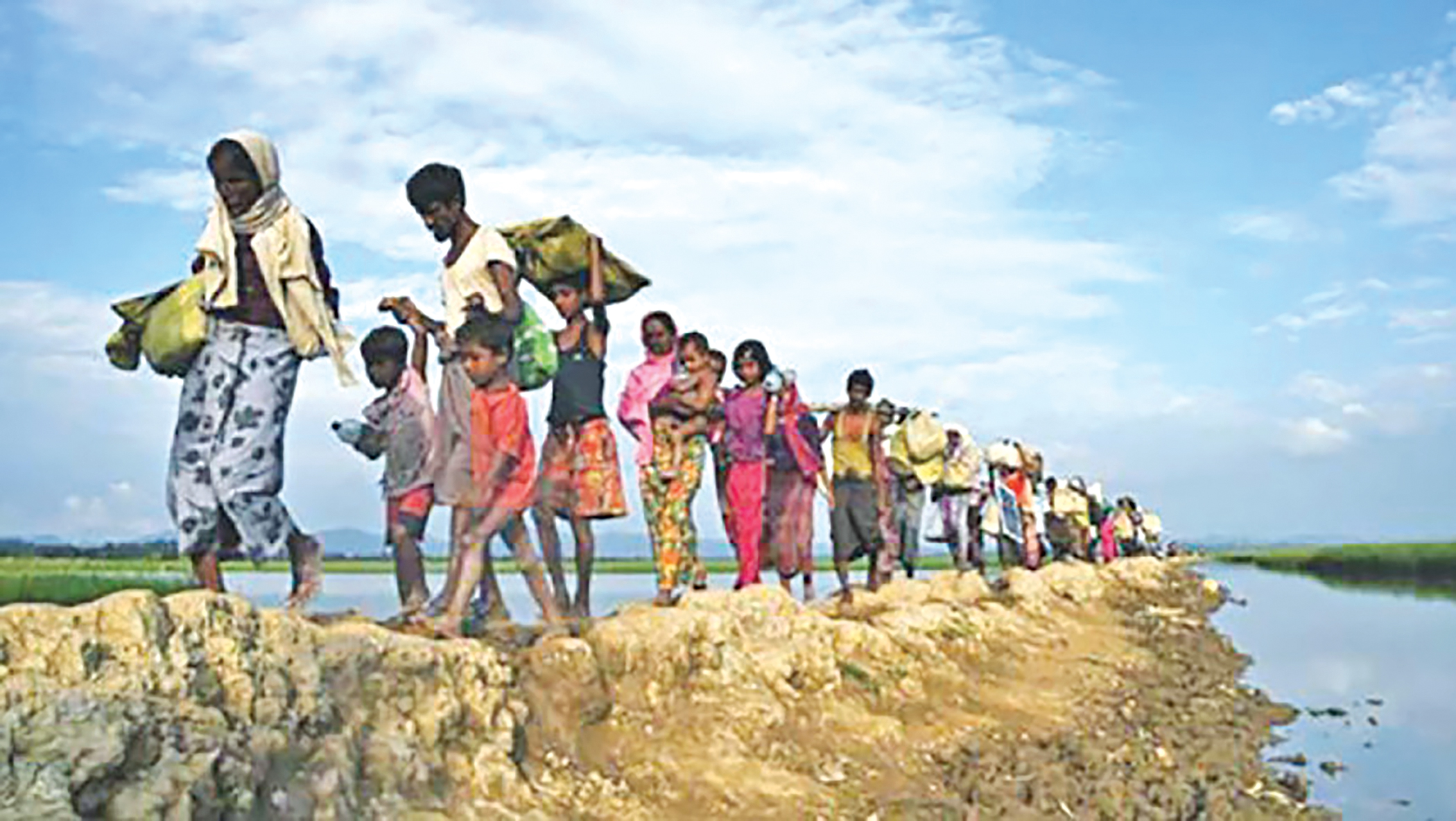
What The Daily Star has documented that night and in subsequent days is part of a growing pattern along the Bangladesh-Myanmar border in Bandarban, where Rohingya groups are crossing into Bangladesh through remote forest routes, often at night.
Ensuring effective border security is not always possible, particularly in remote and inaccessible hill areas. That is why preventing Rohingya, or any other individuals, from entering Bangladesh through unofficial routes remains a major challenge for border security.
Local trafficking networks operating across the hills of Alikadam guide them past streams, hilly trails and security checkpoints.
Locals and elected representatives say these crossings have become regular in recent months due to the worsening conditions in Myanmar.
Since January 2026, more than 100 Rohingyas and at least six suspected Bangladeshi traffickers have been detained in Alikadam upazila, according to media reports.
“Many people are involved in this human trafficking in exchange for money. I would make powerful enemies if I named them,” said Kratpung Mro, chairman of Kurukpata Union Parishad.
 For all latest news, follow The Daily Star's Google News channel.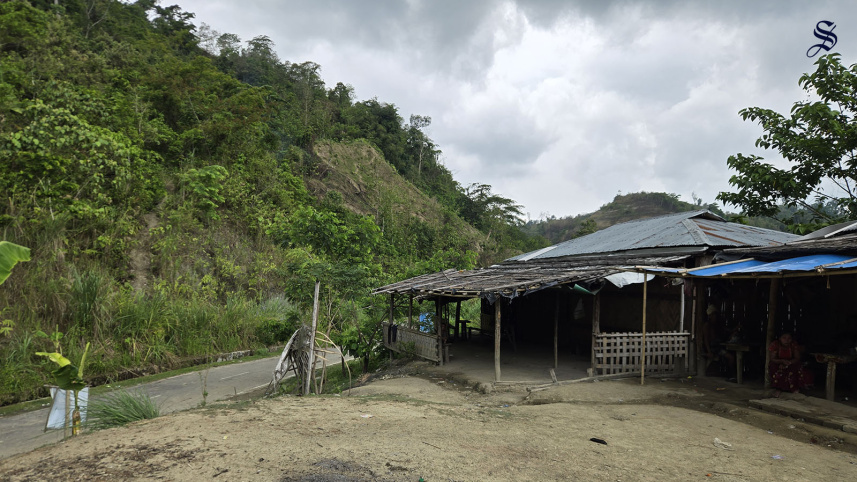
TRACING THE ROUTE
Since the 1980s, Rohingya people have fled military crackdowns, persecution and violence in Myanmar and crossed into Bangladesh in several waves.
The largest influx occurred in 2017, when hundreds of thousands of Rohingyas fled Myanmar to escape a brutal military campaign.
According to the Bangladesh government figures, around 12 lakh Rohingyas are currently living in camps in Ukhiya and Teknaf, Cox’s Bazar.
However, Rohingya people continue to enter Bangladesh through unofficial routes, many using remote hill tracks and river crossings to avoid detection.
As these movements take place outside formal border checkpoints, there are no reliable estimates of how many people are entering Bangladesh through these hidden routes.
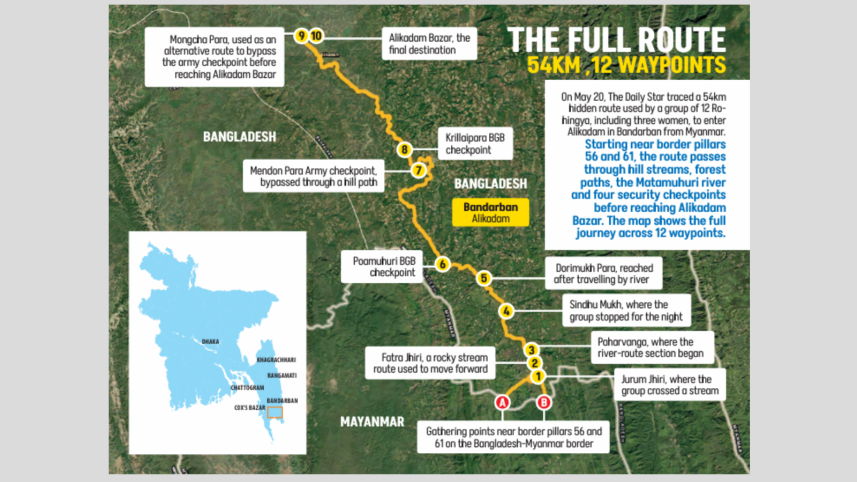
On May 20, this correspondent followed one such journey from Dorimukh Para towards Alikadam Bazar, along routes commonly used to evade security checkpoints.
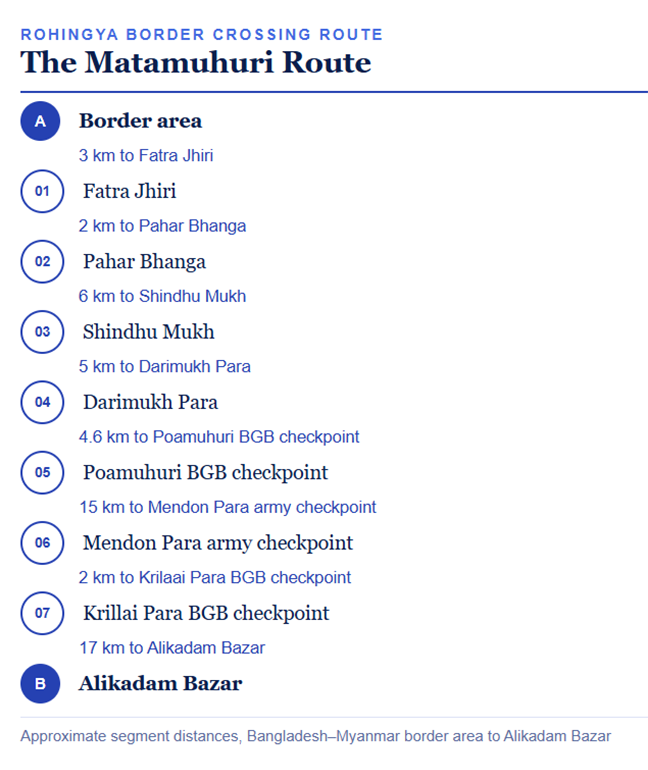
To reach Alikadam Bazar from the border, the group travelled for nearly two days, covering roughly 54 kilometres across forest paths, hilly trails, streams and river channels.
In recent months, the Fatra Para-Dorimukh Para-Alikadam route has emerged as a preferred crossing route. Older entry points through Buchitong, Youngring and Lelong Para are now under tighter surveillance, pushing groups towards more remote and less monitored routes.
“The Alikadam route is easier for them. In Teknaf or Ukhiya, they have to cross waterways by boat, which increases the risk. Here, they can move through forest and streams,” said Kratpung Mro, the Kurukpata union chairman.
MYANMAR TO ALIKADAM
The journey typically begins before nightfall.
On the Myanmar side, Rohingya groups gather quietly on hilltops near Jurum Jhiri, close to border pillars 59 to 61.
They wait until darkness thickens across the forest. Once night falls, they descend a steep ridge and cross the stream at Jurum Jhiri, entering Bangladesh. From there, they follow narrow forest trails running close to the border, moving in silence.
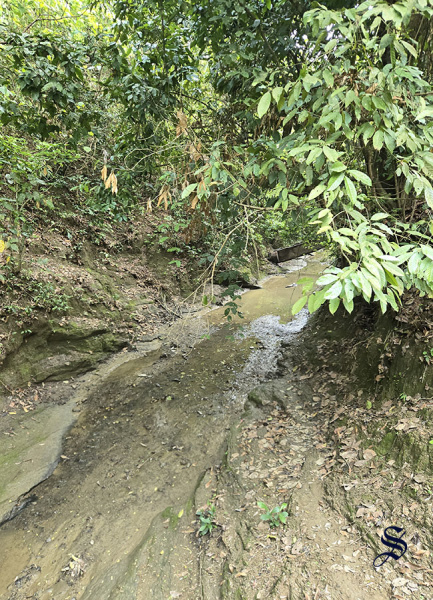
For this particular group, it took about an hour to reach Fatra Jhiri, near Fatra Para.
This stretch is one of the most difficult. The stream is rocky and, in places, waist-deep. The ground is slippery, forcing many to remove their shoes and carry them by hand.
In the dark, stones and tree roots are hard to see, and several travellers suffered cuts and injuries along the way.
After crossing, the group moved towards Paharvanga near the Matamuhuri river, roughly five kilometres from the border. By this point, many were soaked and exhausted.
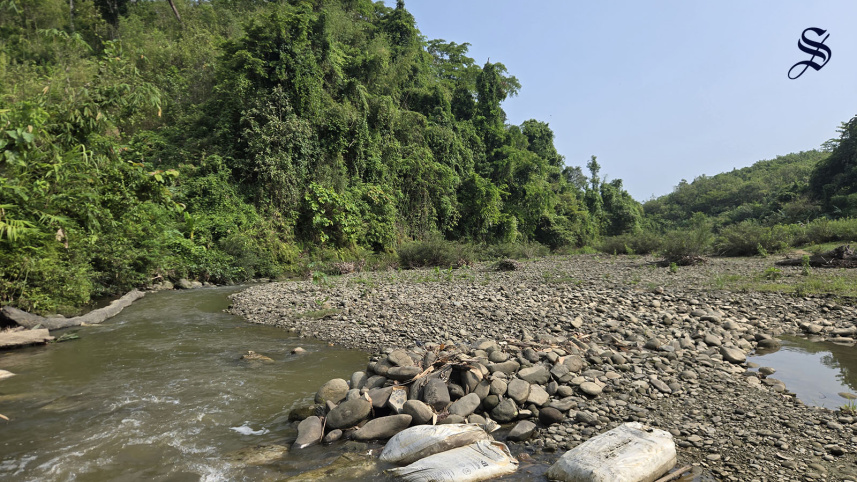
They reached Sindhu Mukh, a remote riverside area, in the early hours, where they spent the rest of the night. We also took shelter in a nearby Mro house.
“They stay there because they can watch for movement,” said a Mro villager. “If they sense anyone approaching, they can quickly disappear into the forest. Security forces rarely go there at night.”
At first light, the journey resumed. Some changed into dry clothes before heading towards Dorimukh Para, where the paved road begins.
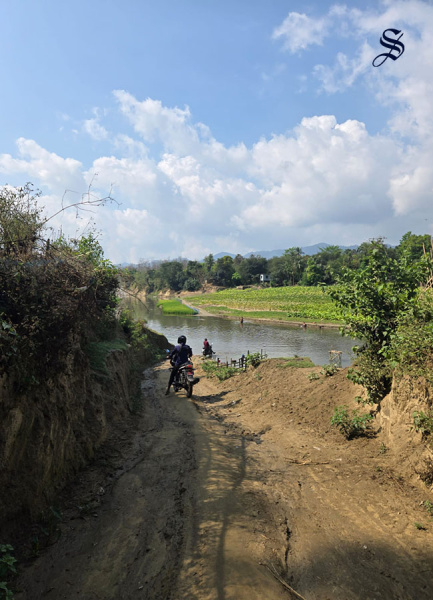
From there, motorcycles picked them up in stages towards Alikadam Bazar, about 40 kilometres away.
Passengers typically pay Tk 500 to Tk 1,000 for transport, along with an additional Tk 1,500 to Tk 2,000 to help bypass security checkpoints, according to local sources.
By the time they reached Alikadam, the group spent nearly two days on the move, guided by members of the trafficking networks that charge each Rohingya Tk 4,500-5,000 to facilitate the crossings.
BYPASSING CHECKPOINTS
At the Poamuhuri BGB checkpoint, the first security post between Dorimukh Para and Alikadam Bazar, a motorbike carrying two Rohingya passengers slowed but did not stop. A BGB member briefly questioned the rider, pointing to a bucket tied to the back.
“What’s in it?” he asked. “Empty,” the rider replied. There was no further questioning. Moments later, the motorbike was waved through.
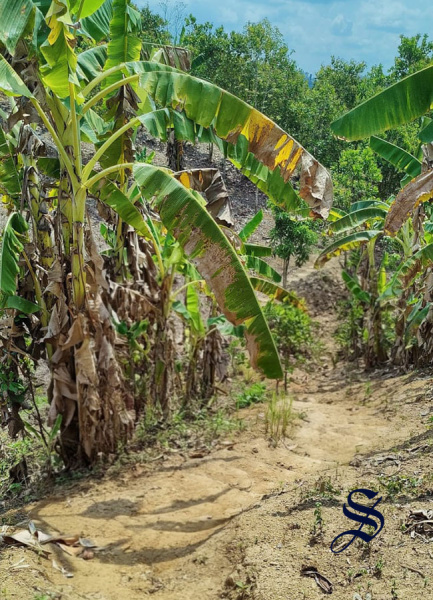
Further ahead, nearly 500 metres from an army checkpoint at Mendon Para, the Rohingya got off before reaching the checkpoint. They took a narrow hill path running alongside the main road. Its worn surface and visible footprints suggested regular use.
The motorbike crossed the checkpoint alone, waited on the other side, and picked them up again.
The next checkpoint, at Krilai Para, belongs to the BGB. There, the lone BGB member on duty, while speaking on the phone, simply waved us through without any checking.
The final checkpoint on the route is Alikadam Cantonment Checkpoint, before Alikadam Bazar.
Here, too, instead of approaching along the main road, the Rohingyas take a detour through Nayapara and Mongcha Para, before crossing the Matamuhuri River on foot.
“Motorbike drivers drop them before the checkpoints. They cross using side paths and wait on the other side. Then the bikes pick them up again,” said Kratpung Mro, the Kurukpata union chairman.
Local sources say such Rohingya movements are not spontaneous.
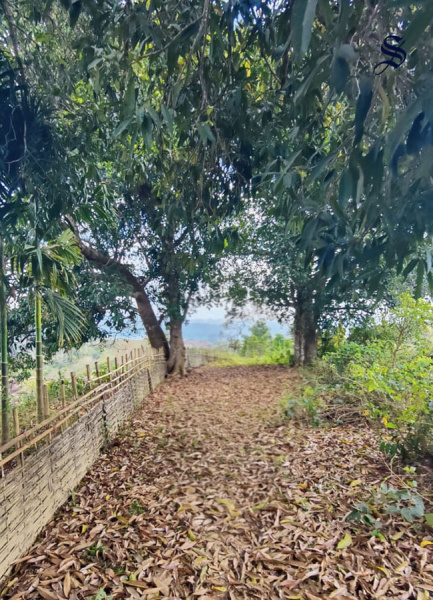
Two to three Rohingya men visit villages like Fatra Para days before a crossing to assess routes, book motorbikes and negotiate payments.
Some also gather information on patrol movements in exchange for Tk 2,000-3,000.
One Fatra Para villager, who spoke on condition of anonymity, said three Rohingya men approached him in late April.
“They said they had no work and not enough food back home. They could not feed their children properly,” he said. “At first I refused. Later, I thought if I did not help, they might become desperate or go elsewhere.”
He said he eventually shared route information and received Tk 1,000.
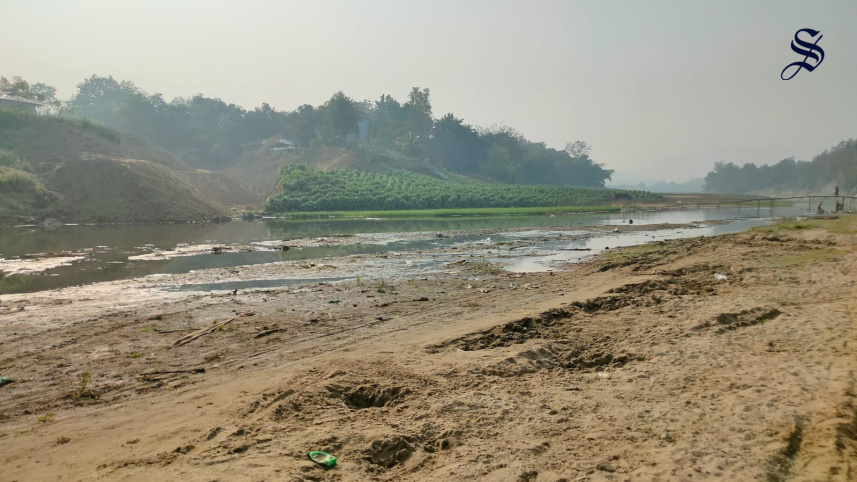
LIFE AFTER CROSSING
Not all Rohingyas who enter through Alikadam move to the camps in Ukhiya and Teknaf. Many stay back, taking up low-paid work at local markets, hotels, tea stalls, and construction sites.
Many crossed as conditions in Rakhine deteriorated. Four Rohingyas described months of gunfire, shelling and ongoing conflict, alongside food shortages and a lack of work.
A UNHCR report published on April 30 said that an estimated 2,000 Myanmar nationals fled the country through land routes in the first four months this year, with the majority (70%) crossing into Bangladesh.
From January 2022 to March 2026, at least 141,500 Rohingya people arrived in Bangladesh from Myanmar through different land routes. Seventy-nine percent of them are women and children, the report said.
“There was no work in my area. Food prices were high. On some days, I could not arrange proper meals for my child,” said a 42-year-old Rohingya man who recently crossed into Bangladesh along the Fatra Para-Alikadam route.
“Here, I can at least eat and earn something,” he told The Daily Star, requesting anonymity for fear of detention.
He now lives in a tin-shed room in Alikadam Bazar, paying Tk 1,000 a month in rent. He works from 6:00am to 10:00pm at a roadside hotel, earning Tk 5,000 a month.
His four-year-old child lives with him, while his wife, who crossed earlier, is in a camp in Ukhiya.
Others in similar situations say they have little room to negotiate their pay.
“If I ask for more, they will not keep me. So I work for whatever they give,” said another worker who arrived by the same route in recent months.
The Daily Star also spoke to two Rohingya men who entered Bangladesh along with 10 others on the night of May 20. They were afraid to speak, but when asked where they had come from, they simply replied in Bangla: “From the other side of the border,” and gestured towards Myanmar.
After crossing the border, many Rohingya also register as Bangladeshi citizens and get enrolled on the voter list.
On July 12, the authorities suspended the Alikadam Sadar Union Parishad chairman and three ward members for allegedly issuing fake citizenship certificates to Rohingyas to facilitate their inclusion in the voter list.
It’s not clear when these Rohingya people entered Bangladesh or through which route.
UNEASE IN THE HILLS
Home Minister Salahuddin Ahmed did not respond to repeated text messages seeking comment on the Rohingya crossings through the Fatra Para-Dorimukh Para-Alikadam route.
Mro communities along the route say the growing movement has created unease in their villages. Groups passing through at night often ask for food.
Manrai Mro, a farmer and elder brother of the Tola Para village chief, said 14 Rohingya stayed in an abandoned jhum house near his village on May 18, just about a month before The Daily Star undertook this journey.
“They came to us for food, and we gave them jhum rice. All of them were heading towards Alikadam,” he said.
Maj Gen (retd) ANM Muniruzzaman, president of Bangladesh Institute of Peace and Security Studies (BIPSS), termed this “concerning”.
“Ensuring effective border security is not always possible, particularly in remote and inaccessible hill areas. That is why preventing Rohingya, or any other individuals, from entering Bangladesh through unofficial routes remains a major challenge for border security,” he told The Daily Star.
“A second concern is their entry into Bangladesh’s informal workforce. Since they are not Bangladeshi citizens, this can create social and economic tensions in host communities. Addressing the issue will require a comprehensive policy response,” he added.
The politics of fear: From Gaza's paper kites to ‘unsafe’ on campuses
Shared rivers, shared responsibilities: The case for water treaties

Shanghai Cooperation Organisation at 25: Can China, India and Russia really speak with one voice?
Bihar wants Delhi to not renew Ganges treaty. What does it mean for Dhaka?
Bangladesh and the United States: Beyond the tariff bargain
From the Carter Doctrine to the Mecca Pact: A changing Gulf security order
More capability, less autonomy? Bangladesh’s emerging security dilemma

An anti-West network is emerging: How should Bangladesh respond?
The Mecca Pact: Deterrence, Israel, and the new Gulf security equation