


Living Vicariously through Equality Law
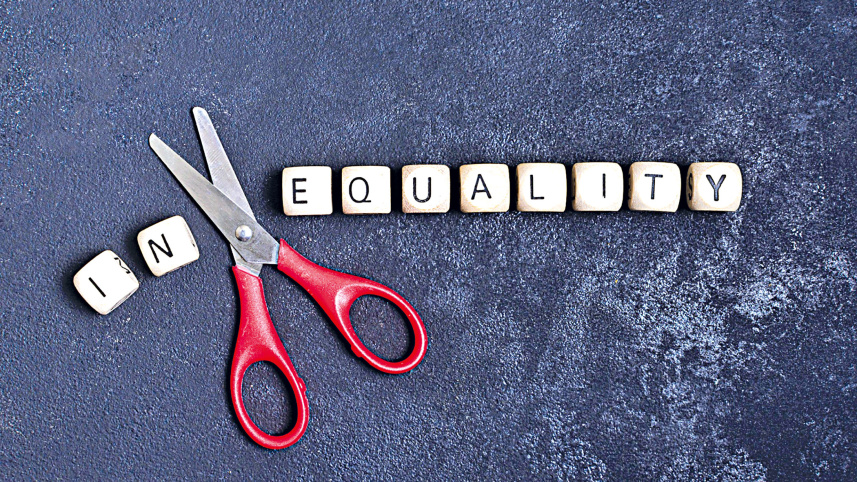
There lies a charm in equality. As an idea, it gives a sense of fulfilment, at least when it is articulated: we are all equal. Yet much of our understanding of how equality resonates with our lived experiences in society primarily depends upon a regulatory mechanism that we have come to define as law. For example, we know that the Constitution of Bangladesh recognises ‘equality before law’, articulated as ‘all citizens are equal before law and are entitled to equal protection of law’, as a fundamental right. Yet, if the regulatory force that we have come to ascribe to law, actually functioned in reality as it does in principle, we would not continue to be burdened with case logs in our courts that grapple, more or less, with questions of equality, fairness, or, more broadly, justice. Unless we understand how the logic of law operates within everyday spaces like offices in Dhaka, public transport such as the Metro Rail, or even cultural celebrations like Pahela Baishakh, we will never fully understand why the promise of equality remains elusive.
To grasp the logic of law requires placing ourselves, as far as possible, in the position of those who know that despite the existence of equality laws, they may still be harassed, ridiculed, excluded, raped, or even murdered for their identities. The continuing existence of inequality in our society reveals an uncomfortable truth: that the logic of law is often not grounded in equality alone, rather it rests upon broader social structures that normalise exclusion and violence against those marked as the ‘other’. Such exclusion is sustained by majoritarian values that define certain identities, relationships, and ways of living as normal, while casting others as abnormal, deviant, or undesirable.

Those who articulate equality, and those who preach its mantras in courtrooms, classrooms, or seminars, need to live vicariously through the experiences of those who confront inequality in everyday life and for whom equality may simply be a ‘nonsensical’ notion. If such vicarious living runs the risk of producing vicarious trauma, that is perhaps a risk worth taking.
When we begin to realise that equality laws continue to fail those who do not comply with heteronormative expectations, we can finally see the limitations of legal reform. Individuals whose lives, relationships, or identities do not conform to dominant norms often experience discrimination despite formal legal protections. The gap between legal recognition and lived reality demonstrates that the law’s underlying logic is not always one of dignity and equality. Instead, it often remains structured by assumptions that render certain forms of violence and exclusion invisible. This is not to suggest that legal reforms serve no purpose. On the contrary, they can fulfil multiple functions, including empowering courts to sanction discriminatory conduct and provide remedies to those who have been harmed.
However, the contrast between the promises of legal reform and the realities of lived experience helps explain why legal recognition alone hardly brings any transformative social change. The recognition of Third Gender identities, for example, marked an important legal and political achievement, notwithstanding the problematic nature of the label itself. Recognition has not, however, automatically translated into equal access to employment, education, healthcare, housing, or freedom from violence.
Mere legal recognition masquerading as ‘inclusion’ may change formal status but does not necessarily challenge the very social structures that produce and continue to maintain marginalisation of certain groups. What seems to contribute to this problem is our tendency to overestimate the power of law. This is generally the case when we think of law as an omnipotent tool to bring change.
Indeed, law is only one site of power. The extent to which law gains power and can actualise it is interconnected with other sites of power that shape the actual power of law as it applies in society. Accessing legal protection, for example, often requires navigating other institutions and power structures, including families, workplaces, educational institutions, religious communities, police authorities, and bureaucratic systems. And each of these sites has its own unique power structures, which may not be superseded by the mantra of equality and dignity alone. When these sites continue to reproduce discriminatory norms, the transformative potential of law becomes constrained. Resultantly, equal rights exists in our constitution, but remain inaccessible in practice.
It is quite clear that equality does not possess an equally distributive power for everyone. To understand the limits of equality law, therefore, law needs not to be viewed as a standalone source of power capable of reshaping society on its own. Rather, it demands that we understand equality law as something experienced within existing social structures that produce such laws in the first place, with all their prior convictions. Sometimes such laws are enacted to reinforce these structures, while at other times they may represent an attempt to challenge them without possessing the capacity to do so. Those who articulate equality, and those who preach its mantras in courtrooms, classrooms, or seminars, need to live vicariously through the experiences of those who confront inequality in everyday life and for whom equality may simply be a ‘nonsensical’ notion. If such vicarious living runs the risk of producing vicarious trauma, that is perhaps a risk worth taking.
The writer is doctoral student in law at the University of Oxford.
 For all latest news, follow The Daily Star's Google News channel.
Comments