


Eid-ul‑Azha in Dhaka: What we eat, how we celebrate and what we are losing
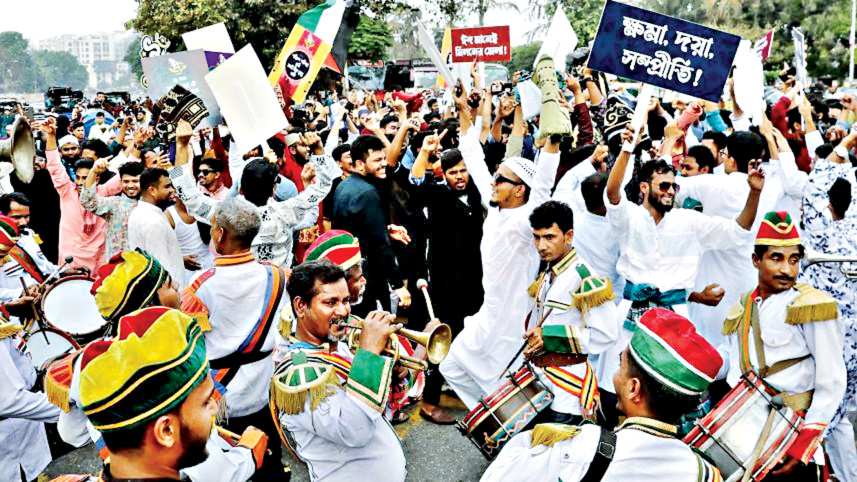
Dhaka has two sides. New Dhaka is easy to spot with its branded cafés, high‑rise malls, glass towers, food courts, and co‑working spaces -- a city that looks like it is racing forward. Puran Dhaka, by contrast, seems like a place that refused to move, with narrow lanes, old buildings, crowded markets, and lifestyle outsiders often misread.
The stereotype, familiar from cinema and drama, paints the people of Puran Dhaka as uneducated and content to live off inherited wealth. That image is outdated. Parents in Puran Dhaka today are deeply invested in their children’s education and careers, business is respected alongside traditional jobs, and the community has changed dramatically.

Eid ul‑Azha was not always celebrated with the scale and spectacle we see in Bangladesh today. As Professor Muntasir Mamun observed in Bangladesh‑er Utsab (1994), the widespread, large‑scale observance of the festival in this region is a relatively recent phenomenon, dating back only forty to fifty years.
Before the twentieth century, goats were the more common choice for sacrifice, which is why the festival is still affectionately called Bakri Eid in Puran Dhaka. Only after Partition did the practice of cow sacrifice gradually expand, shaping the festival into the form we now recognise.
Yet amid this evolution, the Mughal families of Puran Dhaka maintained their own distinctive tradition. Their celebrations were deliberate and community‑driven, anchored not in grandeur or display but in generosity and collective responsibility. For them, Eid was less about spectacle and more about the spirit of giving, a philosophy that continues to echo through the old city’s courtyards and lanes.
The morning of Eid begins with prayer, and my father always insisted the sacrifice follow immediately. Women in Puran Dhaka attend prayers in mosques or open fields, and if you have never prayed in an open field, you have not fully felt the morning begin. After prayer, kitchens fill with korma and kosha mangsho, recipes carried by memory rather than books.
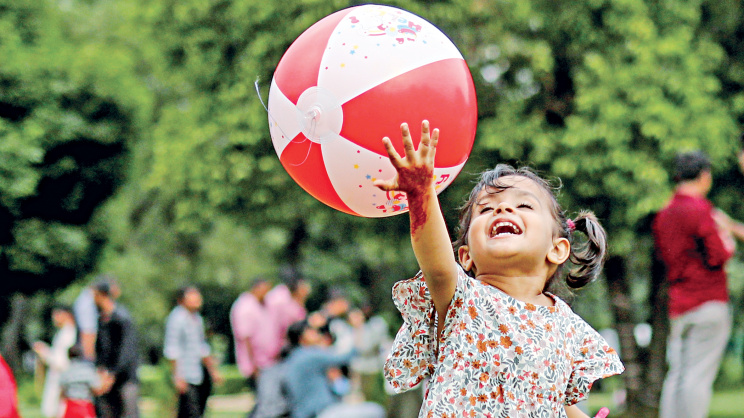
Our 150‑year‑old house courtyard becomes the centre of Eid. Packing, weighing, sealing, and labelling bags of meat -- each marked with a name and weight -- take up the space. Quantity varies by family size, but quality is identical: no special cuts for relatives, no poor cuts for the needy. Deliveries criss‑cross the city, workers receive their share, relatives exchange cuts, and the cycle continues as it always has.
In New Dhaka, the ritual of sacrifice has become more practical than communal. Flatmates or colleagues often pool money to buy a cow, divide the portions among themselves, and let the sense of community end there. Families mark the day with rooftop barbecues or home‑cooked meals -- solutions that make sense for those whose roots lie in distant villages and who cannot easily transport or preserve large quantities of meat. Yet the circle of giving is smaller, and the spirit of collective responsibility is largely absent.
Puran Dhaka, however, still holds on to something vital. The food remains as rich and varied as ever -- kofta in ten different styles, nihari simmered through the night, tilli bhuna, boti kabab, and bakarkhani stuffed with shredded meat. More than dishes, they are reminders of a tradition where Eid is not confined to the household but belongs to the entire community.
My clearest memory goes back to 2004–05, when I was in Class 1. My cousin Xia Hawk -- then carefree and funny -- made even a trip to the cattle market feel like an adventure. We spent twelve hours there, shoes ruined but spirits high, moving from row to row until we finally chose our cow and brought it home on a pickup truck through the lanes of Puran Dhaka.
At home, we decorated it with bells, kept it cool with a fan, and cared for it like family. My father checked on it at night, neighbours came to see, and many families even turned their interest into small cattle farming. Saying goodbye was never easy, but tradition was firm: on Eid morning, the first meat must come from your own sacrifice.
In Puran Dhaka, generosity extends far beyond the family. The elakabashi -- shopkeepers, hawkers, and workers -- are the first to receive their share, an expectation so ingrained it hardly needs to be spoken. After them come labourers, construction workers, and rickshaw pullers, many of whom remain in the city during Eid because they know the old neighbourhoods will give. This trust has been built over generations, woven into the rhythm of the community.
In New Dhaka, the scene is markedly different. Strangers gather under apartment gates without any system, crowds swell, arguments flare, and distribution quickly turns chaotic. Farms deliver cattle or sacrificial meat -- sometimes the next day or even later -- directly to the gates, stripping away the rituals of muddy shoes, long market days, and late‑night polao shared with cousins and grandparents. Eid here often concludes virtually, celebrated on social media, detached from the communal spirit and traditions that once defined it.
Eid in old Dhaka is never private. The celebration belongs to the whole community. In New Dhaka, Eid ends when you close your door. In Puran Dhaka, it ends when the last labelled bag is delivered. Neighbourly participation is not optional -- it is expected.
 For all latest news, follow The Daily Star's Google News channel.
Comments