


Documentary screenings: Molla Sagar’s films on resistance and lived realities
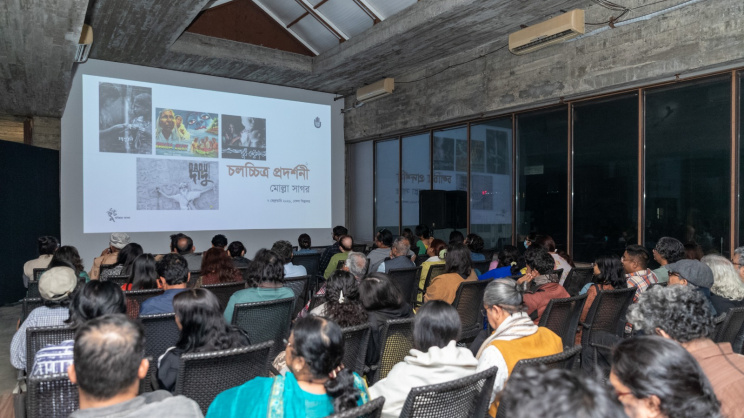
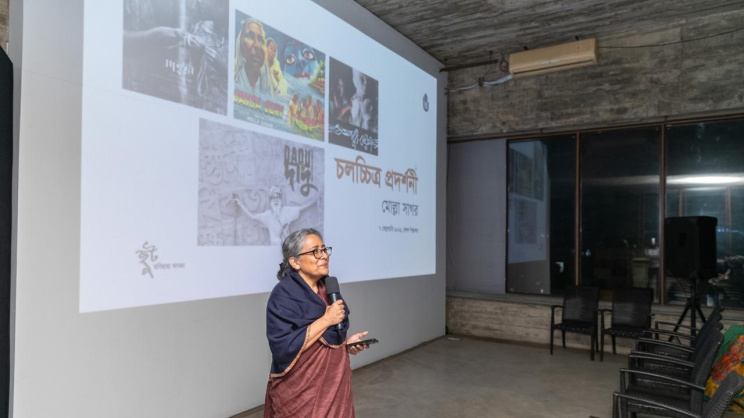
A special screening of four documentary films by filmmaker Molla Sagar was held on February 7, at Bengal Shilpalay in Dhanmondi. The event brought together narratives rooted in people’s movements, labour struggles, ecological relationships and lived histories, offering a rare opportunity to engage with documentary cinema in a filmmaking landscape where the form remains underrepresented.
The selected films; “Dudh Koyla”, “Siren”, “Gangaburi”, and “Dadu”—span different regions and social realities of Bangladesh. Together, they document how communities negotiate survival under pressures created by state policies, industrial expansion and economic restructuring. From the coal-rich lands of Phulbari to the shuttered jute mills of Khulna, from river-based rituals to the life of a centenarian model at the University of Dhaka’s Faculty of Fine Art, the films trace stories that are often marginalised in mainstream visual culture.

Molla Sagar’s engagement with documentary filmmaking began in 2002 with “O Pakhi”, a film examining the killing of migratory birds in southern Bangladesh. Trained in graphic design at the Institute of Fine Arts, University of Dhaka, Sagar’s early involvement with photography shaped his visual sensibility and later informed his approach to non-fiction filmmaking. Over the years, his work has consistently focused on social movements, cultural practices and everyday experiences shaped by structural inequality.
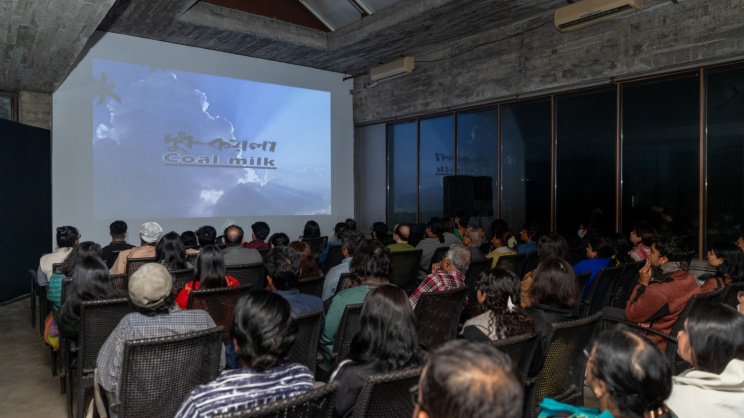
Produced between 2006 and 2007, “Dudh Koyla” documents the Phulbari coal movement in Dinajpur and centres on the Santal community whose land was acquired for open-cast mining. The film captures the transformation of agrarian life into organised resistance, highlighting how land, livelihood and identity remain inseparable for indigenous communities. Sagar spent several months in Phulbari researching the movement and building relationships with local residents, a process that allowed the camera to enter domestic and communal spaces with trust.
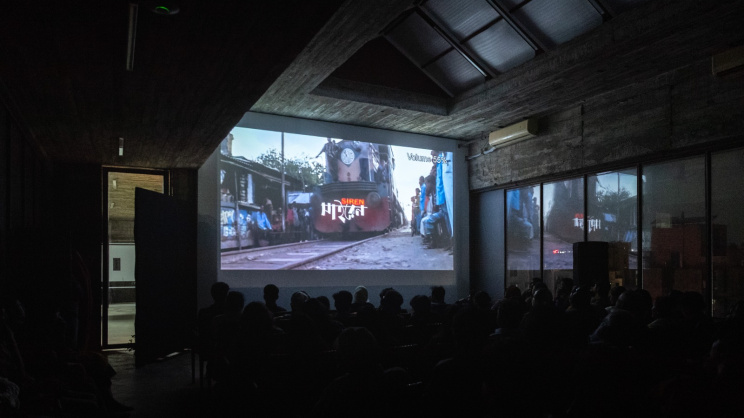
“Siren” focuses on the closure of jute mills in Khalishpur, Khulna, and the economic uncertainty faced by workers and their families following the shutdown. The film documents hunger, unemployment and the gradual erosion of industrial labour communities once sustained by state-owned mills. Rather than relying on commentary, it allows lived experience, ambient sound and everyday routines to shape its narrative structure.
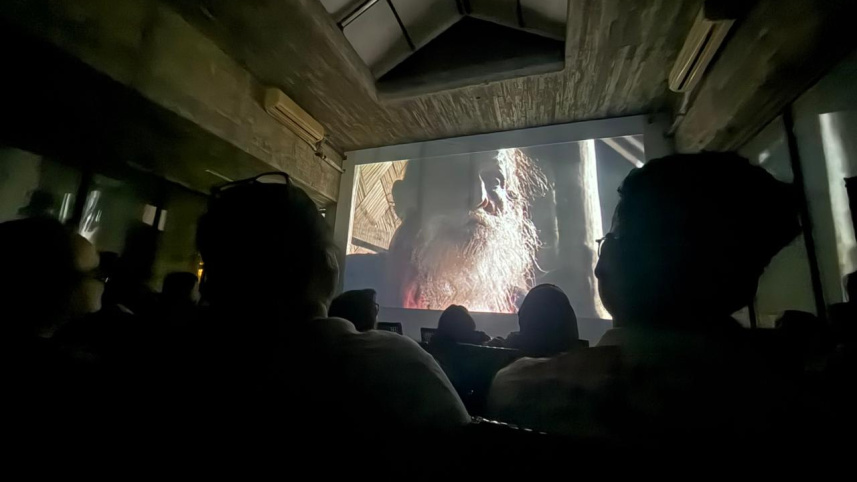
In “Gangaburi”, Sagar turns to the ritual of Ganga Puja and the spiritual relationship between people and the river. The documentary reflects on water as a source of sustenance, belief and cultural continuity, while also acknowledging the vulnerabilities faced by river-dependent communities. “Dadu” portrays the life of Momin Ali Mridha, a long-time model at the Faculty of Fine Art, whose personal history intersects with broader social and artistic histories of the country.
A recurring feature across Sagar’s films is the use of folk songs and soundscapes as narrative elements. Rather than functioning as background, music operates as a carrier of collective memory, emotion and regional identity. Sagar has often noted that songs in Bangladesh express philosophy, grief, joy and resistance, making them integral to documenting social life.
Influenced by the cinematic ideology of Ritwik Ghatak, Sagar’s documentary practice emphasises time spent with communities and a slow, observational process. His films reflect a deliberate refusal of sensationalism, instead prioritising credibility and emotional proximity. Nature, water and labour recur not merely as visual motifs, but as conditions that structure daily existence in rural and working-class Bangladesh.
At a time when documentary filmmaking receives limited institutional and commercial support, the screening served as a reminder of the form’s capacity to record social histories and amplify voices often excluded from dominant narratives. The event reaffirmed Molla Sagar’s position as a significant documentary filmmaker whose work continues to engage critically and empathetically with the people and places he documents.
 For all latest news, follow The Daily Star's Google News channel.
Comments