


AL turns 66 today
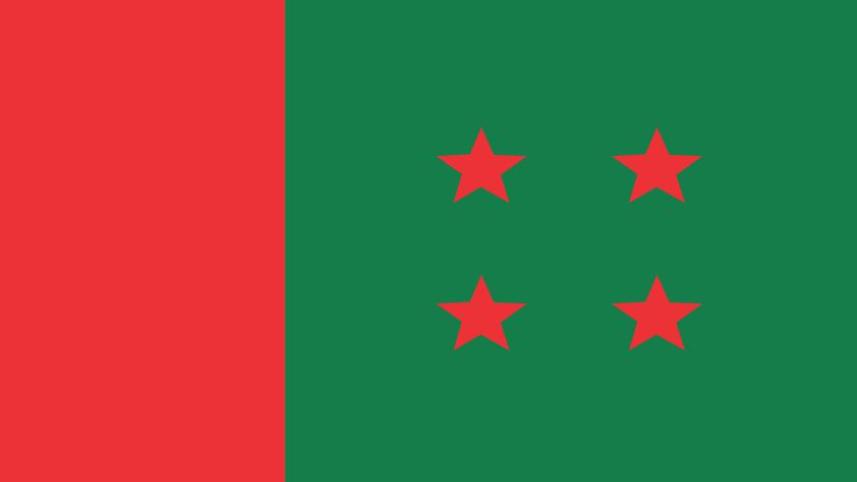
The Awami League celebrates its 66th founding anniversary today.
Born in 1949 as a challenger to the then Muslim League, the AL emerged as a secular and democratic force.

For more than six years since its inception the party had carried the name Awami Muslim League. In 1955, the party shed Muslim from its name to transform it into a non-communal political organisation.
The party had successfully led the language movement in 1952, a landslide victory of the Jukta Front against Muslim League in 1954 elections and formation of the government.
It had also led movements against the anti-people education policy in 1962 and waged movement on the basis of the historic Six-Point in 1966, and the mass upsurge in 1969.
The journey was not smooth for the AL. It was banned during General Ayub Khan's 1958 martial law regime. The entire top leadership of the party was arrested and most were kept detained until 1963. The party was revived in 1962 as part of an alliance of opposition political parties to back Fatema Jinnah in the 1965 presidential election against Field Marshal Ayub Khan.
The AL was led by Maulana Abdul Hamid Khan Bhasani, Hussain Shaheed Suhrawardy and Maulana Abdur Rashid Torkobagish until Bangabandhu Sheikh Mujibur Rahman was elected as the party chief in 1966 from its general secretary. In February 1966, Sheikh Mujib placed the historic Six-Point plan of regional autonomy for Pakistan's federating provinces at a conference of opposition leaders in Lahore.
Then in 1968, Bangabandhu was arrested in the Agartala Conspiracy Case and was put on trial but the mass upsurge in 1969 forced the Ayub regime to free him in February 1969. Bangabandhu gradually evolved into the unparalleled leader of the Bangalees. Under his leadership, the AL won a landslide victory in the 1970 election. It has written a glorious history of leading the country's Liberation War. And it was the AL-led government that framed the country's constitution after Bangladesh emerged as an independent country, upholding the spirit of democracy and other high ideals of the Liberation War of 1971.
In June, 1975, the AL-led government introduced BAKSAL-- a one-party system -- by dissolving all other political parties, including the AL.
After the brutal assassination of Bangabandhu and most of his family on August 15, 1975, the party leaders underwent repressions during the martial law regime. Only two daughters of Bangabandhu, Sheikh Hasina and Sheikh Rehana, survived in London.
The AL was, however, revived during the martial law regime in 1977. After its revival Abdul Malek Ukil and Abdur Razzaq were elected party president and general secretary respectively in the 1978 council.
After the council, internal conflicts surfaced. Factional fights reached a peak before the party's next council in 1981. Amid this, the party council elected Sheikh Hasina, who was abroad then, as chief in an effort to minimise the internal conflicts. Hasina returned to the country on May 17, 1981, and started engaging herself in party activities. She has been leading the party since.
She has been leading the AL for the last 35 years of the 66-year life of the party, and she emerged as the supreme leader both in the party and in the government when her party is in power.
ANNIVERSARY PROGRAMMES
Today, the AL will hold a discussion at Bangabandhu International Convention Centre at 3:00pm.
The party would start the day with hoisting of the national and party flags at all its offices across the country. Besides, it would release pigeon and balloons marking the day.
AL leaders will also place floral wreaths at the portrait of Bangabandhu at Dhanmondi 32.
At a press statement, party General Secretary Syed Ashraful Islam urged all to observe all the programmes with due respect.
 For all latest news, follow The Daily Star's Google News channel.
Comments