


Why ICUs in district hospitals remain a challenge
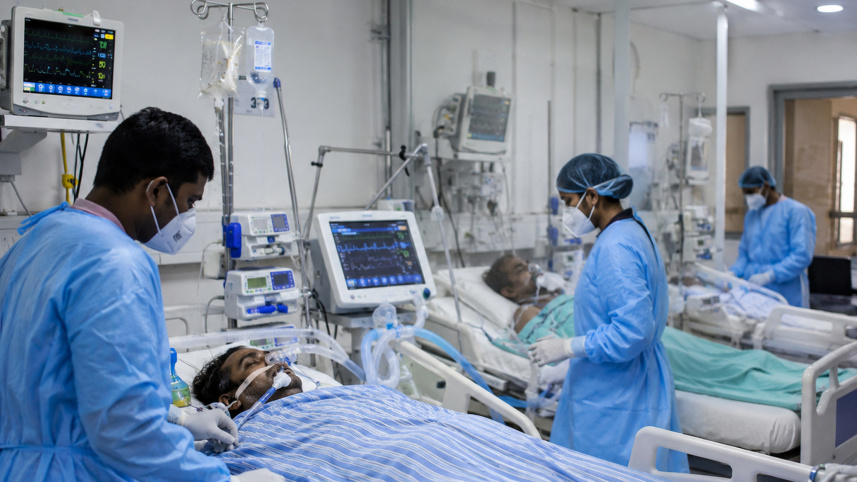
Intensive care units are essential for managing critically ill patients, including those with life-threatening infections, severe trauma, respiratory failure and other emergencies. A functional ICU requires trained doctors, nurses and support staff, along with life-saving equipment such as ventilators, monitors, advanced life-support kits, dialysis facilities, uninterrupted oxygen supply and reliable power backup.
In Bangladesh, the demand for ICU beds has grown sharply in recent years. During the Covid-19 pandemic, the shortage of intensive care facilities became painfully clear. More recently, outbreaks such as measles also highlighted the need for paediatric critical care. These experiences showed that ICU services cannot remain concentrated only in large cities; district hospitals must also be prepared to manage critically ill patients.

The government has taken several initiatives to expand ICU services. In 2019, a national framework was developed for ICU planning, quality improvement and maintenance. It outlined issues such as infrastructure, facilities, manpower and quality indicators. Later, under the Covid-19 emergency response project, steps were taken to establish 540 ICU beds in 43 district hospitals and 10 medical college hospitals. The project included renovation, infrastructure development, central oxygen plants and generators.
However, progress has been unsatisfactory. In many places, construction and renovation work remained incomplete. Equipment such as ICU beds, ventilators and monitors were procured, but many remain unused. Without trained manpower and proper maintenance, expensive machines gradually lose functionality.
The biggest gap is human resources. In 2021, the government appointed 409 anaesthesia consultants, but dedicated ICU consultants or critical care physicians were not appointed in adequate numbers. There was also no complete manpower structure for district-level ICUs. As a result, many anaesthesia consultants returned to their original professional posts, leaving ICU facilities vacant or non-functional.
An ICU cannot function through equipment alone. It must operate as a specialised unit with dedicated physicians, trained nurses, technologists, cleaners and support staff. It also needs protocols, infection-control systems, continuous monitoring, training and quality assurance. International experience, including guidelines from the Indian Society of Critical Care Medicine, shows that critical care is now a distinct specialty and should not be treated merely as an extension of anaesthesia, medicine or surgery.
Establishing fully functional ICUs in district hospitals will take time, planning and sustained investment. But the process must begin with a dedicated manpower structure. The standard staffing framework adopted by the Ministry of Health in 2024 should be implemented urgently. Without trained teams, ICU expansion will remain incomplete, and critically ill patients outside major cities will continue to face avoidable risks.
Dr Shaiful Azam Sazzad is a Vice-President of the Bangladesh Society of Critical Care Medicine (BSCCM). E-mail: dr.sa.sazzad@gmail.com
 For all latest news, follow The Daily Star's Google News channel.
Comments