


India accuses China of premeditated action at Ladakh border
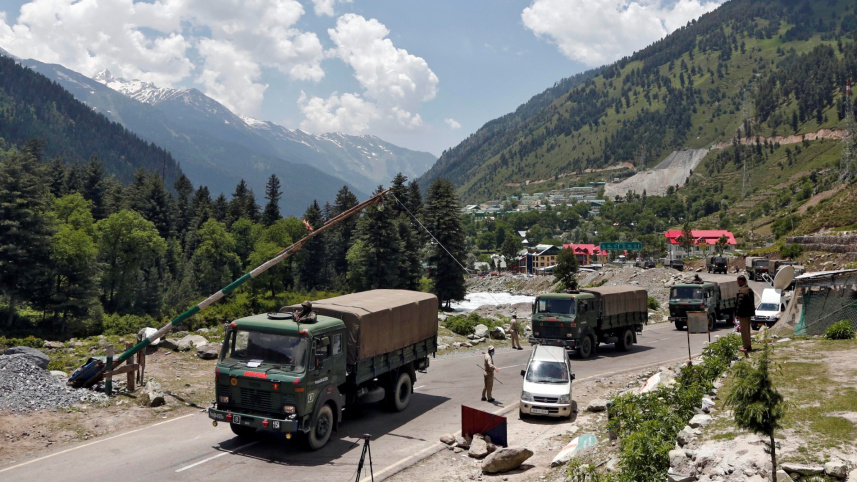
India today accused China of taking "premeditated and planned action that was directly responsible for the resulting violence and casualties" at the border in Ladakh and warned that this "unprecedented development will have a serious impact on the bilateral relationship."
India's External Affairs Minister S Jaishankar conveyed this to his Chinese counterpart Wang Yi during a telephone conversation this afternoon on recent developments in Ladakh, reports our New Delhi correspondent.

The two foreign ministers spoke two days after the violent standoff at Galwan Valley in eastern Ladakh in which 20 Indian soldiers were killed.
According to a read-out issued by the Ministry of External Affairs Jaishankar conveyed India's protest "in the strongest terms".
He recalled that at the meeting of senior military commanders of India and China held on June 6, an agreement was reached on de-escalation and disengagement along the Line of Actual Control (LAC), which acts as the de facto border between the two countries.
"Ground commanders were meeting regularly to implement this consensus throughout the last week. While there was some progress, the Chinese side sought to erect a structure in Galwan valley on our side of the LAC.
"While this became a source of dispute, the Chinese side took pre-meditated and planned action that was directly responsible for the resulting violence and casualties," Jaishankar told Wang.
The Indian external affairs minister said "it reflected an intent (on the part of China) to change the facts on ground in violation of all our agreements to not change the status quo."
Jaishankar "underlined that this unprecedented development will have a serious impact on the bilateral relationship," the MEA readout said.
It said "the need of the hour was for the Chinese side to reassess its actions and take corrective steps. The two sides should scrupulously and sincerely implement the understanding that was reached by the senior commanders on June 6.
"Troops of both sides should also abide by the bilateral agreements and protocols. They should strictly respect and observe the Line of Actual Control and should not take any unilateral action to alter it," Jaishankar told Wang.
By the end of the Jaishankar and Wang's conversation both parties agreed that the overall situation will be handled in a responsible manner and both sides will implement the disengagement understanding of June 6 sincerely, the Ministry of External Affairs said.
"Neither side would take any action to escalate matters and instead, ensure peace and tranquility as per bilateral agreements and protocols," it added.
 For all latest news, follow The Daily Star's Google News channel.
Comments