


Traditional Bangladeshi dishes made easy for modern cooks
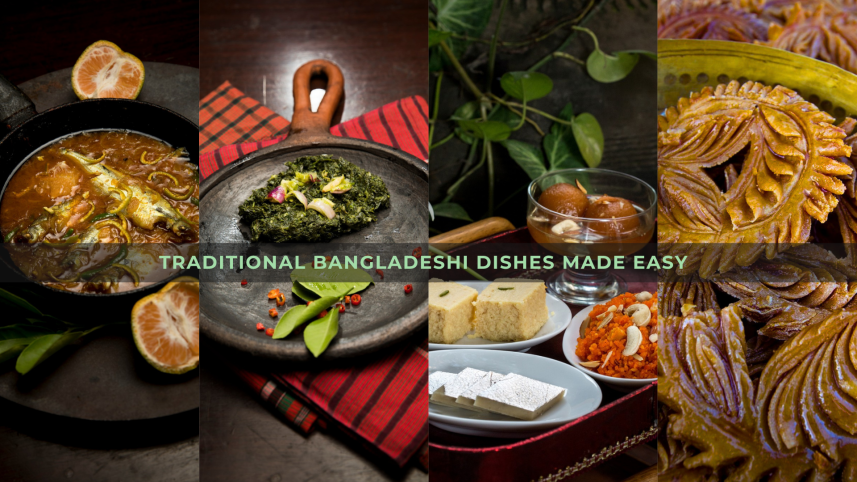
Part of rediscovering our roots involves a culinary journey, where traditional dishes get a modern twist. In a time when fast food and convenience often overshadow heritage, returning to the kitchen becomes an act of memory and reinvention. These recipes draw from familiar flavours yet present them with subtle shifts in technique. The result is food that feels both nostalgic and new, grounded in tradition but open to interpretation.
YELLOW RICE

Ingredients
1 large tomato, cut into cubes
1 big-sized onion, cut into cubes
2 garlic cloves
1 green chilli
½ tsp turmeric powder
½ tsp paprika powder
¼ cup chopped carrot
¼ cup chopped red bell pepper
¼ cup chopped yellow bell pepper
2 cups chicken stock (one ready-made chicken stock cube diluted in two cups of water)
1 cup long-grain rice (uncooked)
¼ cup oil
Salt to taste
Method
In a grinder, put tomato, garlic, and onion. Grind together and make a smooth paste, and set aside. Heat a cooking pot with oil on medium heat. Add all the uncooked rice and fry until the grains turn slightly brown in colour. Add the tomato paste, turmeric and paprika powder, salt and chicken stock. Stir it and cover with a lid. Boil on low-medium heat until the rice is cooked properly. If needed, add extra water. Add chopped carrot, bell peppers and give a good mix, then cover the lid again and cook it for another 1-2 minutes on low heat.
Ready to serve.
PAPAYA STUFFED WITH LOTUS STEM AND CHILLI CHUTNEY
 For all latest news, follow The Daily Star's Google News channel.
 Ingredients
1 Naga chilli
250g lotus stems, chopped
1 large green papaya
¼ cup chickpea powder or 'beshon mix' (add some salt and cumin powder to this)
1 tsp fenugreek (methi) seeds and mustard seeds
A pinch of turmeric and cumin powder
1 tomato (optional)
½ cup roughly ground peanuts (roast them, then grind them up roughly, not into a powder)
A pinch of coriander powder
1 tsp chopped garlic
Salt
Any cooking oil can be used
For the chilli chutney —
Take a Naga chilli and immerse it in white vinegar for about 5 days to 1 week. It loses a lot of its hotness, so it is safe to mash this up and add about 1 tablespoon of tamarind mash. Add a pinch of rock salt and 1 teaspoon jaggery, or gur. You can make this into a paste and add more chilli to your preference.
Method
In hot oil, add fenugreek and mustard seeds and let them splatter. At this point add turmeric and garlic and sauté them for about 1 minute until the turmeric loses its raw smell and the garlic has changed its colour slightly. At this point, add peanuts and coriander powder, and cook for another 1-2 minutes.
Add lotus stems and cook till they are tender. The masala seems to be coming together as the oil will start separating. At this point add tomatoes, check for salt and sauté for up to 30 seconds and if the stems look cooked you may take them off. Depending on the size of the stem, you might need to add some water and cover the pan with a lid for a few minutes.
Peel and de-seed papaya and cut it in half, along the length of the fruit, so you have 2 boat-shaped pieces. Smear these with some olive oil and stick them in the oven until they are tender. You may alternatively boil them till they are soft but do not fall apart at a touch. Sprinkle some salt on the papaya and stuff the hollow parts with the lotus stem mix. Join the two halves and smear them with a thick coating of the beshon.
Note — We would not suggest frying this for health reasons, but we leave this up to you. Alternatively, stick it back into the oven and keep checking so it does not burn but the batter seems cooked. Cut the papaya up into round slices so you have a doughnut-shaped vegetable with a lotus stem filling. Pour the chilli chutney on top of this and serve it cold.
KOLAR THOR AND POTATOES
Ingredients
200g chopped banana stem. You need to peel or rather, shave the extra layer from the stem, then chop into small cubes and leave in cold water with some salt and turmeric for about 15 minutes.
250g cabbage (big leaves; you can use spinach or even pumpkin leaves)
1-2 potatoes
Pinch of turmeric, mustard seeds, coriander powder, cumin powder, cumin seeds (roasted)
1 tbsp grated garlic and ginger
1 tbsp finely chopped green chilli and 1-2 bay leaves
2-3 tomatoes, chopped
200g shrimp (optional) or any small fish
¼ cup chopped, dried mango bar (aam shotto)
Oil and salt to your preference
Method
Add the mustard and cumin seeds in oil until they splutter then add the rest of the masala ingredients and cook until the kitchen starts smelling of all the goodness. Add the banana stem and potatoes and cook for another 3-4 minutes before adding the shrimp. Cook this for another 2 minutes. You can alternatively sauté the shrimp with a bit of garlic in another pan and add them to this mix then cook for 2 minutes. Add the tomatoes and cook another minute, and cover with a bit of water, until the vegetables are well-cooked.
Now take any of the leaves you have (spinach or cabbage) and blanch them for about 30 seconds in boiling water. The cabbage takes slightly longer, up to 1 minute. Make sure you cut the hard stem part of the cabbage after it is blanched, as this will cause an obstacle while wrapping.
Take the kolar thor mix and scoop it into the leaves and wrap them around, making sure they will not split open.
Now, take a pot of boiling water and place a sieve on it. You can also use your bhapa pitha earthen pot to steam the wraps. As the food inside is already cooked, it will not take very long to steam the leaves, up to 2-3 minutes until the food inside is transparent.
Make a chutney of the mango bars. Fry them in minimal oil with some mustard seeds, and add 1 tablespoon tamarind (tetul) mix. Cook this till the oil separates. You may make it dilute or leave it thick. Adjust salt and spices.
Serve them with tomato chutney or the mango mix mentioned above.
BHAPA PULI
Ingredients
1 cup rice flour
¾ cup water
Salt to taste
For the filling —
2 cups of grated coconut
1 cup date palm jaggery
Method
Prepare the filling by cooking the grated coconut and jaggery together, stirring continuously until the mixture turns sticky.
To make the dough, boil ¾ cup of water with salt. Once it comes to a boil, add the rice flour and mix well. Allow it to cool slightly, then knead it into a smooth dough.
Roll the dough into a medium-thick roti on a rice-flour-dusted surface. Cut into small circles using any round cutter. Place a portion of the filling in the centre and seal the edges with your fingertips.
Steam the pithas for 3–4 minutes. Lightly grease the steaming tray beforehand to prevent sticking. Serve hot.
Comments