


Elita Karim reflects on creativity, comfort, and fashion
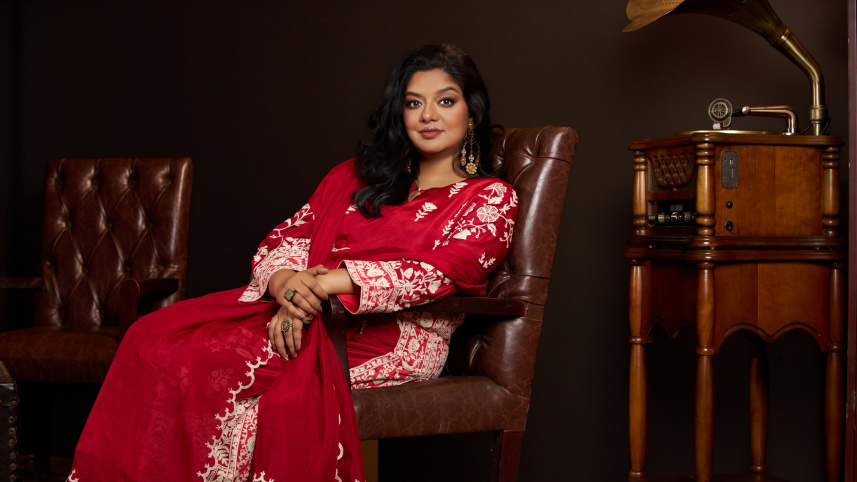
Long before she stepped in front of a camera for a lifestyle photoshoot, Elita Karim had already spent decades performing in front of audiences, reporting from the field, and navigating public life. A singer, journalist, and writer, she is not someone whose career was built around image. Yet, it is perhaps this very distance from fashion as a profession that makes her perspective on style so interesting.
When designer Shahrukh Amin recently styled Karim for a photoshoot, the result was more than a showcase of clothing. It became a reflection of the experiences, influences, and values that have shaped her life.

A style built on movement
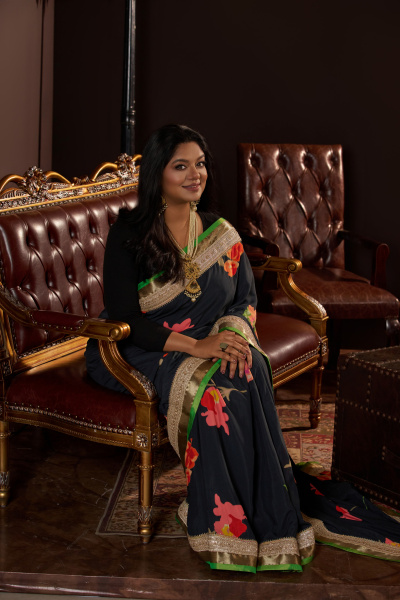
Karim's approach to fashion was influenced less by trends and more by the practical demands of her career.
For years, she balanced journalism and music simultaneously. Reporting assignments took her across Bangladesh, from city streets to remote districts. Performances required frequent travel and long hours.
"Can I do that in heels? No," she says with a laugh.
Comfort quickly became essential. Sports shoes, cotton fabrics, loose silhouettes, jeans, and scarves became staples of her wardrobe.
"My usual clothing is a cotton kurti, jeans, and a scarf," she says.
Over time, practicality evolved into a personal aesthetic. Rather than dressing for attention, she dressed for movement.
When fashion meets personality
That is precisely what made her collaboration with Shahrukh Amin so successful.
According to Karim, the designer understood her personality almost immediately. "He knows I'm not a bling person," she says.
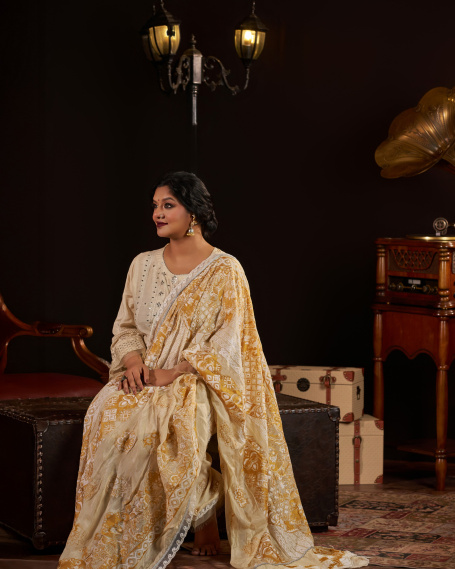
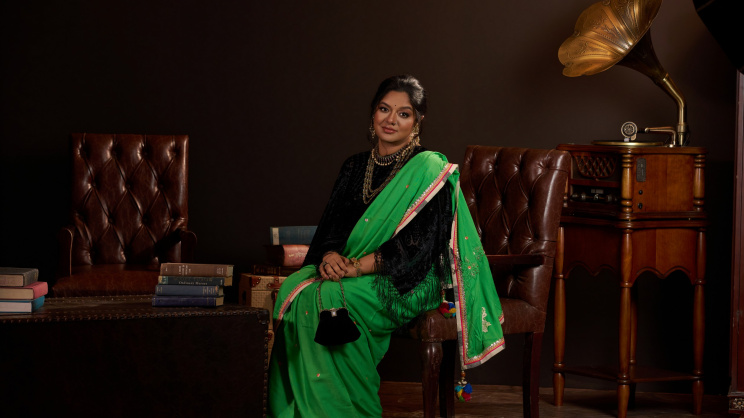
Instead of heavily embellished garments, Amin chose pieces that reflected her preference for simplicity and comfort. Among them was a green saree with minimal detailing and another featuring floral prints, a pattern Karim particularly enjoys.
More importantly, Amin considered her body type.
"He kept in mind that I am well-built," she says.
For Karim, this attention mattered because many women struggle to find clothing that is both fashionable and accommodating. She appreciated that the designs embraced rather than concealed her frame.
"I felt beautiful in those clothes," she says.
Beyond body positivity
Body positivity is a subject Karim approaches with characteristic nuance.
"I think we should draw a line between body positivity and obesity," she says.
 For all latest news, follow The Daily Star's Google News channel.
 Having dealt with health concerns herself, including high blood pressure, she believes self-acceptance and health should go hand in hand. "You should promote body positivity only when you not only feel happy in your skin but also feel healthy in your skin."
At the same time, she rejects the idea that everyone should aspire to the same body shape.
"Even if I lose a lot of weight, I am always going to be well-built," she elaborates.
It is a statement that feels larger than fashion. Like much of Karim's outlook, it is rooted in accepting reality rather than chasing impossible ideals.
Karim’s ensemble has ultimately highlighted something deeper. They reflected a woman shaped by community, culture, work, and experience — someone who understands that style is most meaningful when it grows naturally from the life being lived inside it.
The people who shaped Elita Karim, the artist
Whether in journalism, music, or public discourse, she has consistently chosen engagement over retreat. She believes culture itself emerges from people's responses to their circumstances. Songs, literature, and art often reflect the realities people are trying to navigate. That understanding has shaped not only her worldview, but also her creative work.
Karim grew up in Saudi Arabia within a vibrant Bangladeshi expatriate community. Culture was not something reserved for special occasions. It was woven into everyday life.
"Parents are usually a child's first muse," she says.
Her father, Mohammad Nurul Karim, an English lecturer, became known for organising Eid gatherings, Pahela Baishakh celebrations, Independence Day programmes, and musical events that brought Bangladeshis together. Her mother, Dilruba Begum, meanwhile, taught patriotic songs and children's songs to community youngsters.
Neither was a professional musician, but both believed in nurturing creativity. If Karim sang a note incorrectly, they would point it out. Looking back, she sees even those corrections as encouragement.
"If I didn't get that encouragement from home, I would not have been able to move forward with music," she says.
Another important influence arrived later in Karim's life.
She credits her husband, award-winning filmmaker Ashfaque Nipun, with reshaping how she approaches setbacks and uncertainty.
"Crises are inevitable," she says. "But they don't have to define you. What matters is how you respond to them." And this philosophy appears throughout her career.
In-frame: Elita Karim
Styling: Sonia Yeasmin Isha
Wardrobe: Shahrukh Amin
Makeup & Hair: Sumon Rahat
Set: Eskay Décor by Saimul Karim
Comments