


The Eid salami scam we all fell for growing up

There are many betrayals in life. Some of the most significant ones have been documented in history, including political defections, shattered alliances, and the occasional sports player joining a rival team. However, none of them prepared us for the first, and arguably, the most catastrophic and earliest betrayal of our lives.
The Eid salami betrayal! By none other than our own parents.

Most Bangladeshi children begin Eid morning as small but ambitious capitalists. We wake up early, slip into clothes slightly too shiny for daylight — clothes treasured beyond reason, because today, and today only, in these clothes, the world will finally see us in all our glory — and then we set out with a clear economic agenda: maximise salami.
The model is simple. Hug relatives. Say “Eid Mubarak.” Extend a hand with just the right mixture of innocence and expectation. Receive crisp notes of Eid salami.
Sometimes, it’s a crisp Tk 10 note from a distant uncle who has not yet adjusted to inflation. Sometimes, it’s a generous Tk 50 from a khala who understands that childhood happiness requires proper funding. Maybe even a rare hundred from a grandparent who believes in spoiling children during Eid.
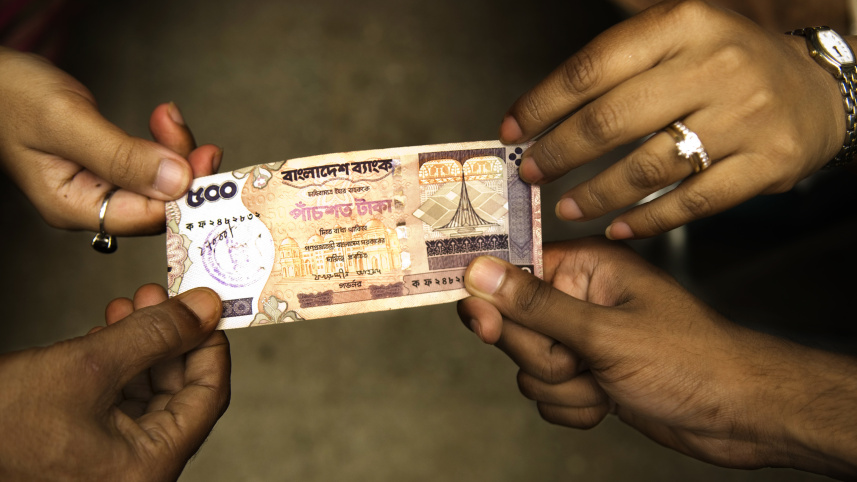
And then, on extremely good years, a majestic Tk 500 note from that one chacha or mama we all have — whose arrival alone lifts the national mood of the cousin community.
For a brief and glorious moment, we are wealthy.
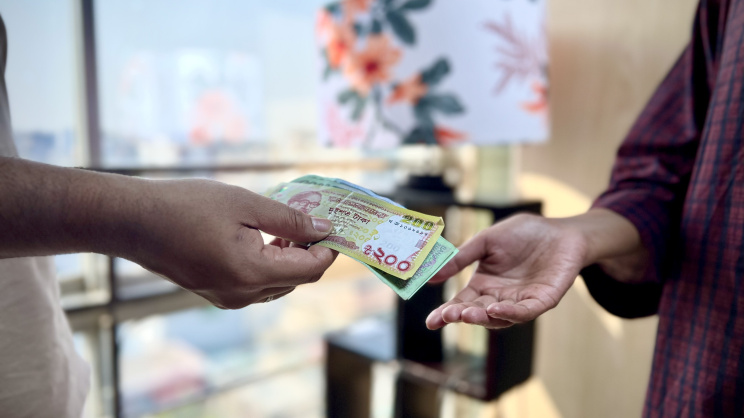
Children gather in corners of living rooms and quietly conduct financial audits. Notes are flattened. Coins are sorted. Strategies are discussed. The Eid economy is thriving.
But just when our financial future begins to look promising, a calm voice appears beside us.
“Give it to me. I’ll keep it safe.”
It is always said with great kindness. The tone suggests responsible financial management. A parent, after all, is simply protecting a child from the many dangers that come with sudden wealth.
And like the naive investors we are, we comply. The money is handed over. And that is the last time we see it.
At first, we do not suspect anything. We trust the system. But after a few days, curiosity begins to grow. I remember asking my mother, “Where is my salami?” She said, “In the drawer.”
“Which drawer?”
“The safe drawer,” she replied.
I am still looking for that drawer.
The safe drawer, as it turns out, is just a concept. It exists in theory, but locating it in practice is remarkably impossible.
Gradually, we realize the truth. Eid salami was never really ours. It was merely passing through our hands on its way to the household budget.
Many of us spent years believing our parents were running a sort of savings programme for us — a long-term investment fund, a modest trust.
Somewhere in adulthood, it dawns on us that the fund had, unfortunately, been liquidated around the same time the gas bill was due.
 For all latest news, follow The Daily Star's Google News channel.
 Years passed. We grew up. We got jobs. We started buying our own Eid clothes. The shiny outfits were replaced with sensible ones, and the only financial counting we now do involves mobile banking apps, rising grocery bills, and other responsible expenses.
Now, small children approach us during Eid. They say “Eid Mubarak” with the same suspicious enthusiasm we once had.
We are now on the other side of the economy.
We are the salami providers.
We hand over a crisp note and watch the child’s eyes light up — the same reckless, unearned excitement we once wore like a medal. For a fleeting moment, we are them again — kneeling in corners of living rooms, whispering cousin strategies, counting every note with the desperate seriousness of tiny day labourers, dreaming wildly of what even a handful of taka could buy.
And then, somewhere in the background, we hear it again — the calm, familiar voice:
“Give it to me. I’ll keep it safe.
Comments