


Why modern dating sounds like a completely different language

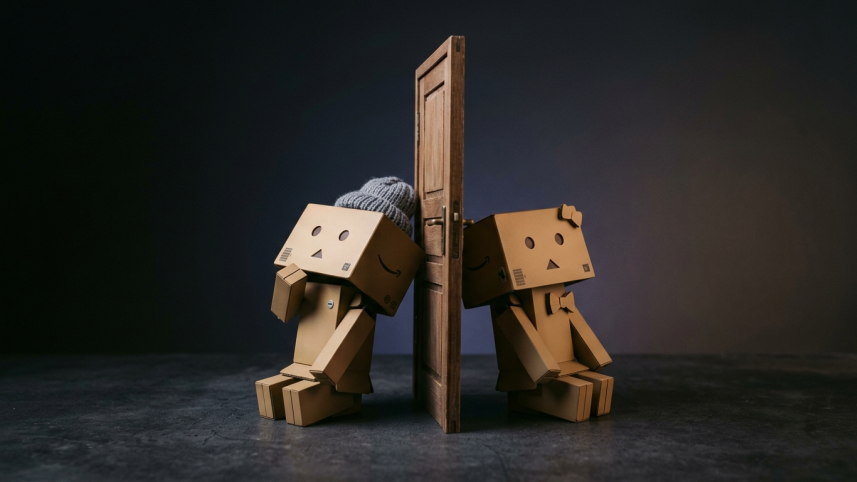
Aunty Eva has reached an age where she no longer understands young people, but continues to observe them with the enthusiasm of David Attenborough watching particularly confused flamingos.
Last Sunday, her niece informed her she had been the victim of "emotional Airbnb."

Eva nodded thoughtfully, despite having absolutely no idea whether this required therapy, legal advice, or a security deposit.
Apparently, emotional Airbnb is when someone moves into your emotional space, enjoys all the comforts of a committed relationship, stores their baggage in your living room, raids your fridge of affection, and then checks out without paying rent.
Eva found this rather touching. Her generation simply called it dating.
By Tuesday, she had learnt another phrase: micro cheating!
Back in Eva's day, cheating involved lipstick on collars, mysterious phone calls after midnight, and neighbours who knew far too much. Now, according to the internet, liking somebody's holiday photographs seventeen times in succession could constitute an international incident. Marriage, Eva concluded, had become less about adultery and more about digital forensics. Entire relationships now rested on whether someone reacted to an Instagram story with a fire emoji.
Once upon a time, women searched trouser pockets; now they searched the following lists. Progress, apparently.
Then came "dial toning." The younger generation explained this involved slowly reducing communication until a relationship quietly dissolved without anyone having to endure the inconvenience of an honest conversation.
Eva nearly laughed herself into a coughing fit. "My dear," she said, "we invented dial toning." Only in the nineties it was called, "He's become very busy." Women spent months staring at landline telephones, convincing themselves the line must be faulty. The technology has changed. Human cowardice remains refreshingly consistent.
Her favourite discovery, however, was "canon event dating"; a relationship that arrives not to last, but to permanently alter the trajectory of your life. Eva rather liked that one, mostly because it sounded poetic enough to justify terrible decisions. The emotionally unavailable guitarist? Canon event. The man who quoted Nietzsche but borrowed bus fare? Canon event. The fiancé who disappeared two weeks before the wedding? Less canon. More criminal.
The more Eva listened, the more she realised young people had not invented new dating behaviour. They had simply become remarkably good at naming it.
Ghosting once meant disappearing. Love bombing once meant trying too hard. Situationships were simply relationships that refused to complete the paperwork.
Previous generations needed years to become suspicious; young people now require little more than a suspiciously enthusiastic fire emoji and access to someone's Instagram following list. Sherlock Holmes would have struggled to keep up.
Perhaps every generation believes its heartbreak is uniquely sophisticated. Her grandmother blamed fate. Her mother blamed men. Eva blamed timing. Her niece blames attachment styles, emotional Airbnb, and Mercury in retrograde.
Different vocabulary. Identical tears.
Perhaps that is what love has always done. It reinvents its language every decade while stubbornly recycling the same old emotions. The technology evolves. The terminology expands. The dating apps update. Yet, somewhere tonight, someone is still staring at a phone, wondering why the person who claimed to adore them has suddenly stopped replying.
Heartbreak, it seems, has always been fluent. Only the dictionary keeps getting updated. And whatever generation you are from, there still isn't an app for that... although, judging by current trends, someone will probably invent a term for it by Thursday.
 For all latest news, follow The Daily Star's Google News channel.
Comments