


26 Bagerhat rivers turn into narrow canals, hurting agriculture and trade

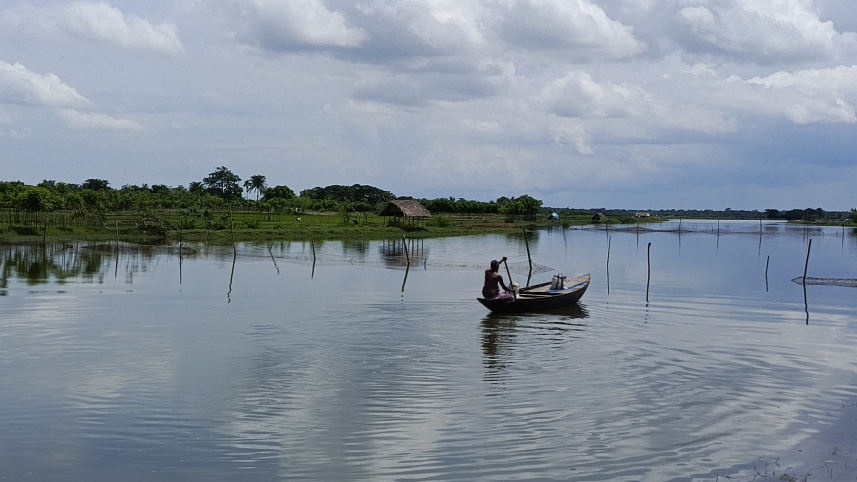
Encroachment, pollution and unplanned embankments for shrimp farming have caused rapid siltation, turning at least 26 rivers in Bagerhat adjacent to the Sundarbans into narrow canals.
The condition of these water bodies is so dire that there is not even knee-deep water during low tide. For the past 20 years, launches, steamers and cargo vessels have been unable to navigate these 26 rivers.

As a result, farmers face a severe water crisis for irrigation during the dry season. During the monsoon, crops are submerged and destroyed every year due to waterlogging caused by siltation and the lack of floodplains because of unplanned embankments built for shrimp farming. Excessive salinity is spreading, reducing navigability and water depth, degrading soil fertility, and damaging the area's green environment.
The rivers are Putimari, Bishna, Daudkhali, Mongla, Bhola, Bishkhali, Huji, Joukhali, Kaliganga, Khontakata, Rayenda, Baleshwar, Bhairab, Taleshwar, Bhasha, Bemorta, Doyania, Kuchibaga, Chhabeki, Raoti, Betibunia, Kolmi, Doyani, Jugikhali, Kumarkhali and Chitra.
Due to a lack of dredging, water connectivity has been completely severed, disrupting the movement of cargo vessels carrying import and export goods between Mongla Port—the country’s second international seaport—and the rest of the country, dealing a blow to trade and business activities. More than 300 canals connected to these 26 rivers have also dried up.
Meanwhile, the Daratana river, which flows beside Bagerhat town, is also rapidly filling up due to encroachment and waste dumping in recent years.
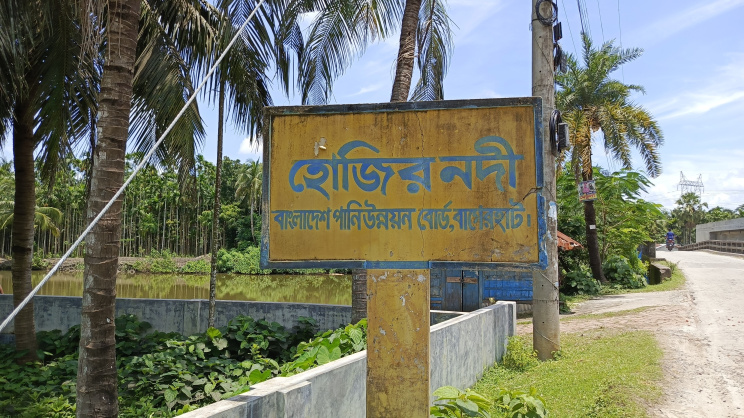
According to the Bagerhat Water Development Board (WDB), only two rivers in the district — the Panguchi and the Pashur — currently maintain normal flow.
Officials and stakeholders also attributed the crisis to unplanned shrimp farming on agricultural land with embankments, which prevent normal tidal water from entering because there are no floodplains. They also said no staff have been recruited to operate the 165 sluice gates under the WDB’s five polders. As a result, the flap gates (the lower parts of the sluice gates) remain closed during low tide, stopping water flow and accelerating siltation.
Outside the polders, the Farakka Barrage has stopped upstream water from reaching these rivers. This causes tidal water to remain stagnant for long periods, leading to heavy siltation. As a result, saline water from the Bay of Bengal cannot recede quickly during low tide, spreading excessive salinity into agricultural land, reducing soil fertility and damaging Bagerhat's green environment.
On-the-ground visits found that unplanned shelter projects (Ashrayan projects) have been built on silted-up riverbeds, while influential land grabbers have illegally occupied riverbanks by constructing permanent and temporary structures, shops, business establishments and houses.
Samir Baran Paik, a retired teacher of Bachua CS Pilot School, said, "We saw large launches, steamers and boats running in these rivers of Bagerhat when we were growing up. Due to unplanned embankments, rapid siltation has killed the rivers, turning them into narrow canals."
Noor Alam Sheikh, environmentalist and Pashur Waterkeeper, said, "To bring back life to the 26 rivers that have turned into narrow canals in Bagerhat, rapid dredging and excavation are a must to restore normal flow. Immediate steps must be taken to save the Daratana river, flowing beside Bagerhat town, from rapidly filling up due to encroachment, pollution and waste."
Jayanta Pal, executive engineer of the Bagerhat WDB, said, "To keep the Mongla Port-Ghashiakhali international naval channel active, dredging has been carried out in the Daudkhali river via Rampal upazila headquarters. To implement electoral pledges, the BNP government is currently excavating rivers and canals in Bagerhat district under 25 packages at a cost of Tk 619 crore."
 For all latest news, follow The Daily Star's Google News channel.
Comments