


China is our true friend: Jamaat ameer
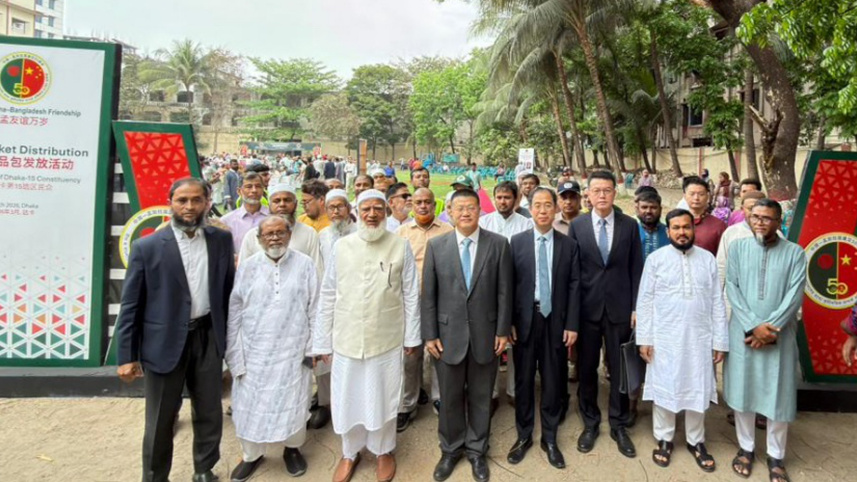
Bangladesh Jamaat-e-Islami Ameer and Leader of the Opposition Shafiqur Rahman yesterday described China as a “true friend” of Bangladesh, calling for expanded initiatives for public welfare.
Shafiqur made the remarks at a food distribution programme for underprivileged people at Adarsha High School ground in Mirpur-10. The event was jointly organised by Jamaat and the Chinese Embassy in Dhaka, with Chinese Ambassador Yao Wen present.
 For all latest news, follow The Daily Star's Google News channel.
 He said China had never interfered in Bangladesh’s internal affairs and had proven to be a dependable development partner. “Some countries interfere at will after taking everything from Bangladesh without offering anything in return. But China does not do that,” he said.
Referring to five decades of ties, he said China recognised Bangladesh in 1976 and has since become one of its largest development partners, contributing to major infrastructure projects.
Shafiqur also alleged that during a past “fascist period,” symbols of Bangladesh-China friendship were undermined, citing the renaming of the China Friendship International Conference Centre. He said such actions harmed national interests.
Describing the long-delayed Teesta River project as “the cry of Bangladesh,” especially for the northern region, he stressed its implementation and said his party would support any initiative to advance it.
He welcomed China’s reported plans to support specialised hospitals and build residential halls for Dhaka University students, calling them examples of “genuine friendship.”
He added that Bangladesh seeks cordial ties with all countries but will not accept dominance by any external power.
Ambassador Yao Wen said Bangladesh and China are comprehensive strategic cooperative partners.
Referring to Eid-ul-Fitr, he said the programme aimed to support local residents and that China would continue projects to improve people’s well-being.
Later, at a press conference in Moghbazar, Jamaat leaders criticised recent government decisions to appoint administrators to city corporations and district councils, as well as changes in leadership at several public universities.


Comments