


Govt to explore market-based power trade with India
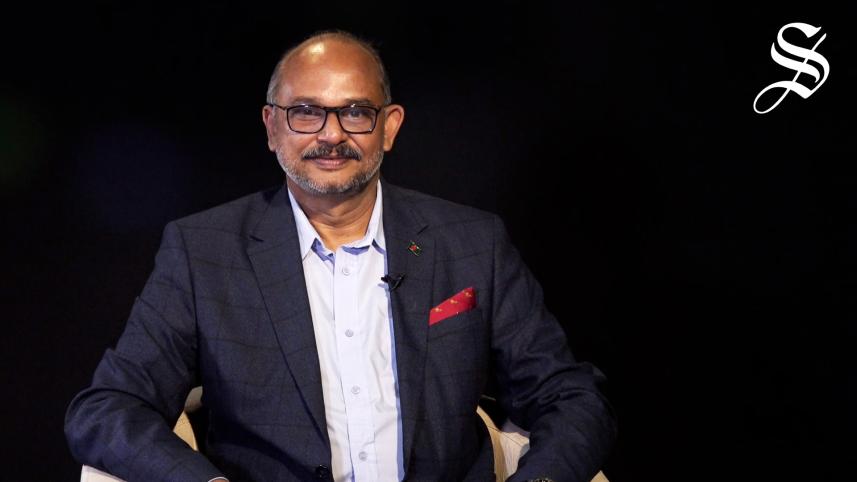
The government is exploring market-based electricity trade with India and reviewing existing energy and power agreements with the country to ensure they serve Bangladesh’s interest, said Rashed Al Mahmud Titumir, the prime minister’s adviser on finance and planning, yesterday.
Speaking to reporters after separate meetings with the Indian ambassador and the Chinese envoy in Dhaka, Titumir said the government is reassessing past arrangements in the energy sector while seeking new cooperation frameworks based on market mechanisms and investment rather than loan dependence.
 For all latest news, follow The Daily Star's Google News channel.
 He said Bangladesh may explore joining India’s power exchange, which operates on a market-based pricing system.
The government is reassessing past arrangements in the energy sector while seeking new cooperation frameworks based on market mechanisms and investment rather than loan dependence.
“If we connect to that grid, the price paid by Nepal, Bhutan, or even a state in India could serve as benchmarks. That means it is a market-based system,” he said, adding that no decision has yet been taken.
Titumir said the government is reviewing energy and power agreements signed during the previous administration, as some were found to be unequal.
The meeting also discussed projects financed under India’s lines of credit.
Titumir said both sides will review the status of those projects, including completed and ongoing ones, and assess whether they align with Bangladesh’s current development roadmap.
“We will review whether the projects taken earlier should continue. India also wants a review. It will be an open-minded process,” he said.
He added that Bangladesh wants to strengthen regional cooperation in power and energy among South Asian countries, particularly India, Bhutan and Nepal.
Titumir said the discussions were part of the government’s efforts to increase investment to revive an economy it claims was left in a “devastated condition” by the ousted Awami League government.
He also said the government aims to move away from a “culture of loans” and focus on investment-driven industrialisation.
“If investment increases, production will increase. That will boost employment and revenue,” he said.
The adviser also said Bangladesh is moving toward a “One Citizen, One Card” system through initiatives such as farmer and family cards. In this context, the government discussed Aadhaar and India’s experience with the system.
Titumir said his meeting with the Chinese envoy focused largely on investment and industrialisation.
He noted that during Chinese President Xi Jinping’s visit to Bangladesh in 2016, projects worth about $20 billion were discussed. However, projects worth only around $8.2 billion have progressed so far.
The two sides discussed the status of those projects and ways to accelerate their implementation.
Bangladesh is interested in increasing Chinese investment, particularly in industrial sectors, he said.
Discussions were also held on forming a working group involving the Bangladesh government, the Chinese government and Chinese companies to explore ways to boost investment, he added.
Comments