


Ordinance repeal puts disappearance victims, July fighters at risk: Outgoing NHRC commissioners

The five outgoing members of the National Human Rights Commission (NHRC) warned today that, under the reinstated NHRC Act of 2009, government forces will now investigate allegations of their own rights violations.
In an open letter, they cautioned that this change places victims of enforced disappearances and participants in the July uprising at serious risk. They also alleged the government's true motive for repealing the ordinances was to curtail the NHRC's independence.


When contacted, Law, Justice and Parliamentary Affairs Minister Advocate Md Asaduzzaman told The Daily Star, "I am yet to see the statement. However, there is no reason for them to issue a statement on this matter."
In the letter, they protested against several pieces of misinformation regarding the NHRC Ordinance and related legal instruments, which had been presented in Parliament as arguments for repealing the ordinances.
Their open letter said it was discussed in the parliament that necessary protection has been provided to the July warriors through the passing of the ordinance.
But in reality, they said that according to the July Mass Uprising (Protection and Liability Determination) Ordinance, 2026, participants of July mass uprising, will be protected if deaths occur due to political resistance during the uprising. However, if murders occur by exploiting the chaos, cases will be filed.
To avoid conflicts of interest, the Human Rights Commission was to determine which category a death falls into through investigation. But under the reinstated 2009 Act, the Human Rights Commission cannot investigate allegations against security forces. Investigations will be conducted by the government forces themselves, who were direct parties during the July mass uprising “The fate of the youth who took to the streets will be decided by the very person they stood against. Consequently, July warriors from all political parties may be at risk in the future,” he said.
The commissioners -- Justice Moyeenul Islam Chowdhury, Nur Khan, Ilira Dewan, Prof Md Shariful Islam, and Nabila Idris --cautioned that repealing three key ordinances severely eroded the commission's independence.
Their letter systematically addressed what they called "misinformation" presented in parliament to justify the repeal.
Contrary to the law minister’s claim that the punishment for enforced disappearance is limited to 10 years, the commissioners clarified that the 2025 Enforced Disappearance Ordinance provides for the death penalty and life imprisonment, depending on the severity of the crime.
They also refuted the government's assertion that the International Crimes Tribunal (ICT) Act is sufficient to handle such cases.
"The ICT can only judge 'mass' disappearances as crimes against humanity. It cannot adjudicate isolated criminal cases of disappearance," the letter stated.
It added that as of April 11, new cases of enforced disappearance are no longer defined as criminal offences under the reinstated legal framework.
They pointed out that, under the 2009 act, the commission will be under the law ministry and will require prior government permission before investigating any security personnel.
"If a government institution is accused, an investigation subject to that same government's permission is meaningless," the letter noted.
The commissioners further criticised the new selection committee structure, expressing fears of a return to the "politicisation of appointments."
While the government has promised a "stronger" law following further scrutiny, the outgoing commissioners expressed deep scepticism, arguing that the 2025 ordinances were already the result of consultations with over 600 stakeholders.
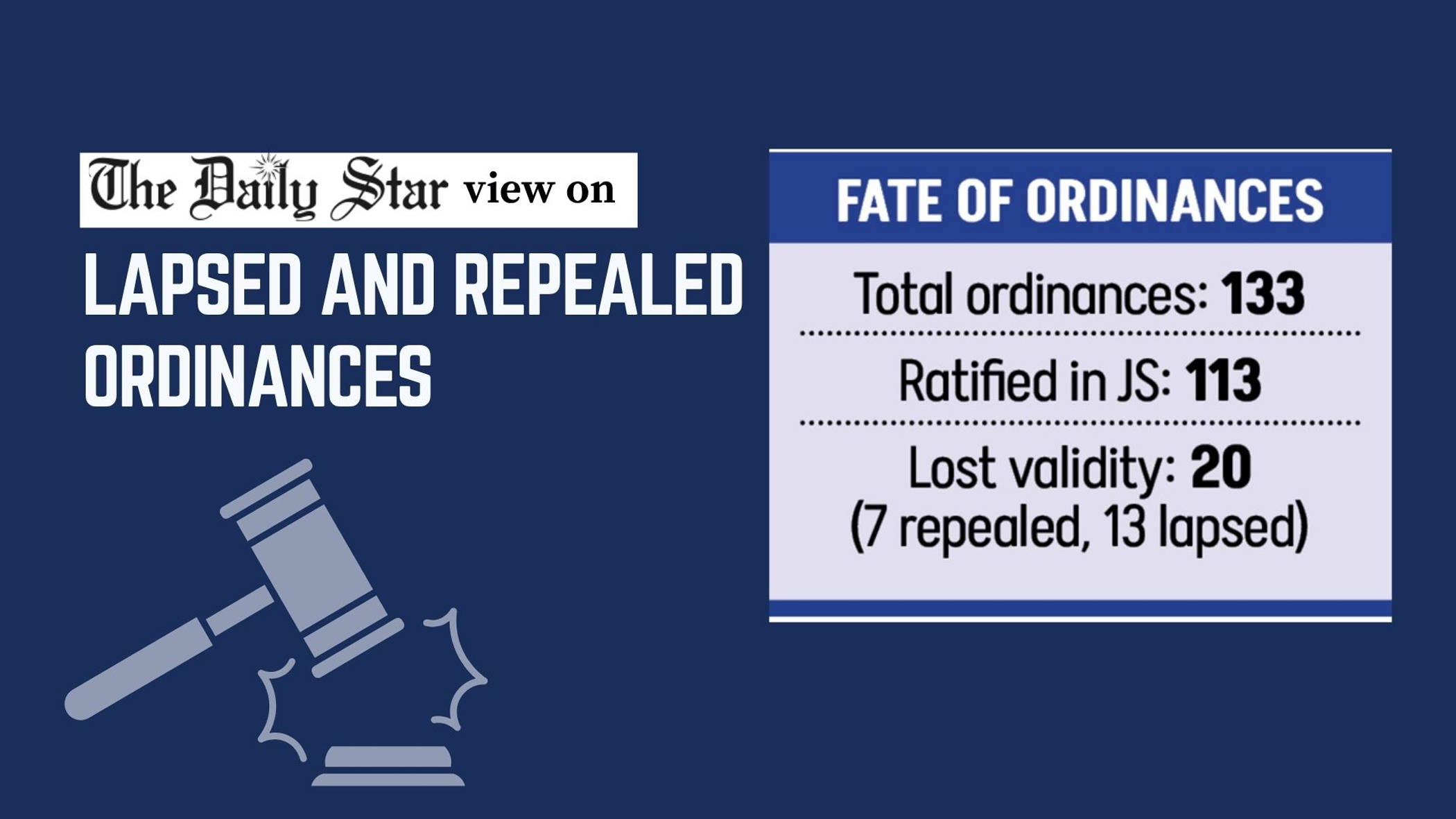
Last Thursday, parliament passed a bill repealing the NHRC ordinance issued during the interim government's tenure, reinstating the 2009 Act enacted during the Awami League era.
 For all latest news, follow The Daily Star's Google News channel.
Comments