


Rose Garden: a palace where legacy blooms


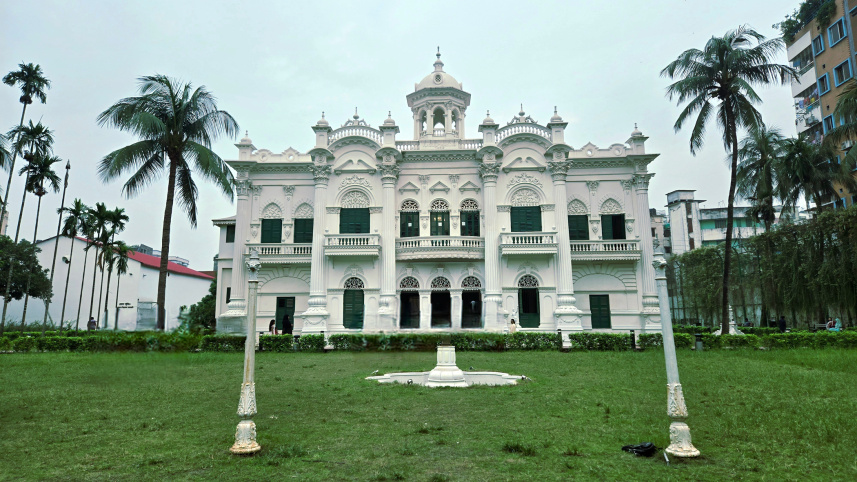
Hidden within the bustling alleys in Old Dhaka’s Tikatuli lies a regal architectural gem -- the Rose Garden.
Built in the early 20th century, the palace that once reflected an elite lifestyle now carries the scent of history, the echoes of political discourse, and the essence of cultural heritage.

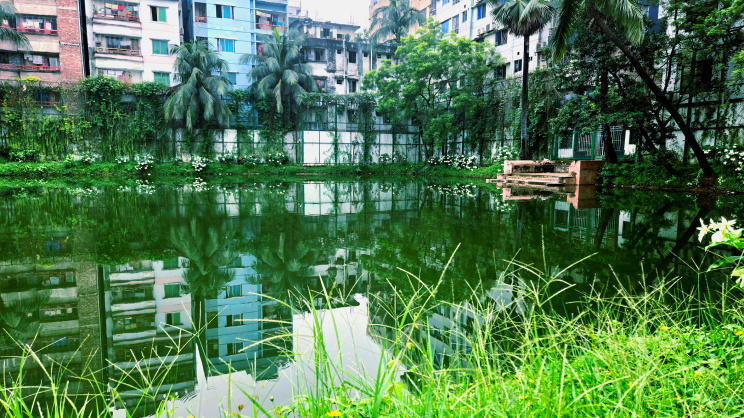
Located on KM Das Lane, the Rose Garden now stands as a preserved heritage site and public entertainment centre.
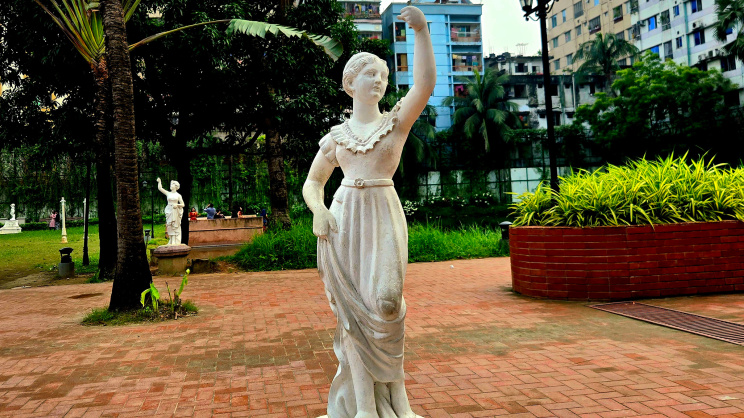
The estate features an elegant white marble mansion exuding Greek architectural style, white marble sculptures, a field with an artificial fountain at the centre, a pond with a paved bank, and a lush green garden with rows of rose bushes, creating a mesmerising ambience of grandeur.
The ground floor of the palace consists of eight rooms, all currently closed. On the upper floor, four of the five rooms are open to visitors. Along the wooden staircase to the second floor, there are colourful glass designs that make the palace come alive in a play of light and shadow.
The palace features a large hall, which was once the ballroom, with every corner intricately adorned and the ceiling featuring chandeliers that are still ready to shine.
On one side of the palace is the Bengal Studio, where the Bangladeshi film “Harano Din” was shot.
Every day, a host of local and foreign visitors visit the Rose Garden.
Shiuly Akter, a visitor, said, “The architecture of old houses and palaces always fascinates me. The Rose Garden is not just a palace. As I entered, I felt as if I were standing as a witness to time. Its serene beauty is enchanting. If anyone ever seeks tranquillity, history, and beauty, then an afternoon visit to the Rose Garden is highly recommended.”
Rajnin Farhana, another visitor, said, “I heard about the palace since it reopened. A number of my friends visited earlier and posted photos on social media. Now I came to visit the palace and take a lot of photos.”
Monowar Hossain, a local resident, said, “I was born and brought up in this area. The Rose Garden is the symbol of pride not only for our locality but for the whole country.”
The story of Rose Garden begins during the British era in 1931, when Rishikesh Das, a nouveau riche businessman, constructed the mansion.
Once, after being humiliated at a cultural gathering at Baldha Garden, Rishikesh decided to host his own events at a grand garden house. Due to the abundance of rose bushes, the estate was named “Rose Garden”.
However, before the decoration of the building could be completed, Rishikesh went bankrupt and had to sell the property in 1937 to Khan Bahadur Abdur Rashid. The mansion was then renamed “Rashid Manzil”.
Later, it came under the ownership of Kazi Mohammad Bashir (popularly known as Humayun Saheb) and subsequently to Kazi Abdur Rakib and his wife Laila Rakib.
The mansion is deeply entwined with Bangladesh’s political history. Following the Partition of India, many significant political meetings were held here, including the first informal meeting to establish the East Pakistan Awami Muslim League in 1949. Numerous renowned politicians and leaders from Bangladesh and India were hosted here.
In 1966, the property was leased to Bengal Studio. In 1993, the Rashid family regained ownership. In 2018, the Government of Bangladesh acquired the property for Tk 331 crore.
After 2022, the building was restored and reopened on July 30 last year. Now, visitors can enter the building from 11:00am till 6:00pm. It remains fully closed on Sundays. On Mondays, it remains open partially from 2:00pm to 6:00pm. Entry tickets are priced at Tk 30 for regular visitors and Tk 10 for students each.
 For all latest news, follow The Daily Star's Google News channel.
 Afroza Khan Mita, regional director of the Department of Archaeology, said the Rose Garden has seen a steady stream of local and foreign visitors since its reopening.
“In August and September last year alone, we earned a total of Tk 17 lakh from ticket sales. Clearly, there is immense public interest. The site offers Dhaka residents a peaceful retreat while also contributing to government revenue,” she said.
Comments