


Shock ouster of BB governor

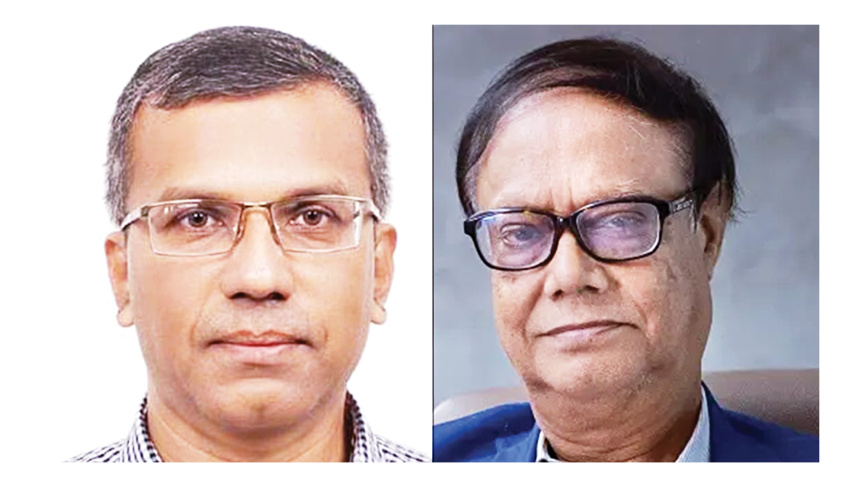
In a stunning development that roiled the financial sector, the government yesterday removed Bangladesh Bank Governor Ahsan H Mansur, replacing him with a corporate accountant who owns a garment company.
By the time Mansur departed amid calls for his resignation from central bank employees, the finance ministry had already fast-tracked the appointment of his successor, 59-year-old Mostaqur Rahman, managing director and CEO of Hera Sweaters Ltd.


Within hours, the ministry issued two separate notices: one cancelled the remainder of Mansur’s tenure, which was due to run until August 2028, and the other appointed the new governor.
Asked what prompted the sudden move, Finance Minister Amir Khosru Mahmud Chowdhury framed it as a prerogative of a newly elected administration. “There’s nothing to consider,” he told reporters at the Secretariat.
“A new government has taken office and has its priorities. Changes have not only occurred at Bangladesh Bank; changes are happening in many places and will continue to happen,” he said.
“To align with and implement the new government’s programmes, preferences, thoughts, and vision, changes will be made wherever necessary. This is perfectly normal.”
Mansur’s unceremonious removal surprised many, as it came just days after Mansur met the finance minister on February 23 and received assurances that the new government would carry forward banking reforms. His ouster -- less than two years into his four-year term -- has raised fresh questions about the independence of the central bank.
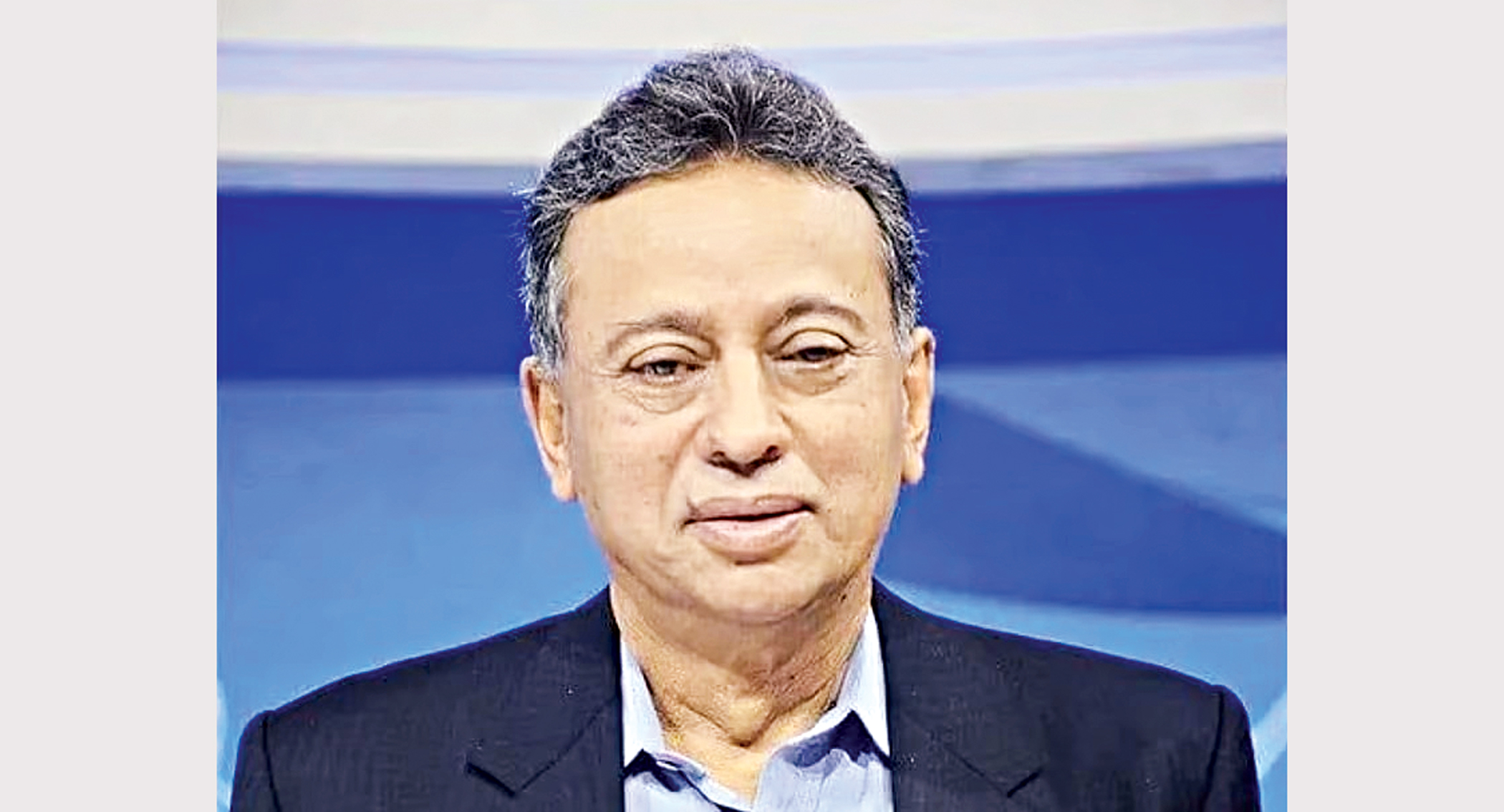
There’s nothing to consider... A new government has taken office and has its priorities. Changes have not only occurred at Bangladesh Bank; changes are happening in many places and will continue to happen.
The appointment of the new governor quickly sparked criticism within financial and policy circles. Before his appointment, Mostaqur chaired the Bangladesh Garment Manufacturers and Exporters Association’s standing committee on the central bank. He also sat on the ruling BNP’s election steering committee.
In December, Mutual Trust Bank rescheduled Tk 89 crore in stressed loans of his company, Hera Sweaters. The loans were restructured for 10 years with a two-year grace period under a special facility for distressed borrowers, according to a bank official.
Managing directors of three commercial banks, speaking anonymously to The Daily Star, expressed deep unease. “How can someone who rescheduled loans for his own company under special terms work in the interest of the country’s banks?” one executive said, calling it a clear conflict of interest.
The new governor did not respond to repeated calls for comment.
A former IMF economist, Mansur was appointed in 2024 by the interim government to stabilise a deeply troubled banking sector. The seeds of his downfall were sown when he began dismantling weak banks in a sector already strained by poor governance and mounting loan defaults. His aggressive reform drive angered powerful businesspeople and entrenched factions within the central bank.
“A group of people are angry with me because their interests have been hurt,” he recently told The Daily Star. “Even then, I will continue my reform work.”
That defiance culminated in a fierce internal showdown. The revolt came into public view on February 16, when the central bank’s Officers’ Welfare Council publicly denounced the governor, accusing him of favouritism in awarding digital banking licences and rebelling against his ongoing efforts to merge weak banks. He was accused of behaving autocratically, belittling officials, and filling some senior positions with contractual appointees.
Some officials also spoke out against the ongoing bank merger process. When Mansur retaliated by transferring three of the vocal officials, the resentment boiled over. The unrest reached its climax yesterday as a section of Bangladesh Bank employees organised a large protest at the Motijheel headquarters.
In a hastily convened press conference just before his removal, an embattled Mansur described the protest as “a conspiracy by a vested group aiming to undermine the discipline and achievements of our banking sector.”
 For all latest news, follow The Daily Star's Google News channel.
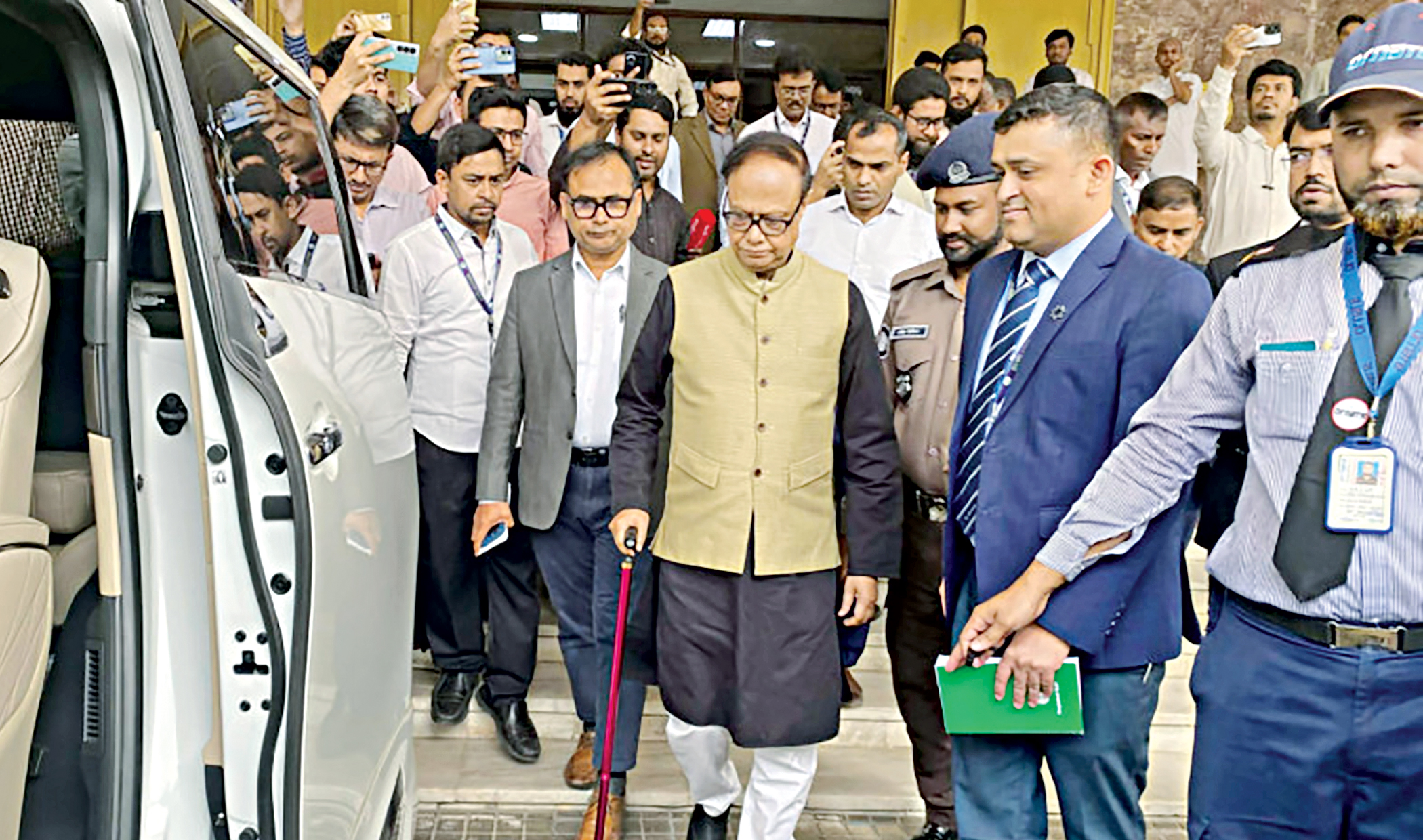
 Ahsan H Mansur leaving Bangladesh Bank around 2:00pm yesterday. Photo: Courtesy of nTV
Mansur spent his final moments cancelling meetings and watching news of his removal unfold on midday television before leaving the central bank premises around 2:00 pm. Speaking to The Daily Star over the phone, he said he had not resigned but had left the office after learning of the appointment of a new governor. “I don’t know anything. I saw it on TV. There are formalities remaining. I will complete them later,” he said.
Around the same time, Ahsan Ullah, an adviser to the governor of Bangladesh Bank, was allegedly mobbed and forced out of the central bank premises by a group of officials. The incident occurred around 3:00 pm.
In a striking parallel, similar mob pressure had preceded the departure of Mansur’s predecessor, Abdur Rouf Talukder, in August 2024 -- though under different circumstances.
As news of the development spread, economists reacted swiftly, with some expressing sharp criticism on social media.
“The decision to appoint a professional accountant and businessman as Bangladesh Bank governor naturally raises questions. Is the government truly committed to reforming the banking sector?” wrote Selim Raihan, a professor of economics at Dhaka University, on Facebook.
“A businessman may prioritise corporate interests, whereas the primary responsibilities of the central bank are to control inflation, ensure financial stability, and take firm action against weak banks,” he wrote.
Warning of deep-rooted problems -- from defaulted loans to governance failures -- he added, “Are we returning to a system where influential groups override the independence of the central bank?”
Mustafizur Rahman, distinguished fellow at the Centre for Policy Dialogue, credited Mansur with laying the groundwork for long-term reform. He praised efforts to restructure bank boards, curb illicit financial outflows, and push for a much-needed asset recovery entity to handle distressed assets.
M Masrur Reaz, chairman of Policy Exchange Bangladesh, lauded Mansur’s attempt to reform the sluggish Money Loan Court framework. He called the transition “abrupt and institutionally troubling,” questioning whether a sweater exporter possesses the technical expertise and strategic depth required to lead a central bank during a prolonged financial crisis.
Md Deen Islam, research director at the Research and Policy Integration for Development, described the leadership change as “alarming”, warning that the country may be heading in the wrong direction.
Mansur’s tenure was not without criticism from economists. They observed that his punishingly contractionary monetary policy, while initially justified to tame inflation, may have eventually dampened investment and supply-side activity.
Immediately after he took over, bankers reacted negatively to some of his public remarks. He had warned that 10 banks were on the verge of collapse -- a statement that triggered depositor anxiety and intensified pressure on the banking system.
Comments