


The river took her land. It also took her name

Sakhina Begum had seen better days once upon a time. It was another life when she was part of a well-to-do family and villagers called her Mandaler bou. Now she has grown old and frail, and her husband has lost all his land to the hungry Brahmaputra.
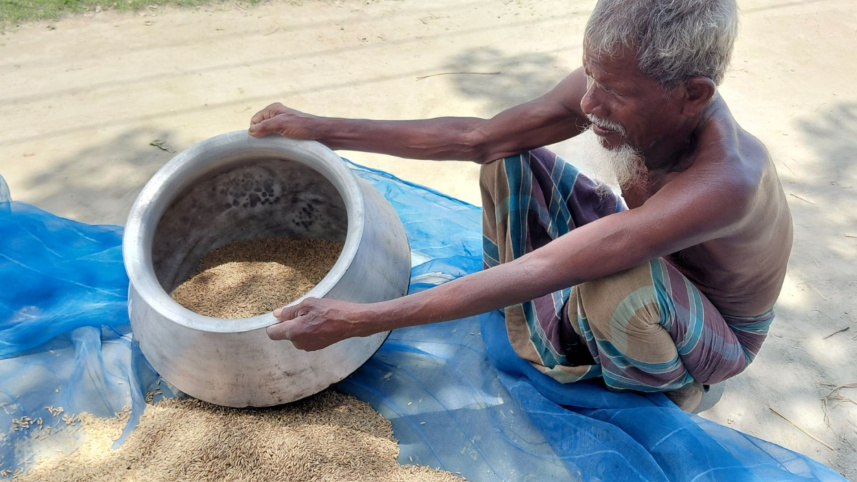
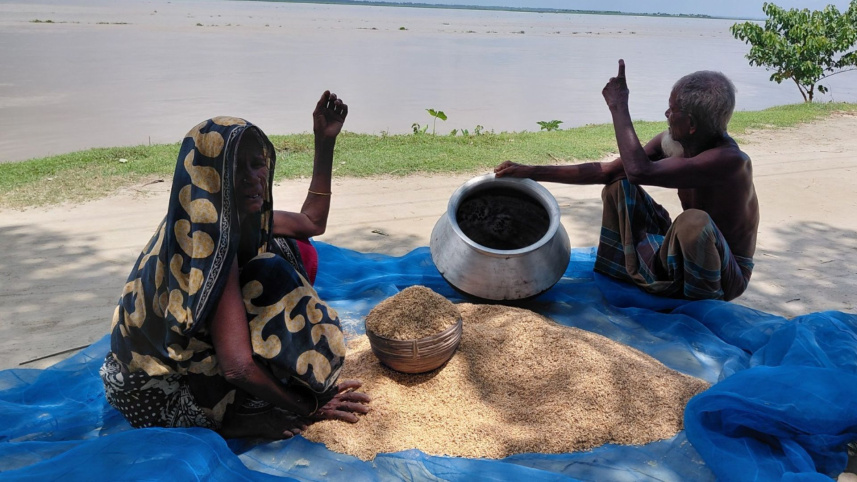
Under the harsh midday sun, 68-year-old Sakhina Begum was drying paddy. Beside her sat her husband, Khatib Uddin Mondol, 73. Their sunburnt bodies were bent with age, yet the old couple carefully gathered each grain into a clay pot.

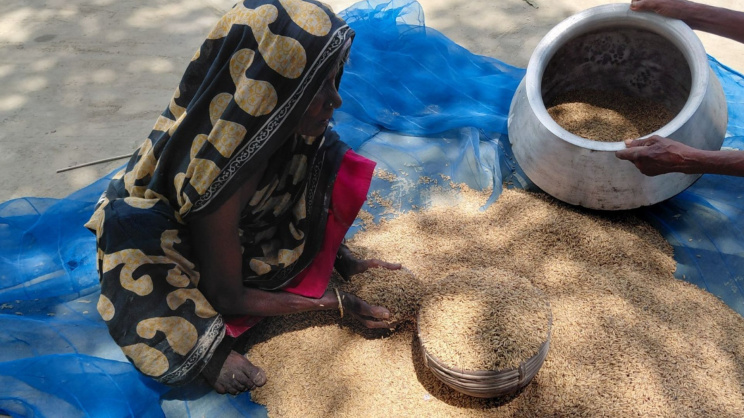
Midway through, Sakhina stopped. She ran her hand lightly over the drying paddy, as though returning to a field from decades past.
Then, almost in a whisper, she said, "These days I long for someone to call me Mandal's wife..."
There were no tears, only yearning in her voice. It was not just form of address that she longed for. She was mourning the loss of an identity that had been swallowed by the river.
At 16, Sakhina was married into the Mandal family in Kachkol village, around five kilometres from Char Fakirer Hat in Kurigram. Besides a happy home, marriage also gave her a new identity. One that carried prestige and status that made her proud.
Gradually, people stopped calling her Sakhina. To the village, she simply became Mandaler bou (Mandal's wife). That by itself was enough to say who she was and where she stood.
"I loved it when everyone called me that," she recalls.
Her husband was a respected farmer. The family owned 16 bighas (1 bigha equals 33 decimals) of fertile farmland, a sprawling 12-decimal homestead and a courtyard filled with mango, jackfruit and litchi trees. Crops grew almost year-round. Villagers knew Khatib simply as Mandal.
And she endearingly turned into Mandaler bou.
To outsiders, it may have sounded like nothing more than a nickname. But within the village, it represented something much deeper -- a woman's place in the community, her dignity, trust and standing as part of a farming household.
"In the first few years after our marriage, my husband wouldn't even let me work in the fields," Sakhina says. "I was the new bride. That gave me a certain standing."
Eventually, she joined him in farming. Having grown up in a farming household herself, she knew the work well. Together they cultivated the land and harvested the crops.
Over time, she became someone others relied upon.
 For all latest news, follow The Daily Star's Google News channel.
 People came to her when they needed money. Some borrowed rice or lentils. Others asked for vegetables.
"I never sent anyone away empty-handed," she says.
Khatib was not a wealthy landowner, nor an influential village elite. But he was respected. Villagers often invited him to local arbitration meetings. When women's issues arose, many also sought Sakhina's opinion.
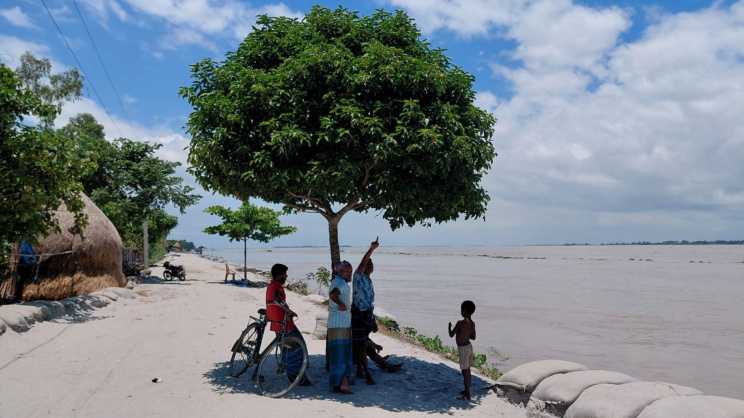
The couple now lives in a small house on government land beside a Water Development Board embankment in Soroktari village under Raniganj union in Kurigram's Chilmari upazila.
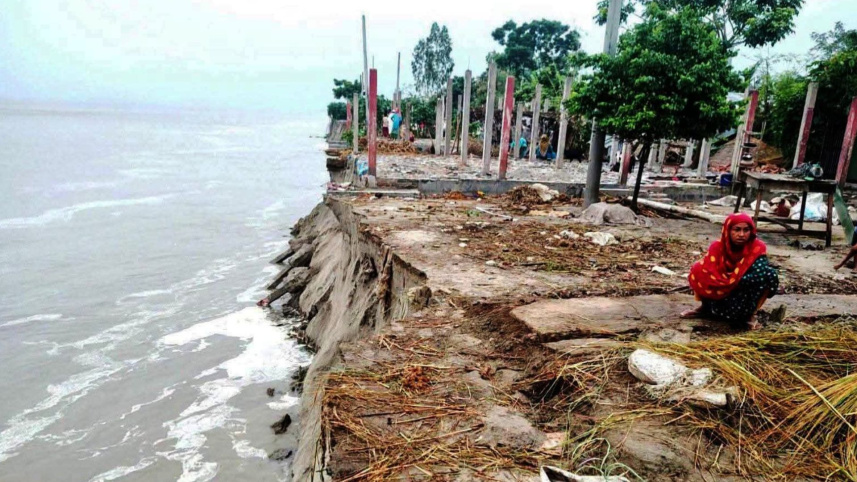
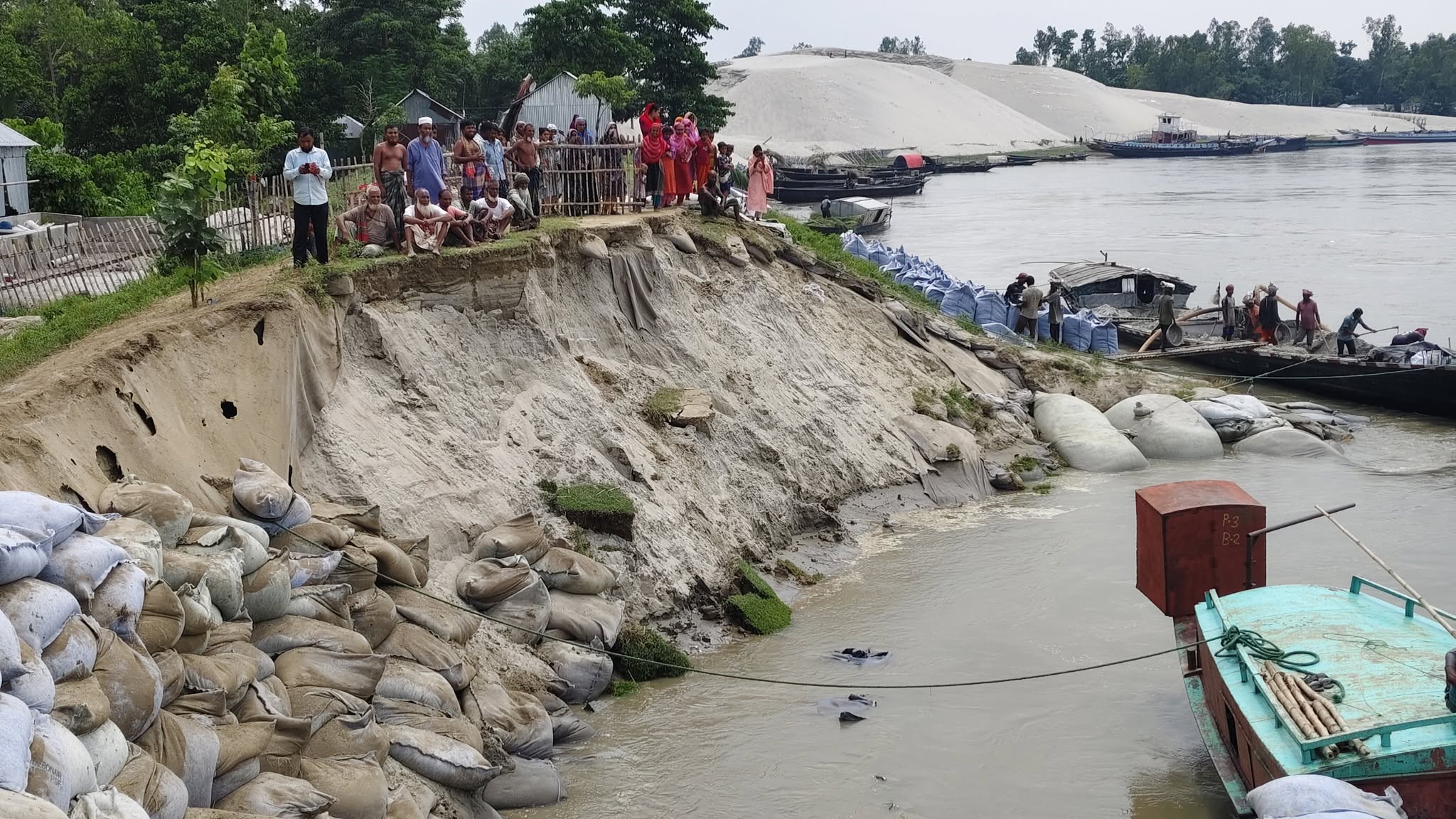
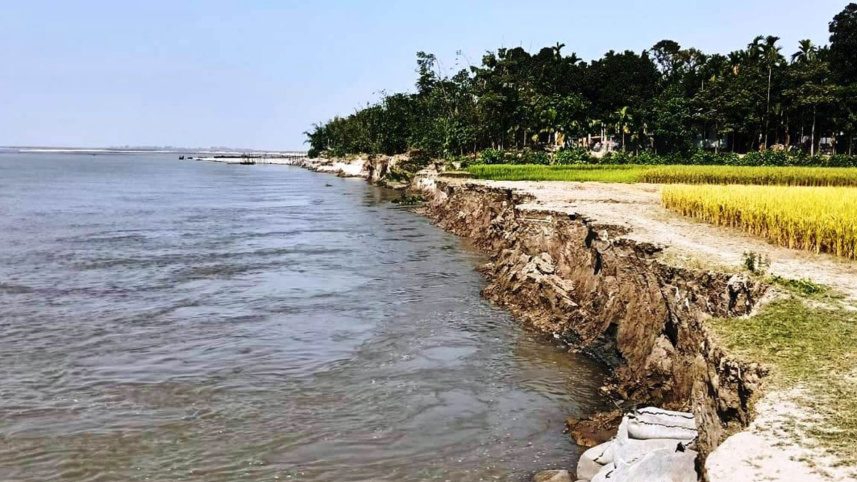
The Brahmaputra has taken everything from them. Over the past four to five years of erosion, the couple lost their land, then their homestead, then their orchard. It took away everything -- one after another.
Their family has broken apart. Of their three children, two sons now work as day labourers in Dhaka; their daughter has gone to live with her in-laws.
Khatib now farms other people's land as a sharecropper. Sakhina works that land alongside him.
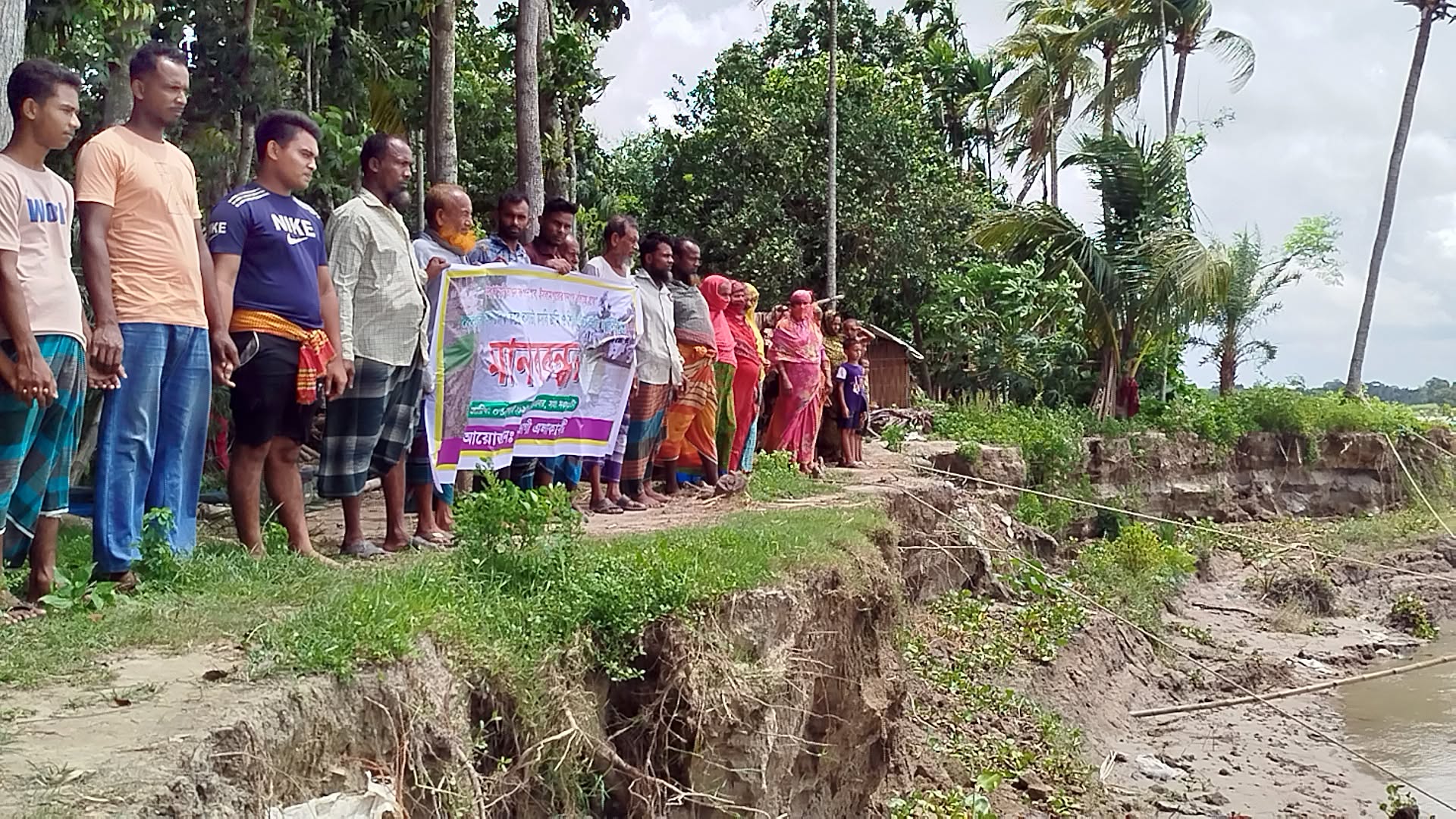
Like the Mondol couple, many others in the village have lost their land and homestead to the river. Along with it, families have broken up, and familiar, once-close neighbours have scattered.
"Most of the people who knew me are no longer in the village," Sakhina says. "After the river took our land, everyone scattered."
Her words carry within them another, less visible cost of river erosion.
A 2013 study on river-erosion-affected women, published in the journal *Review of European Studies*, found that displacement leaves women facing social isolation. The bonds of mutual cooperation and dependence once built into their social and moral relationships weaken sharply after erosion. What people lose is not only land or homes, but this social capital too.
According to Rezwana Karim Snigdha, a professor of anthropology at Jahangirnagar University, discussions about river erosion often overlook women's experiences because public attention tends to focus on male landowners.
"When we think of a farmer or a landowner, we usually imagine a man," she says. "As a result, men become the visible victims of losing land and property."
But, she argues, women's losses extend far beyond physical assets.
"We rarely acknowledge that a home cannot exist without women," she says. "In reality, natural disasters displace families, but our social norms and practices often end up displacing women."
A 2024 study published in the journal Environment and Urbanization Asia found that 94 percent of people displaced by river erosion said they had lost long-standing social relationships and community bonds.
Another study, published in the Bangladesh Research Foundation Journal in 2013, found that 65 percent of displaced women believed their social status had changed after displacement, while 60 percent reported growing distance from relatives and familiar social circles.
For those who once knew the Mandal family, the memories remain vivid.
Sixty-year-old agricultural labourer Mobarak Ali, who now lives on the embankment himself, once worked on Khatib's land.
"When we worked on Mandal's farm, we always had enough to eat," he says. "Mandaler bou treated every labourer with respect."
Raniganj Union Parishad Chairman Monjurul Islam says river erosion destroys far more than physical assets.
"It takes away people's social standing, their sense of security and their hopes for the future," he says.
According to the Asian Development Bank's 2020 Jamuna-Meghna River Erosion Mitigation Project report, river erosion claims around 10,000 hectares of land in Bangladesh every year, affecting more than 100,000 people.
Yet the figures still fail to capture what people like Sakhina have truly lost.
No report records how many women have lost the names by which entire communities once knew them.
No database counts the friendships that vanished with a village.
No survey asks how many still wait to hear a familiar voice call them by a name that made them feel they belonged.
Sakhina Begum still pines for those days. If, by chance, she runs into someone from her old life in the fields, and they call out, as they used to, -- "Oi... Mandaler bou..." -- her face still breaks into a warm smile.
"I feel a sense of honour," Sakhina says.