


Expectations of non-resident Bangladeshis from the 2026 democratic government

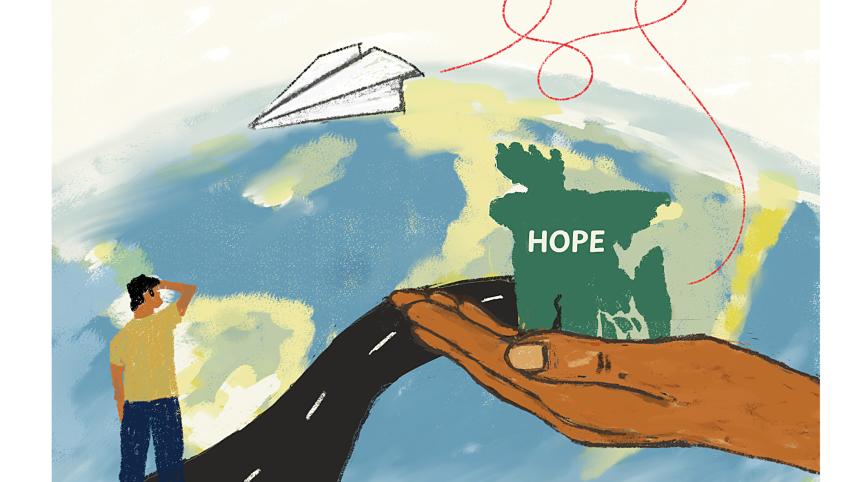
Bangladesh witnessed some extraordinary times just over a year ago. Nineteen months after the mass uprising of July 2024, the national election is expected to be held in February 2026. The Bangladeshi diaspora, residing across the globe, not only witnessed the historic mass uprising but also expressed their solidarity with the anti-discrimination student movement.
For our anniversary issue, we spoke to some of our non-resident Bangladeshi (NRB) men and women and asked them about their hopes and expectations from the new democratically elected government.

A clean, efficient, and welcoming airport
Every time Sabrina Nawrin Rahman, a marketing professional at Volkswagen in Sydney, Australia, lands in Dhaka, she experiences a mix of emotions: it is the joy of coming home, accompanied by the comfort of hearing Bangla all around her and a sense of belonging that no other place in the world offers. However, Rahman’s excitement begins to fade as soon as she steps into the airport.
With mosquitoes buzzing everywhere, toilets unhygienic, baggage trolleys grimy and poorly maintained, bags tossed and turned carelessly, conveyor belts moving at a snail’s pace, air conditioners not blowing cool air, and chaotic scenes unfolding every minute, Rahman thinks that an NRB’s, as well as anyone else’s, first impression of Hazrat Shahjalal International Airport is far from pleasant. She thinks that airports are not neutral infrastructure; they project a country’s self-image.
“Hospitality is the new standard. A clean, efficient, and welcoming airport, staffed by professional people, will ensure a pleasant experience for every guest and traveller and at the same time, reflect the true essence of Bangladeshi hospitality,” she said.
Rahman believes that cleanliness across the airport, efficiency at all levels, helpful immigration officers, reliable luggage handling, clear signage, upgraded luggage carts, and perhaps touches of local art and music can transform the entire Dhaka airport experience into something we all can take pride in.
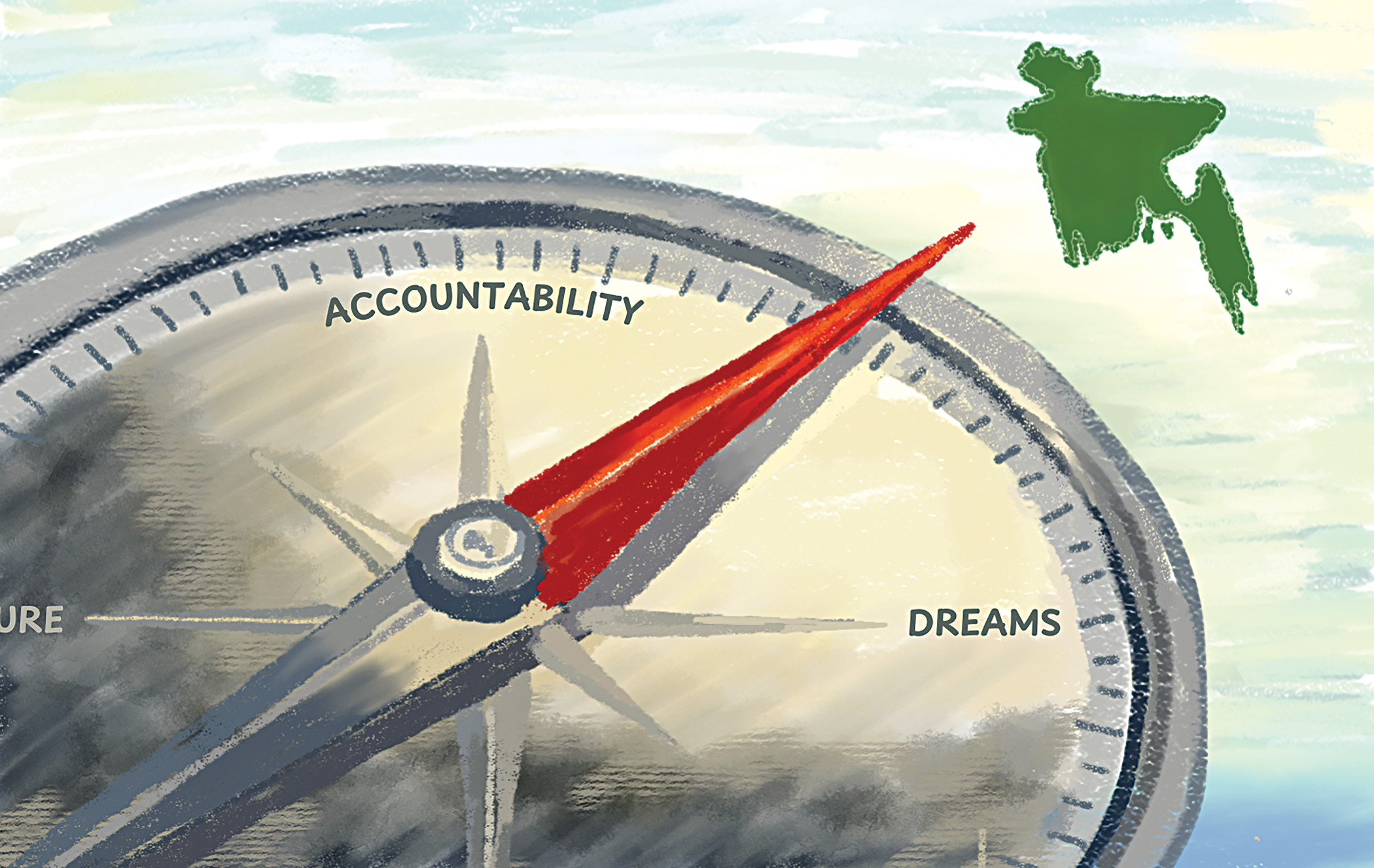
She hopes that the new democratically elected government will seriously address the problems that local and foreign travellers face at the country’s airports.
Enforcement of fire safety regulations and modern, affordable healthcare
In 2021, Afsheen Mozammel, an engineering manager at Cox Communications in Atlanta, USA, and her mother were tragically injured in a fire incident near the Gulshan Pink City Shopping Complex. She was vacationing in Bangladesh at the time.
“My mother and I were on a rickshaw when we heard a loud explosion. A scorching heatwave hit my face, and the next second, I was covered in shards of broken glass. The rickshaw-puller covered his face, abandoned the rickshaw, and ran away, screaming,” she said.
Afsheen and her mother were left in a state of panic and confusion. “We got off the rickshaw and started running. We were barefoot. We somehow lost our shoes in the chaos,” she said.
Fortunately, a kind man helped the mother and daughter onto another vehicle and requested the rickshaw-puller to take them to the nearest hospital. Both of them were bleeding from head to toe.
Mozammel shared that they were taken to a renowned private hospital located in Gulshan 2, where she learned to her dismay that the emergency room did not even have patient gowns that they could change into. On top of that, the attending doctor administered a medication that had adverse effects on her and left her body swollen.
“The hospital overcharged us for the service, but we were not in a state to argue with them over the price. We also paid for the treatment of the first rickshaw-puller, who was taken to the same hospital,” she added.
Mozammel said that the incident revealed to her the stark reality of the risk of fire hazards and inadequate healthcare in Bangladesh. “We were at a renowned private hospital in Gulshan, and yet the emergency room was ill-equipped. They did not even have the basic supplies to provide proper care to their patients,” she said.
“I can only imagine the dire state of our public hospitals,” she added.
The fire incident was covered by the national media, but Mozammel does not know if anyone was held accountable for the incident. All she knows is that the party at fault did not come to the assistance of the injured or pay for their medical bills.
“This is what happens when zero accountability is commonplace,” she said.
 For all latest news, follow The Daily Star's Google News channel.
 On her subsequent trips to Dhaka, she avoided that particular area of Gulshan, as she still carried the trauma within her. She still bears scars from that day on her face, arms, and legs, a constant reminder of what she endured.
She strongly hopes that the new democratically elected government will work towards modernising the country’s healthcare sector and strictly enforcing the fire safety regulations.
“Without healthy citizens, no country can progress. And true national progress is not measured by GDP but by the quality of life of its citizens,” she said.
Overhaul of the banking sector
Iftekhar Ahmed (not his real name) believes that the country’s banking sector urgently needs reform for future economic progress.
He left Bangladesh in 2018 and settled in a European country. Once the owner of several thriving ready-made garments factories that employed more than 4,000 people, his business fell into a financial crisis in 2015.
Ahmed believes that accountability and strict monitoring can save Bangladesh’s banking sector as well as the business community. Unless a political government overhauls or reforms Bangladesh’s financial sector, banks and businesses will continue to collapse.
“The dream of a prosperous Bangladesh will remain elusive if financial institutions are allowed to operate unchecked,” he said.
Ahmed misses running his own RMG factories and dreams of returning to Bangladesh someday to resume the business that his late father built five decades ago.
Immediate attention to the road traffic situation
As a patriotic Bangladeshi, Dr Haseen Mahbub Cherry, a senior scientist at Bio-Rad Laboratories in Oxford, England, holds many aspirations for her home country. One issue that she believes requires immediate attention is the country’s road traffic situation.
Dr Cherry stated that in 2024 alone, more than 6,900 road accidents took place, resulting in more than 7,200 deaths and over 12,000 injuries — the numbers are mind-boggling.
“Despite huge investments made in building roads, highways, and flyovers over the years, Bangladesh has been unable to establish a proper traffic management system due to rampant corruption and weak enforcement of laws,” Dr Cherry said.
Dr Cherry thinks that road accidents are not the only sad outcome of the poor road traffic situation in the country; traffic congestion also causes people to lose significant work hours, resulting in staggering economic losses. Additionally, potholes and open manholes cause injuries and even deaths. She says that the recent tragic incident in which a bearing pad from a Metro Rail pillar became loose, fell on a citizen, and killed him is unimaginable in a first-world country.
She hopes that the future government will prioritise road safety as a national agenda, enforce strict traffic laws, invest in better infrastructure, implement efficient public transport, ensure proper driver education, and raise public awareness.
“My dream is that one day Bangladesh will achieve the same level of road traffic safety as a first-world country, where roads are safe for everyone — pedestrians, cyclists, motorcyclists, and car users alike,” she said.
Clean water, air, and energy
“Access to clean water is a basic human right,” said Sabriya Fatema Zahra, a resident of Minnesota, USA, and mother to three children. “I want the future democratically elected government to ensure citizens’ access to clean water and penalise people and parties who are killing our lakes and rivers by dumping toxic waste into them.”
Zahra shared with us the story of Rahima khala, one of the domestic helps in their home in Dhaka.
“Rahima khala left her previous residence and moved to a new place in Mirpur recently, as the water in her old neighbourhood became so toxic that it smelled foul, carried debris, and became undrinkable. She and her family suffered from persistent skin, eyes, and stomach diseases caused by the contaminated water,” Zahra said.
In addition to ensuring all citizens’ access to clean water, Zahra expects the next government to work towards increasing green energy production. The elevator of the six-storey residential building in Mirpur DOHS, where Zahra’s parents live, runs on solar energy 24/7. “However, not all solar energy panels that we see on the roofs of Dhaka’s buildings are actually operational. And there is no one to monitor these panels.”
“The next government can enact laws to ensure that more and more buildings in Dhaka and other major cities install solar panels as a means to reduce pollution and greenhouse gas emissions,” Zahra said.
Dhaka’s air quality is one of the worst in the world. The air in major cities like Dhaka and Chattogram is hazardous to health. Zahra wants the new democratically elected government to address the air pollution crisis in major cities.
“I want the new government to plant more trees, create green spaces, update traditional brick kilns, and penalise those who cut down trees and drive unfit vehicles,” she said.
Education is the backbone of a nation
Neaz Hyder, who is a UK-based marine surveyor and examiner of engineers, settled abroad more than four decades ago. Although he left the country more than 40 years ago, his ties with Bangladesh and his love for his homeland have remained unshaken.
Hyder laments that the nation failed to improve its education system, resulting in the subsequent importation of, and reliance on, foreign education. As a marine engineer, he shared his insights on the state of marine education in Bangladesh. “There was a time when foreign cadets used to come to Bangladesh to attend the Bangladesh Marine Academy in Chattogram. Our sea education and training had high standards. However, this is not the reality anymore,” he said.
Even though the last government allowed private marine academies to open, they failed to address the issue of how cadets would complete the mandatory sea training. “Without sea training, graduates from marine academies are ineligible to become captains or chief engineers of ships,” Hyder said.
“I was lucky that during my time, that is in the late ‘70s, Bangladesh Shipping Corporation had many ships, and I got my placement quite conveniently. However, at present, not many seagoing Bangladesh-flag vessels are available for the cadets to gain sea time,” he added.
Hyder strongly believes that education is the backbone of a nation and hopes that the democratically elected government will seriously work towards improving the quality of education in the country. “Without a modern education system that serves every young citizen, no country can make progress,” he said.
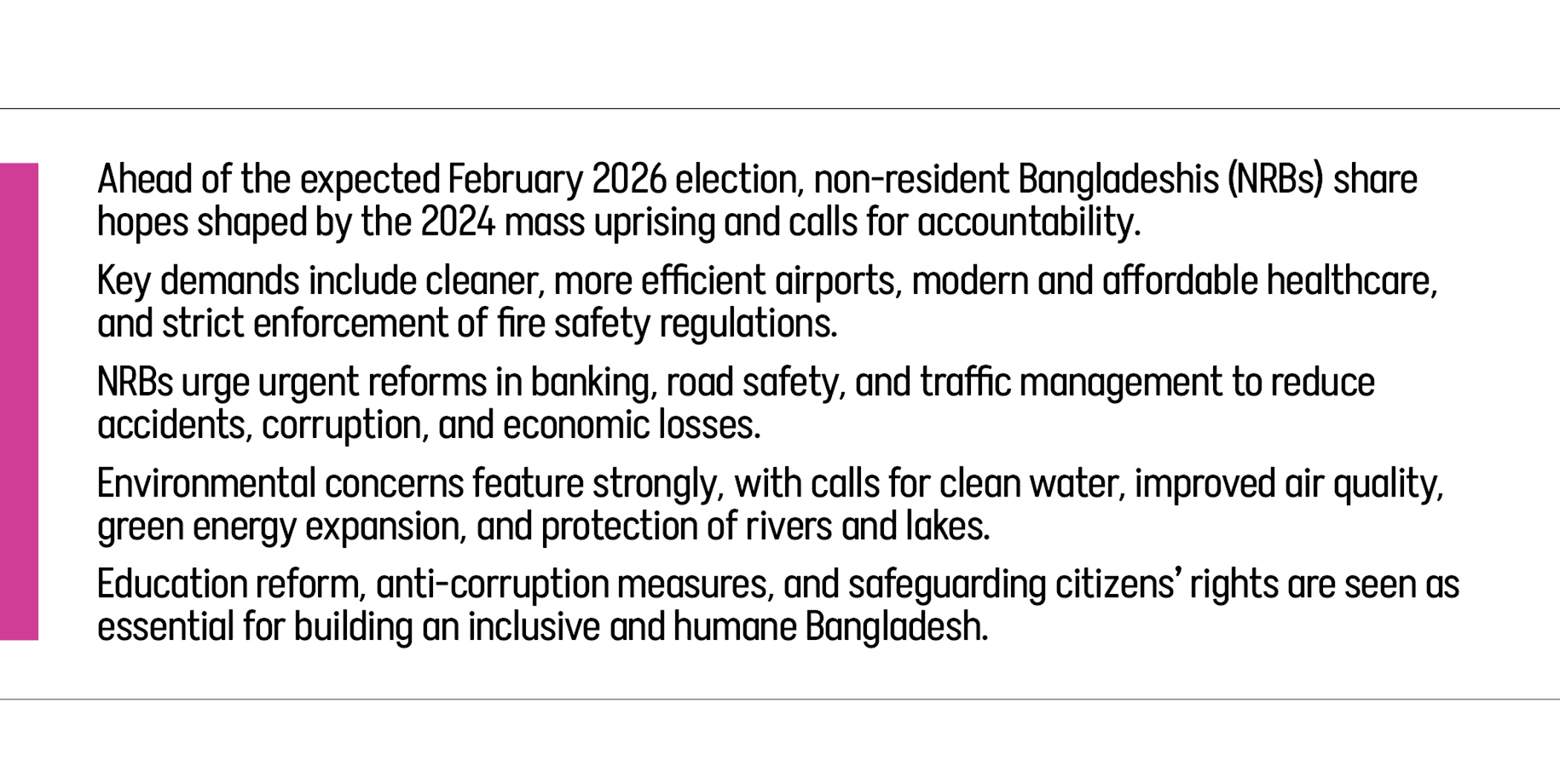
The NRB men and women we spoke to envision a kind and empathetic society, where people respect and care for each other’s lives and well-being. They identify rampant corruption as the nation’s primary enemy and urge the future democratically elected government to finally hold individuals and institutions accountable for their actions.
They hope that the new government will prioritise protecting labour and consumer rights, implementing measures to safeguard the country’s air, land, and water bodies, modernising healthcare and education, increasing road safety, enforcing fire safety regulations, and increasing green energy production. They envision a strong, inclusive society that ensures safety and equal opportunities for all, and where women’s and children’s rights are strictly upheld.
Illustration: Jawwad Sami Neogi
Comments