

No river, no dream


Kazi Khaleed Ashraf (KKA): River-realm or river-sphere, or, in a technical sense, river ecology, has been a recurring topic in our many conversations. River ecology is the domain of professionals and planners, but when we say river-realm, it invokes the social life—the people’s way of looking at rivers and experiencing them. There may be four ways in which rivers evoke our imagination. One, recreating the natural process with the river as the generator. By that, I mean the river has water, it has a flow, and an important thing—it has sediment.
Two, rivers are now technologically mediated. By that, I mean how human installations such as dams, dykes, embankments, and channelisations, constructed for one reason or the other, with good or bad consequences, define development.
Three, rivers are part of the public realm and shared imagination. People go from the interior of the land to the edge of the river and experience something phenomenal—you can’t minimise that. In Bangladesh, there are so many poems on that experience; I am sure in China as well, about being present at the magical edge of the river.
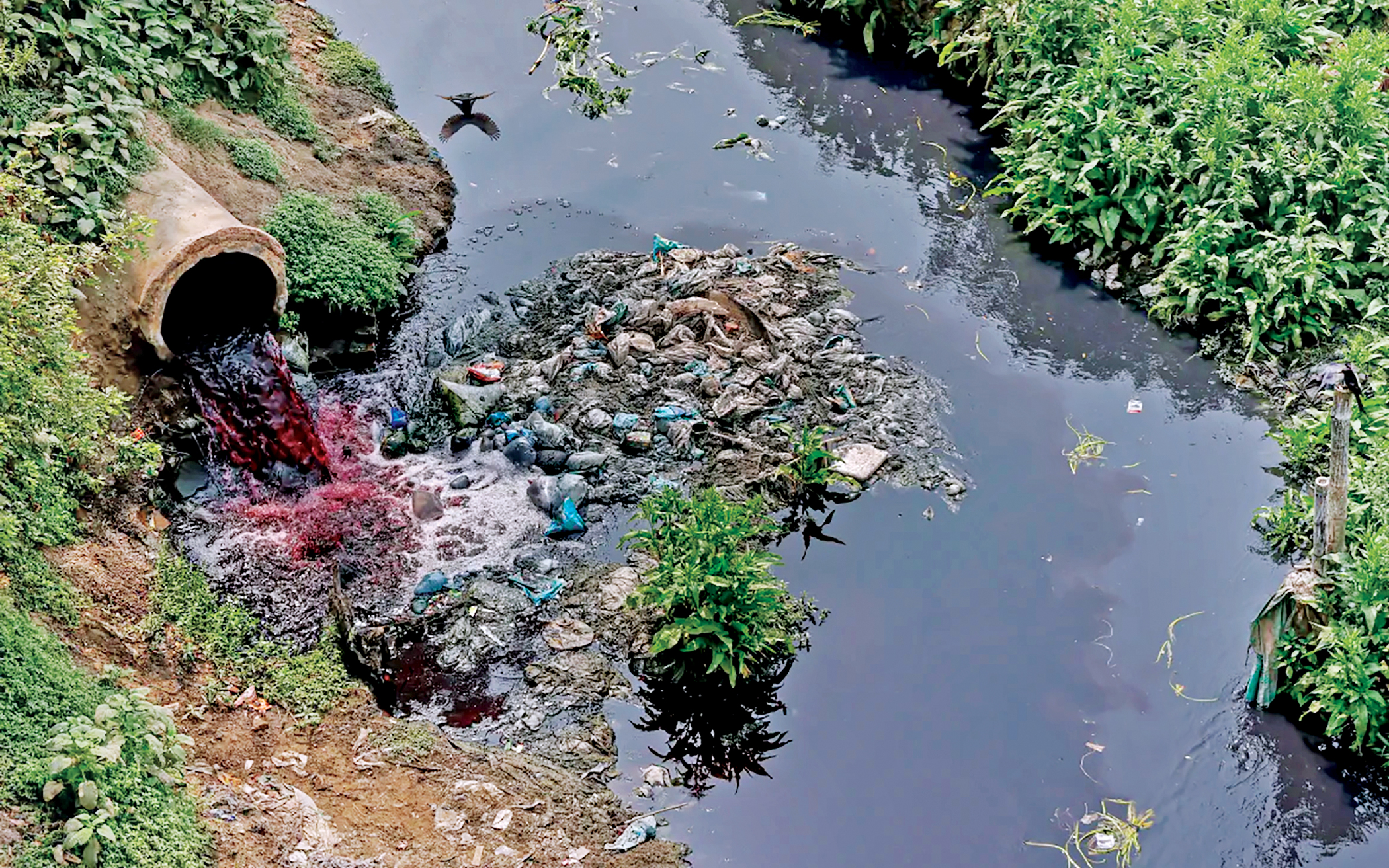
And four, how rivers, from a natural system, become a part of a constructed system. I think conflicts arise there, in the kind of constructed landscape we are pursuing. In Bangladesh, the village is a constructed landscape in which rivers play a significant role. But the way rivers are in villages is quite different from the way rivers have become in cities. It seems that in cities we have lost the spirit of the river. What has happened from the villages to the cities? In cities, rivers have basically become drainage channels—an ecological disaster—polluted and abused, controlled by technocratic processes.
As an architect, I am interested in the ethos of rivers. Although I am trained in the techniques and technology of making buildings, I have increasingly developed an interest in rivers. In Bangladesh—perhaps in China and Vietnam, in all the deltaic places—an architect should first be trained in understanding rivers before handling buildings. Because the river in deltaic places is the basis of the “ground” condition. And without understanding the ground condition, how can you proceed? In Bangladesh, sometimes there is no ground condition—the water comes in and the land vanishes, and when the water goes away, land is recreated in a different way. There is no site without water in Bangladesh—it’s all about water.
Kongjian Yu (KY): Bangladesh and China, particularly East Asia, Malaysia, and Indonesia—what we call South to South-East Asia—have a monsoon climate. Most of the countries in the monsoon regions are underdeveloped or developing. Now the whole world is talking about climate change, but we are always in a climate change. Climate change is nothing new for China, for Bangladesh, for India, for Malaysia. For the past 100 years, these underdeveloped countries have been colonised by what we call industrial civilisations. Those civilisations developed in European countries where the climate is quite stable or mild, I would say. When you look at the rain pattern in Europe, it is very mild and evenly distributed. When we—I mean countries that are in a similar monsoon climate zone—try to adopt that industrial civilisation, we will fail. That’s why all Chinese cities in the monsoon region in coastal areas— in fact, two-thirds of Chinese cities—suffer from urban flooding. And certainly, most of the cities in India, Bangladesh, and Pakistan are suffering from issues like flooding because we simply don’t have our own climate-adaptive infrastructure. We used to have it once, as you mentioned, in the villages. Unfortunately, we don’t have an urban modernism adapted to the river and the monsoon climate.
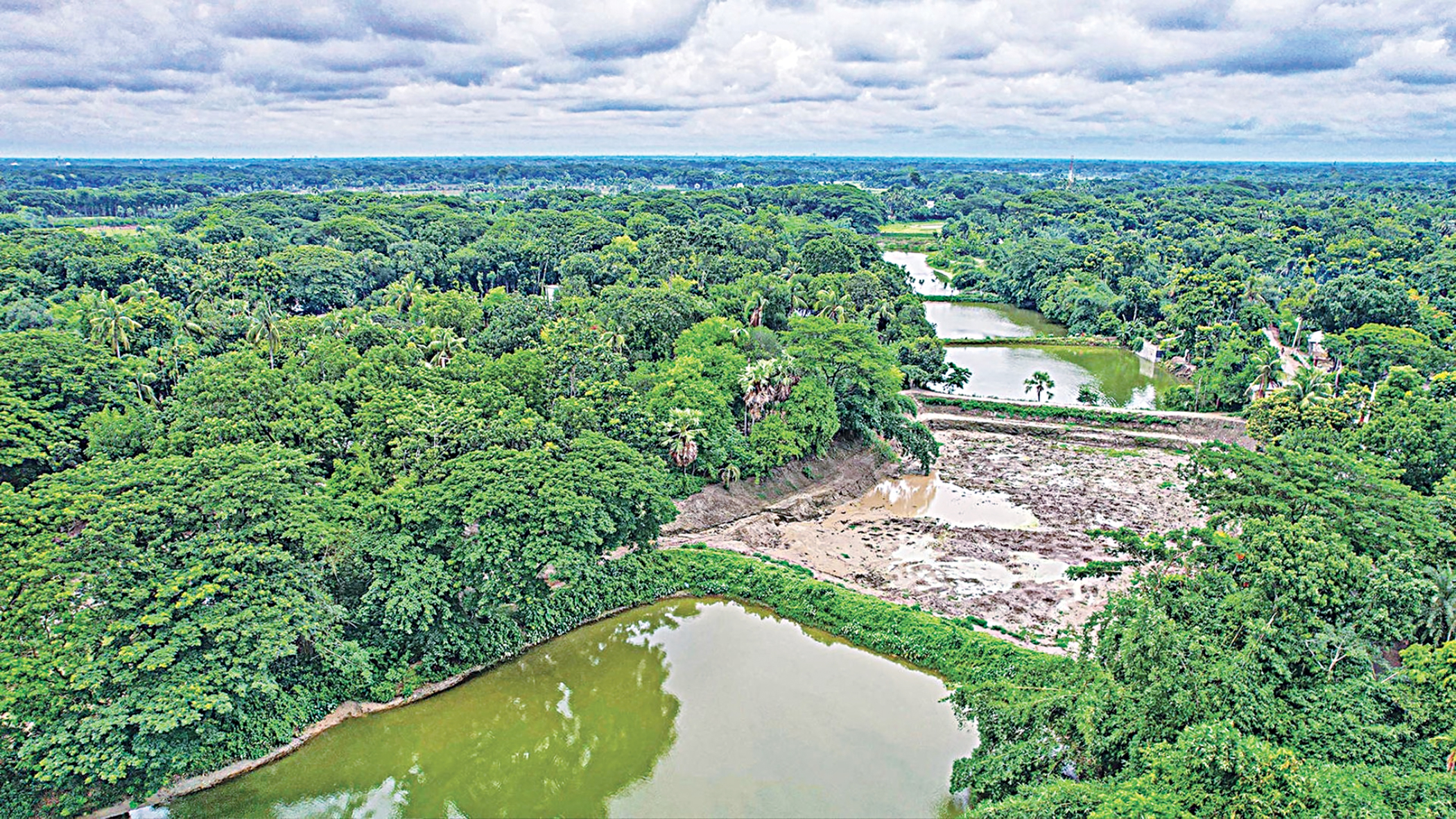
In 4,000 years of agriculture in China, we learned to adapt to the monsoon and river system. We have hundreds of cities along the Yellow River basin that follow strong adaptive patterns. I wrote a paper in 2008 on this adaptive landscape. A typical Chinese city has two layers of walls surrounding it. There is an inner wall, which is a square wall to protect the city during war. Then there is a bigger circular wall, which is 2 metres or 1 metre high, that adapts to the river. In the villages, we build houses on higher ground. We build terraces and raise them to 2 metres or 3 metres high. That’s enough to adapt to the river. The most important thing is that we never fight the river. There are a thousand years of agricultural practices in which villages, by opting for minimum intervention, use adaptive landscapes and demonstrate adaptive skills that include cut and fill to create dykes and ponds, and high ground for settlement. So, we had villages that worked with the river, lived with the river, but now we have cities that change the river. But we will ultimately fail because of the power of the river. The river is a force of nature; it is the most forceful of natural entities because of the monsoon climate.
I think it is important to understand why rivers in this region are different from rivers in European countries, where they are often predictable, stable, and controllable. When you think of the Thames, the Rhine, or the Seine—those rivers were fine until European countries also began experiencing dramatic change due to climate change. Now, it is monsoon-like there. That’s why European countries will come back to Asian civilisation to learn how we adapt to the monsoon type of climate.
Today, because we have powerful concrete and steel industries, as in China, all the rivers have been channelised, all the way from the Himalayas to the Yangtze River to the ocean. The whole river is being constructed because of the power of industrial civilisation. I believe this kind of civilisation will fail. That’s why, in my letter to the mayors of China about the big river, I said we are going to have another civilisation. How to free the river. Instead of constructing rivers, we make our cities spongy, adapting them to rivers.
KKA: I am very glad you mentioned the monsoon sphere; that’s what distinguishes this part of Asia from other parts. The region is a child of the monsoon. The monsoon is really a water phenomenon, and the river is a part of that.
When you say the river is a force of nature, and the monsoon is part of that, we have a dynamic, volatile, changing phenomenon, and everything that follows. For centuries, we have adapted to that dynamic condition. But as you said, with our engagement with Western cultures, one of the things we have adapted is a belief that technology can solve everything. Some people call it a technological utopia. I would say technological arrogance. Of course, we rely on technology. But if we assume that it will solve, control, and manage everything, including the dynamic condition of the monsoon, that’s not happening.
You mentioned dykes. Dykes could also be small in scale. In Bengal, farmers make dykes to control and manage the flow of water and its containment on a small scale. But that’s very different from technologically scaled-up embankments. There, you want to control nature. Farmers didn’t want to control nature; they wanted to manage only certain sections of the flow of water. Regarding the word Bengal or Bangala, Emperor Akbar’s chronicler Abul Fazl mentioned that the ‘al’ in the word Bang-al is derived from the small dykes farmers make. So, perhaps the name of the nation, a national bearing, refers to the ethos of agriculture.
You mentioned how rivers and water systems are more or less stable in the European context, whether naturally or processed. But things are changing now. The monsoon is arriving in Europe also. They are now considering different rhetorics—let the water flow, let the rivers flow. They contained the river before; now it’s about flow, overflow, and the dynamics of water. So they are changing their policies, while in our context we are still beholden to their old technologies.
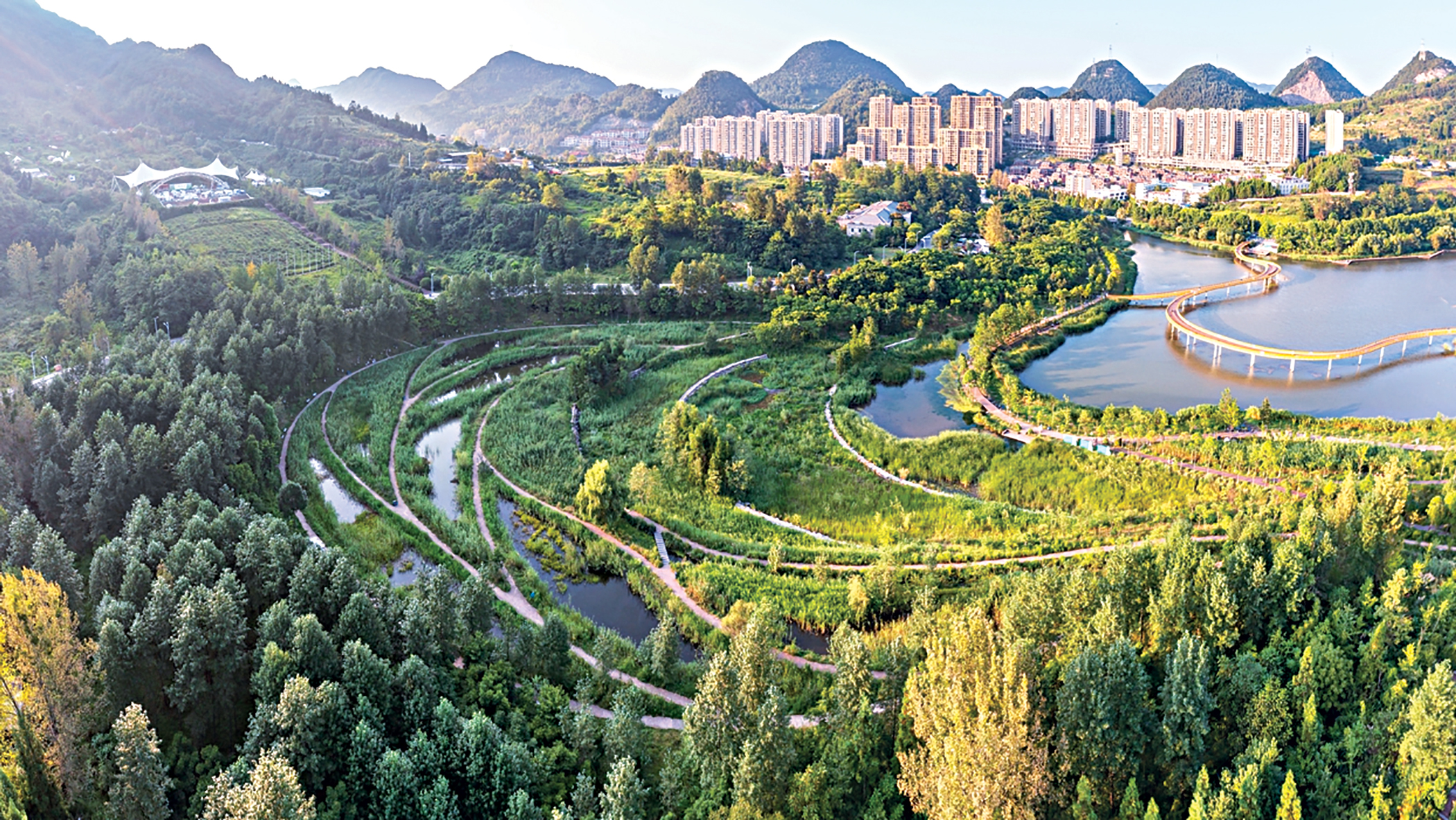
KY: Yes, I think that’s the tragedy of human society. We keep on making mistakes. We forget our heritage. The difference with other regions is in the scale of the technology; ours is much smaller, localised, it’s sponge-like. It’s not a big dyke; it’s not a dam. That makes a big difference. Now it is linked to a massive industrial scale. The old practice is family-based, individual-based, and village-based. That creates a very resilient system. From what I saw in Dhaka, you have a big potential for urbanism. But what is going to be the form of the city? That’s very challenging.
It is possible to create a new type of water-adaptive, resilient city. That will be a new revolution. The tragedy is that the policymakers don’t have this kind of knowledge, and that’s why I think it’s important for a new leadership to transform the decision-makers. That’s why, for the past 25 years, I keep talking, letting the decision-makers know that if they fail, a crisis will develop. Look at what happened in 2012 in China. In Beijing, the capital was flooded, and so many people drowned. They have begun to realise that we need a spongy city and different nature-based solutions, not an industrial solution. But the so-called advanced industrial civilisation is still in control. We have to revise so many things, including university textbooks and the ways we educate our people. The entrenched system doesn’t believe that a spongy city will work. But I think that’s the future. We need a new school.
KKA: In China, you have worked with 300 cities. In Bangladesh, every town has a river. I haven’t come across any town without a river. The river may be active, may be a little dead, a little sad, but there is a river. There is still a deep historical relationship with rivers—the deep structure you talk about. But increasingly we have forgotten that because of this utopia of technology, and perhaps the lure of capitalism. So what’s going to be the form of the city in an adaptive process—that’s the key question.
KY: We should not just follow whatever the Western part of the world is doing. We should invent a new type of urbanism. That’s the only way we can transform from dystopia. You mentioned the utopia of technology—actually, it is a dystopia of technology. From dystopia, we should move towards our local, native utopia in order to build a new city based on adaptation to agricultural landscape practices. I think you need to do it: build a new city that has a completely different form, and then we can show the whole world what the new urbanism of the next century is—one that can adapt to climate change and other challenges.
KKA: If you look at the environment of Dhaka, it’s surrounded by a combination of floodplains, agricultural land, and river basins. It is a fantastic landscape, increasingly being changed simply by landfilling—as if there can’t be any other response other than landfill. The argument has been that we need to build, we need to put up buildings, we need it for the economy, and so on. I personally feel that ecology and economy need not be enemies. There are strong laws in Bangladesh about the conservation and retention of such a critical landscape, but the laws are not maintained because of the forces of the economy. I think there can be a third form, what you referred to as a new urban form, because the conventional pattern of building and the conventional mode of construction will always lead to a crisis, as it is based on a ‘dry ideology.’
You have already mentioned two things—rivers as forces of nature and rivers as life. If we accept that, of course, the future of rivers is the same as the future of human civilisation.
KY: Yes, well, I will say: free the river—that’s the future. The river is a vital living organism of the whole world, particularly of the monsoon region. When I was in Bangladesh, I was amazed at how productive your water system was, with the fish and agriculture. It was the same in China. Now we destroy the whole system. The river is key for the planet in providing an ecosystem. We try to build grey infrastructure to replace those services, and that becomes so expensive. That causes all the problems.
So, we have to think in terms of services—how much the river produces, how much abundance the river can provide: life’s biomass, everything. You even mentioned silt. Silt is the base for productivity. Without silt, no production. Imagine how much fertiliser we use today, how many chemicals we produce, and meanwhile how much we risk. Sixty percent of chemicals run into the river. China consumes 30 per cent of global fertilisers. India, Bangladesh, plus America consume another third. Sixty per cent of all those chemicals run into the water. Water itself loses the capacity for cleaning and producing nutrients that farmers need.
The second is certainly what you mentioned at the beginning as cultural qualities. Rivers produce so much picturesque, poetic, and cultural spirit of humankind, whether in India or the USA or China. Talking about culture, the only American literature I read was about Huckleberry Finn travelling along the Mississippi River. So the same in Bangladesh. But when I travel today, I see a loss of the poetic content. I don’t see any trees around the river, no villages along the river, no communal life, no fishermen—that’s a huge loss. It’s not spiritual life anymore.
The other thing is the power of regulation. The surface of the river is regulated; that’s why it leads to so much climate change. In the dry season or in the wet season, you have the river basin system that regulates the river. Note that the Amazon River is still very primitive. So you can imagine what it used to be: an abundance of forests with water flowing underneath the canopy. You did not see the water; you did not see the river. Green and blue, everything together, sponge-like—that is what rivers should be. That’s the global future.
I say all rivers should be covered with forests, that there’s no hard boundary. We see the river as a productive ecosystem—the most biodiverse areas are within the river and around the river, including the wildlife system and everything. This is nature regulating itself, with the meanderings, the tributaries—it acts as a great regulator; it’s a home for the soul. No river, no dream. Kids today don’t even know how to draw the picture, as the river is now concrete. Freeing the river doesn’t mean reverting to a primitive agricultural civilisation. We are upgraded. We now understand the science of the river. We are based on the modern science of the river. We now know how to adapt to it, not because of survival needs alone, but because we are sensitive. The move from unconsciousness to a conscious understanding of the river is the future of the planet, the future of humankind. So, the future of the river is the future of human civilisation.
This is a shorter version of a conversation between Kongjian Yu and Kazi Khaleed Ashraf, held in 2022 for Jamini Art Journal.
Kazi Khaleed Ashraf is Bangladesh’s leading architectural and urban thinker and the editor of the book The Great Padma: The Epic River that Made the Bengal Delta.
Kongjian Yu was one of the world’s leading landscape architects and ecological thinkers, who developed the radical idea of a “sponge city.” He died in a tragic plane accident in the Amazon last year.
Send your articles for Slow Reads to slowreads@thedailystar.net. Check out our submission guidelines for details.